Sciatica vs Piriformis Syndrome: What’s the Difference?
Pain that travels from the lower back into the hip, buttock, or leg is often called “sciatica.” But not all sciatic-type pain comes from the spine. One condition that can closely mimic sciatica is piriformis syndrome. At Frankos Chiropractic & Thrive IV in Smithfield, we commonly help patients throughout Cache Valley experiencing lower back pain, buttock pain, leg pain, numbness, and mobility issues. Understanding the difference between sciatica and piriformis syndrome can help guide proper treatment and recovery on.
Dr Chad Frankos DC
5/11/2026
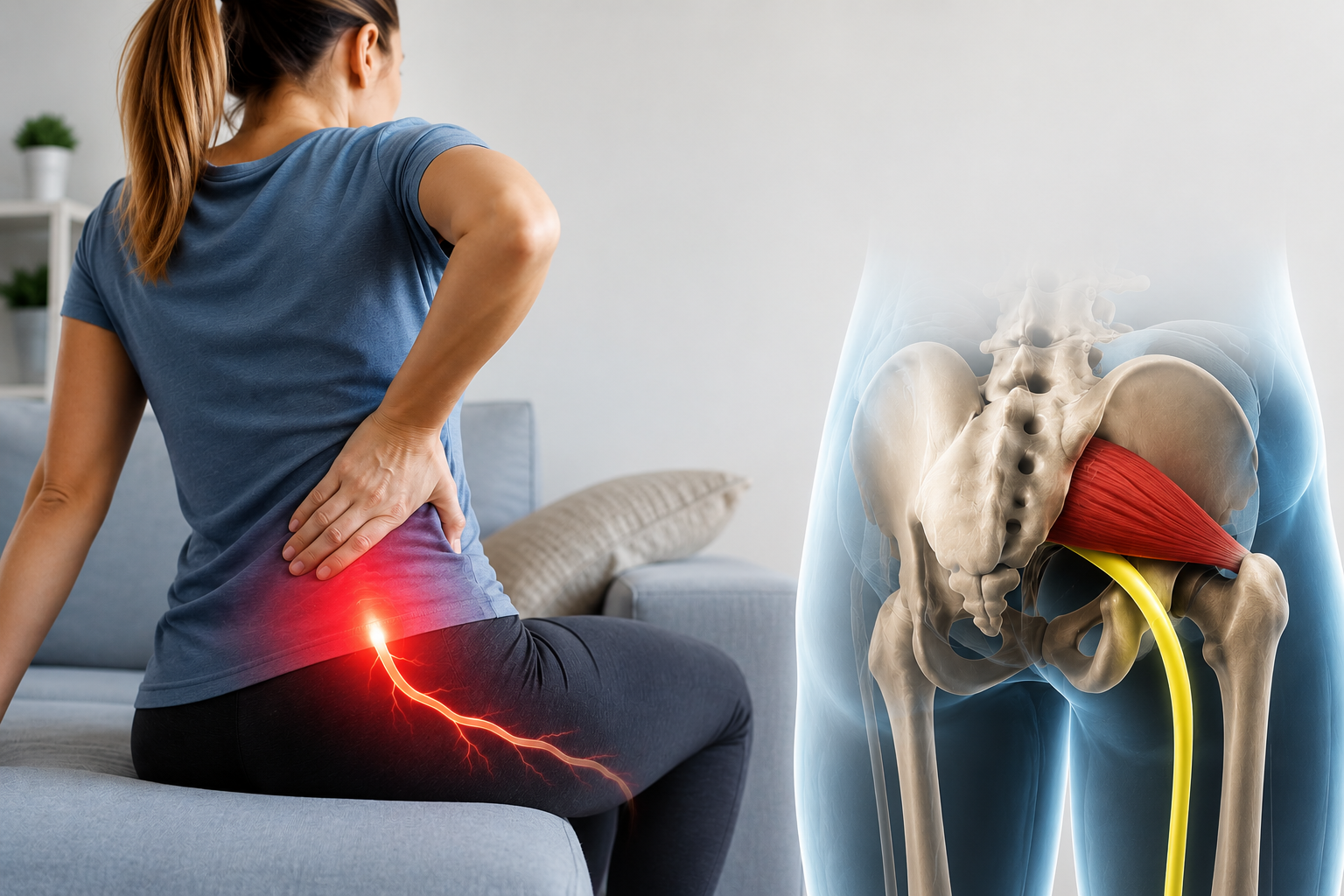
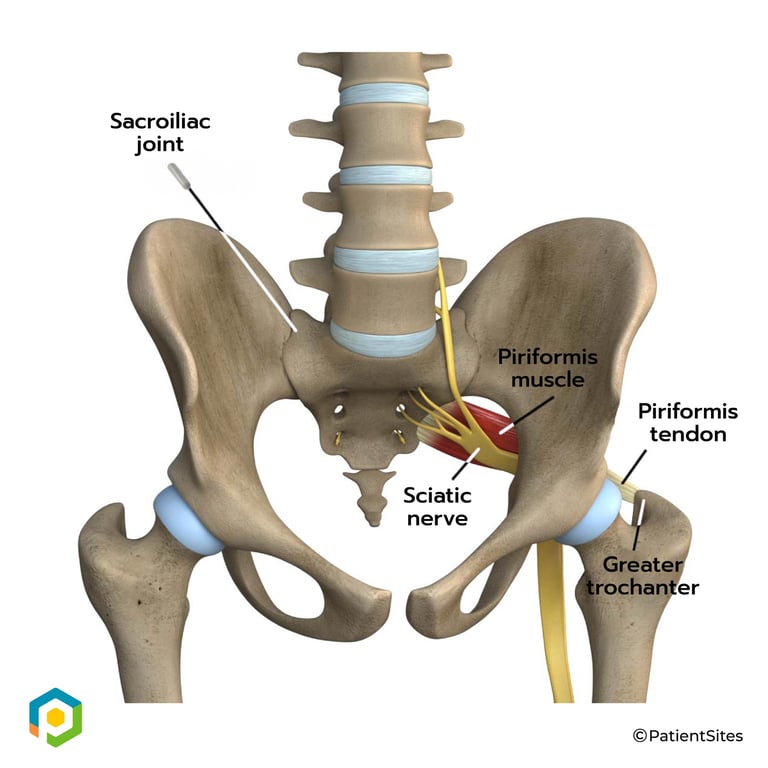
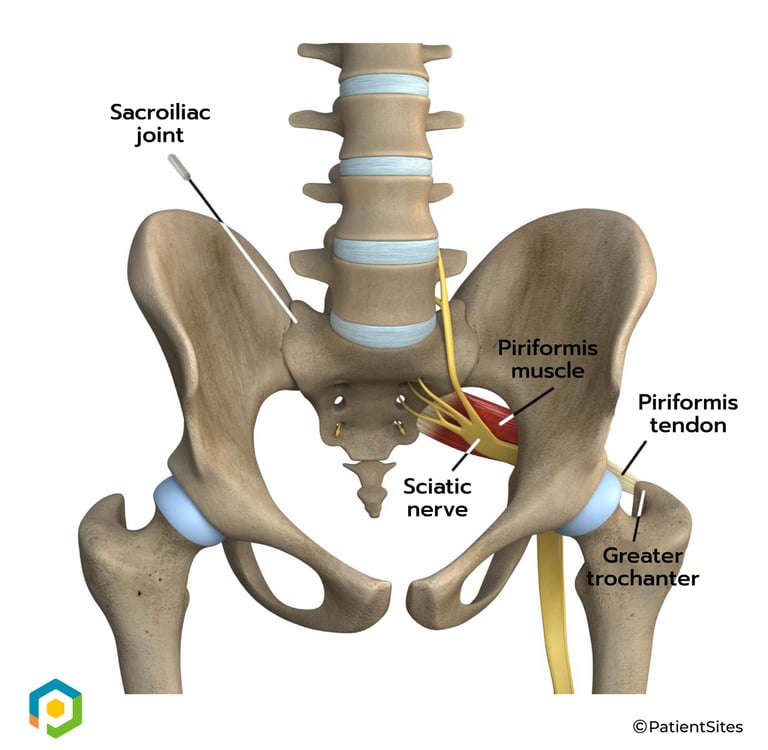
Anatomy of the Sciatic Nerve & Piriformis Muscle
The sciatic nerve is the largest nerve in the body and travels from the lower spine through the buttock and down the leg. In many people, the nerve passes directly beneath the piriformis muscle, which is why tightness or irritation in this muscle can sometimes create sciatic-like symptoms.
What Is Sciatica?
Sciatica refers to irritation or compression of the sciatic nerve, which is the largest nerve in the body.
The sciatic nerve travels from the lower back through the hips and buttocks and down each leg. The nerve is formed from spinal nerve roots L4 through S3.
Sciatica is commonly associated with:
disc irritation or herniation
spinal joint dysfunction
inflammation near the nerve roots
degenerative changes in the lower back
Common Symptoms of Sciatica
People with sciatica may experience:
pain radiating down the leg
numbness or tingling
burning sensations
weakness in the leg
lower back pain
pain worsened by sitting or bending
Symptoms often travel below the knee and may affect only one side of the body.
What Is Piriformis Syndrome?
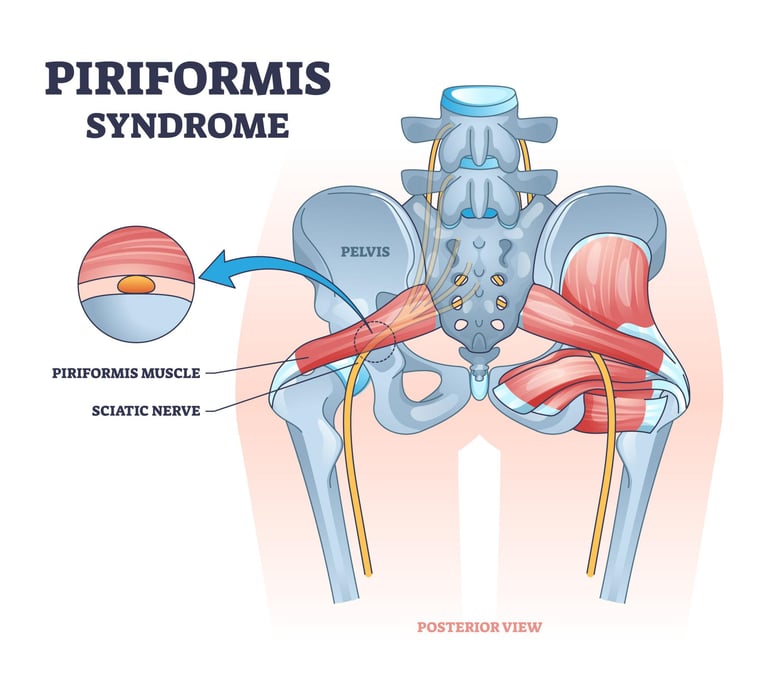
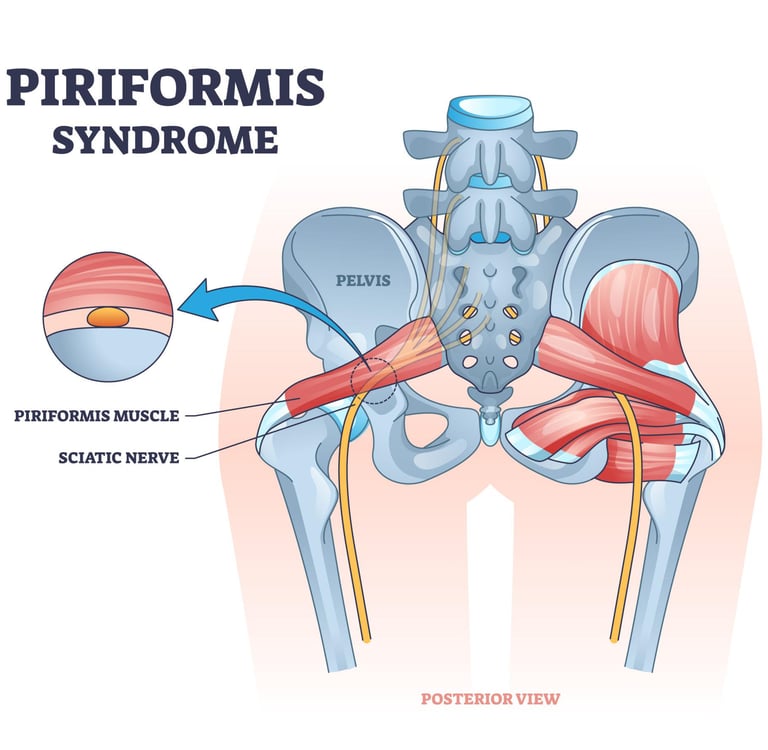
Piriformis syndrome occurs when the piriformis muscle—located deep in the buttock—irritates or compresses the sciatic nerve.
The piriformis muscle is a deep hip stabilizer that runs from the sacrum to the greater trochanter of the femur.
When the muscle becomes tight, inflamed, or overactive, it can create symptoms very similar to sciatica.
Common Symptoms of Piriformis Syndrome
Piriformis syndrome may cause:
deep buttock pain
hip tightness
pain when sitting
tenderness in the glute area
pain that may travel into the leg
discomfort with walking, running, or stairs
Unlike true lumbar sciatica, piriformis syndrome often causes more localized buttock pain and may not always extend far down the leg.
Key Differences Between Sciatica and Piriformis Syndrome
Pain Source
Sciatica
Usually originates from the lower back or lumbar spine.
Piriformis Syndrome
Typically originates in the buttock or hip region.
Symptom Pattern
Sciatica
Symptoms often travel below the knee into the calf or foot.
Piriformis Syndrome
Pain is commonly concentrated in the buttock and upper leg.
Movement Triggers
Sciatica
Symptoms may worsen with:
bending
coughing
prolonged sitting
spinal compression
Piriformis Syndrome
Symptoms often worsen with:
sitting on hard surfaces
climbing stairs
running
hip rotation movements
Muscle Tightness
Piriformis syndrome often involves:
tight glute muscles
reduced hip mobility
tenderness in the buttock
Sciatica is more commonly associated with spinal irritation and nerve-related symptoms.
What Causes These Conditions?
Common Causes of Sciatica
Sciatica may develop from:
herniated discs
spinal irritation
repetitive lifting
prolonged sitting
poor posture
degenerative spinal changes
Common Causes of Piriformis Syndrome
Piriformis syndrome may be associated with:
overuse injuries
prolonged sitting
running or sports activities
hip muscle imbalance
poor movement mechanics
muscle tightness
Athletes and people who sit for long periods commonly experience piriformis-related symptoms.
Important Note About Piriformis Syndrome
Some medical professionals debate how common true piriformis syndrome actually is, since many cases of leg pain originate from the lumbar spine instead. However, irritation around the piriformis muscle and surrounding hip structures can still contribute to sciatic-like symptoms in some patients.
How Chiropractic Care May Help
Proper evaluation is important because treatment approaches may differ depending on the underlying cause.
At Frankos Chiropractic & Thrive IV, treatment may include:
chiropractic adjustments
mobility work
stretching recommendations
soft tissue therapy
cupping therapy
IASTM
rehabilitation exercises
shockwave therapy when appropriate
The goal is to improve movement, reduce irritation, and help patients return to normal activity comfortably.
Helpful Stretches & Mobility Work
For many patients, improving:
hip mobility
glute flexibility
posture
core stability
spinal movement
can help reduce stress on the lower back and surrounding muscles.
Movement-based care is often an important part of recovery.
When Should You Seek Treatment?
You should consider evaluation if you experience:
persistent leg pain
numbness or tingling
weakness
worsening pain with sitting
difficulty walking or exercising
chronic lower back or buttock pain
Early treatment may help prevent symptoms from becoming more severe or chronic.
Sciatica & Piriformis Syndrome Treatment in Smithfield, Utah
At Frankos Chiropractic & Thrive IV, we help patients throughout Smithfield and Cache Valley recover from lower back pain, sciatica, piriformis syndrome, sports injuries, and mobility problems naturally.
Whether your pain is coming from the spine, hip, or surrounding muscles, identifying the source is the first step toward recovery.
👉 Schedule an appointment today to start moving and feeling better naturally.