Sports injury chiropractor in Smithfield, Utah
Sports Injury Care for Active Families, Athletes, Lifters, Runners, and Weekend Warriors
Sports injuries are not just for elite athletes. They happen to youth athletes, parents, runners, lifters, golfers, wrestlers, skiers, pickleball players, rodeo athletes, hikers, and active Cache Valley families. Frankos Chiropractic evaluates the movement pattern, tissue load, joints, muscles, training demands, and red flags before building the plan.
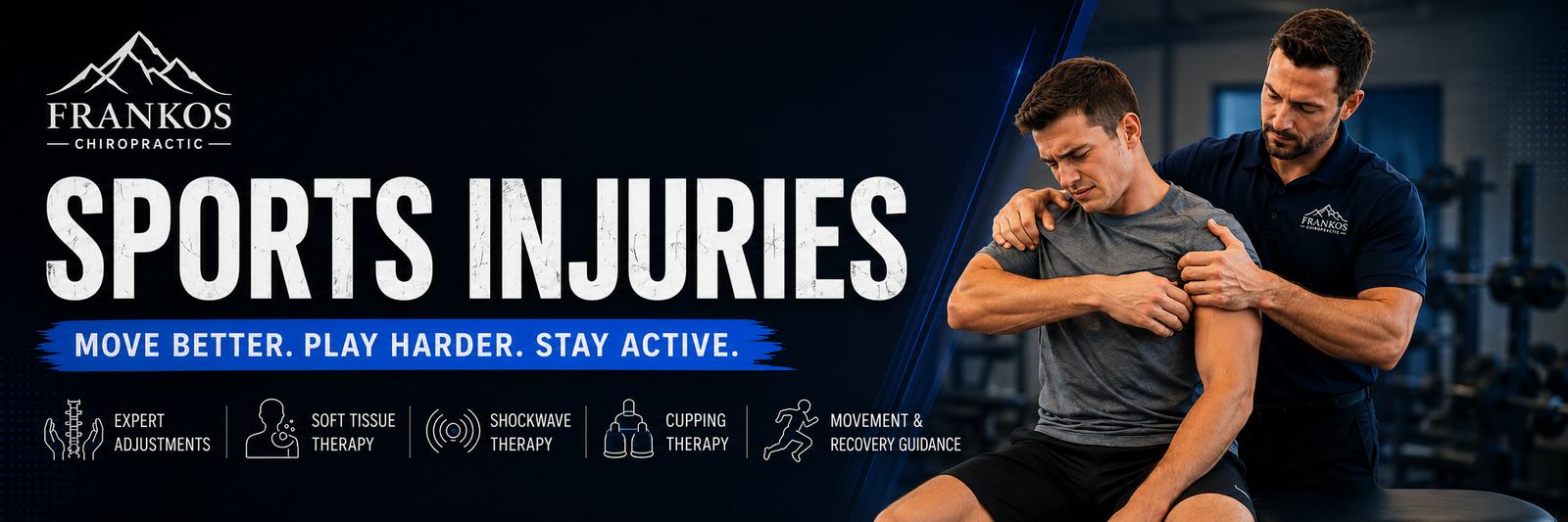
A sports injury is not just “rest until it goes away.”
Some injuries need urgent care, imaging, concussion evaluation, orthopedics, or a different provider. Others need smart conservative care, movement modification, soft tissue work, joint mobility, load management, and a gradual return to activity. The key is knowing which situation you are in.
Book based on your goal.
Tell us what you need to get back to: practice, lifting, running, games, hiking, work, coaching, tournaments, or playing with your kids. Return-to-activity goals help guide the exam and plan.
Sports injuries may involve…
- Sprains, strains, and overuse irritation
- Back, neck, rib, and shoulder pain
- Hip, glute, knee, ankle, and foot pain
- Running, jumping, cutting, lifting, and throwing mechanics
- Calf, Achilles, plantar fascia, IT band, or tendon overload
- Training spikes, poor recovery, tournament weekends, and hard surfaces
- Head impacts or collision injuries that need medical screening
Common sports injury patterns
What type of sports injury pattern are you dealing with?
Patients often search for a sports injury chiropractor near Logan or Smithfield because they want to stay active without guessing, resting forever, or pushing through a problem that keeps coming back.
Back pain from lifting or training
Pain after deadlifts, squats, cleans, overhead work, gym training, CrossFit-style workouts, ranch work, or sudden load increases.
Neck and shoulder sports pain
Pain from wrestling, football, volleyball, throwing, golf, lifting, biking, skiing, overhead work, or contact injuries.
Hip, glute, and SI irritation
Pain around the pelvis, hip, glute, groin, or SI region that changes with running, cutting, squatting, hinging, or skating.
Knee and ankle overload patterns
Pain tied to jumping, cutting, running, cleats, court sports, hiking, uneven ground, or repeated impact.
Runner and endurance athlete pain
IT band irritation, plantar fascia pain, shin tightness, calf/Achilles load, hip tightness, back pain, and training errors.
Youth athlete aches and overuse
Growing athletes can develop pain from repetitive practices, tournament weekends, lifting, growth spurts, and poor recovery.
Post-game stiffness and soreness
Soreness that does not clear, recurring tightness, restricted movement, and compensation patterns after games or practices.
Auto or collision-related sports injury
Falls, impacts, crashes, whiplash-type symptoms, rib irritation, and contact injuries need a more careful screen.
The Frankos approach
The exam decides the sports injury plan.
Sports injury care should identify whether the main issue appears to be joint restriction, soft tissue guarding, tendon overload, load management, training error, movement mechanics, trauma, or something that needs referral.
Sport and position history
We review the sport, position, training phase, recent changes, practice load, competition schedule, lifting program, and goals.
Mechanism and red flag screen
Sudden trauma, concussion signs, inability to bear weight, deformity, severe swelling, numbness, or weakness may need urgent care or imaging first.
Movement testing
We look at the movements that matter: squat, hinge, reach, rotate, lunge, gait, running mechanics, shoulder motion, or sport-specific positions.
Joint and spine mobility
Neck, ribs, thoracic spine, low back, pelvis, hips, knees, ankles, shoulders, wrists, and feet may influence performance and symptoms.
Soft tissue and load tolerance
Muscle guarding, tendon irritation patterns, trigger points, fascia restriction, and tissue sensitivity are matched to the stage of injury.
Return-to-activity planning
Care should include what to avoid, what to keep doing, what to modify, and when to progress rather than guessing at full return.
Visit process
What happens at a sports injury visit?
You should leave with a clearer understanding of what was screened, what appears to be contributing, what treatment was chosen, and how to modify activity while symptoms calm down.
Listen
We review sport, position, mechanism, training changes, competition schedule, pain behavior, and return goals.
Screen
We check for trauma signs, concussion concerns, fracture/dislocation signs, nerve symptoms, and whether conservative care fits.
Test movement
We look at the movements that matter for your activity: squat, hinge, reach, rotate, lunge, gait, shoulder motion, or sport positions.
Treat
Care may include adjustments, soft tissue, IASTM, cupping, mobility work, traction, or shockwave discussion when appropriate.
Plan
You leave with practical guidance for activity modification, home movement, recovery, and follow-up timing.
Treatment options
Sports injury care may include more than one tool.
Frankos Chiropractic uses conservative options based on the exam. Some athletes need mobility. Some need soft tissue care. Some need spine or rib work. Some need load modification. Some chronic tendon and soft tissue patterns may be candidates for shockwave therapy. Some injuries need imaging, sports medicine, orthopedics, physical therapy, or urgent care.
Chiropractic adjustments
When appropriate, adjustments may address restricted motion in the spine, ribs, pelvis, hips, shoulders, ankles, or other joints affecting sport movement.
Learn moreSoft tissue therapy
Muscle and fascia-focused care for tightness, guarding, trigger points, tendon overload patterns, and recovery from repeated training stress.
Learn moreIASTM and cupping
Tools may be used for selected soft tissue restriction, chronic tightness, and mobility limitations when appropriate.
Learn moreShockwave therapy
May be discussed for selected chronic tendon or soft tissue irritation patterns such as plantar fascia, Achilles, shoulder, hip, or other stubborn tissue problems.
Learn moreTraction / decompression
May be considered for selected neck or low back presentations when unloading changes symptoms and the exam supports that direction.
Learn moreMovement and mobility guidance
Simple sport-specific home guidance for mobility, warmups, recovery, load management, and avoiding the exact pattern that keeps flaring pain.
Learn moreYouth and family care
Care can be modified for youth athletes, students, and families depending on age, sport, tolerance, and goals.
Learn moreReferral when needed
Some injuries need imaging, orthopedics, urgent care, sports medicine, physical therapy, concussion evaluation, or co-management.
Learn moreActive symptoms vs maintenance
New sports pain is not a quick wellness visit.
Sports pain with injury, weakness, swelling, instability, nerve symptoms, inability to train normally, or pain that keeps returning needs a problem-focused visit instead of a routine maintenance adjustment.
Book active sports injury care if…
- Pain started during practice, a game, lifting, running, or a fall.
- You have recurring pain that changes how you move.
- You are avoiding workouts, sports, running, or daily activity.
- You have tightness, soreness, or restriction that keeps returning.
- You want to discuss shockwave therapy for a chronic tendon or soft tissue issue.
Maintenance care is different.
Wellness or membership visits are best for appropriate patients who are not trying to evaluate a new sports injury, worsening pain, swelling, weakness, or loss of function. If a sports injury is the main complaint, choose a problem-focused visit first.
Safety first
When a sports injury needs urgent medical care first.
Some sports injuries are not appropriate for chiropractic care first. Severe trauma, suspected fracture or dislocation, concussion danger signs, neurological symptoms, or inability to bear weight should be screened urgently.
Do not wait on these symptoms.
Seek urgent or emergency care for head injury with worsening headache, repeated vomiting, confusion, seizure, slurred speech, weakness, or loss of consciousness; suspected fracture or dislocation; severe swelling or deformity; inability to bear weight; progressive numbness or weakness; chest pain; shortness of breath; or symptoms that feel like an emergency.
Head injury signs
Worsening headache, confusion, vomiting, seizure, slurred speech, weakness, loss of consciousness, or unusual behavior after impact.
Bone or joint signs
Obvious deformity, severe swelling, major bruising, inability to bear weight, joint giving way, or suspected fracture/dislocation.
Nerve or medical signs
Numbness, progressive weakness, chest pain, shortness of breath, fever, severe neck/back pain after trauma, or rapidly worsening symptoms.
What to do at home
Sports injury self-care should protect the tissue without shutting everything down.
The goal is not to ignore pain or rest forever. The goal is to reduce the load that keeps irritating the tissue while keeping safe movement, recovery, and function moving in the right direction.
Usually helpful early steps
- Stop the specific motion that sharply worsens symptoms.
- Modify practice, lifting, running, or sport intensity instead of forcing full effort.
- Use comfortable movement that does not spike pain.
- Avoid testing the injury repeatedly to “see if it still hurts.”
- Use ice, heat, compression, or support based on injury stage and professional guidance.
Stop guessing if performance is changing.
If pain changes your stride, swing, throw, lift, squat, sleep, or confidence, it is time to evaluate the pattern. Compensation often spreads the problem from one area to another.
Local sports injury care
Sports injury chiropractor near Logan, Smithfield, and Cache Valley.
Frankos Chiropractic is located at 115 N Main St in Smithfield, Utah. Patients visit from Logan, North Logan, Hyde Park, Richmond, Lewiston, Providence, Hyrum, Nibley, Wellsville, Preston, Franklin, and nearby communities for sports injury and active lifestyle care.
Frankos Chiropractic
115 N Main St, Smithfield, UT 84335
One Smithfield office serving Cache Valley with practical, exam-based conservative care for athletes, youth athletes, runners, lifters, active families, weekend warriors, sports soreness, overuse pain, and selected chronic soft tissue injuries.
Related pages
Build the right internal pathway for sports injury patients.
Sports injury patients often need to understand back pain, neck pain, shoulders, plantar fasciitis, sciatica, shockwave therapy, soft tissue therapy, and conservative care options before they book. These pages help them choose the right next step.
Frequently asked questions
Sports injury questions before you schedule.
These answers are educational and do not replace an exam. Your care plan depends on your history, symptoms, exam findings, sport goals, and whether conservative care is appropriate.
Can a chiropractor help sports injuries?
Chiropractic and conservative care may help selected sports injury patterns when joint motion, soft tissue guarding, posture, load management, or movement mechanics are contributing. The exam helps decide whether care is appropriate.
What sports injuries do you see?
Frankos Chiropractic sees active patients with back pain, neck pain, shoulder pain, hip/glute pain, knee/ankle overload patterns, plantar fascia pain, sports soreness, and selected overuse injuries.
Do you treat youth athletes?
Yes. Care is modified based on age, sport, symptoms, exam findings, tolerance, and goals. Youth athletes with severe trauma, head injury, deformity, or inability to bear weight should be medically evaluated first.
Can shockwave therapy help sports injuries?
Shockwave therapy may be discussed for selected chronic tendon or soft tissue irritation patterns, but it is not the right choice for every acute injury or every athlete.
Should I keep playing through pain?
Do not push through worsening pain, instability, numbness, weakness, severe swelling, or pain that changes how you move. Some activity can be modified, but the plan should match the injury stage.
When should a sports injury get urgent care?
Seek urgent care for suspected fracture or dislocation, severe swelling, deformity, inability to bear weight, progressive weakness, numbness, chest pain, shortness of breath, or concussion danger signs.
What about concussions?
Head injuries need proper medical screening. Do not return to play the same day if concussion is suspected. Emergency symptoms include worsening headache, repeated vomiting, confusion, seizure, weakness, slurred speech, or loss of consciousness.
Do you help with return-to-sport decisions?
Frankos Chiropractic can help with conservative movement guidance and activity modification, but return-to-play decisions may require athletic trainers, physicians, physical therapists, coaches, school protocols, or specialists depending on the injury.
Do you accept insurance for sports injury care?
Frankos Chiropractic accepts most major insurance plans. Coverage varies by plan, deductible, visit type, and medical necessity. The office can help verify benefits.
Where is Frankos Chiropractic located?
Frankos Chiropractic is located at 115 N Main St in Smithfield, Utah and serves Cache Valley from one Smithfield office.
Schedule at Frankos Chiropractic
Ready to find out what your sports injury pattern is?
Book online or call the Smithfield office. If you are a new patient, complete intake forms before your visit when possible. If you have head injury danger signs, suspected fracture/dislocation, severe swelling, inability to bear weight, chest pain, shortness of breath, progressive weakness, or urgent symptoms, seek urgent medical care first.
Frankos Chiropractic • 115 N Main St, Smithfield, UT 84335 • One Smithfield office serving Cache Valley