Auto accident chiropractor in Smithfield, Utah
Auto Accident Injury Care for Whiplash, Neck Pain, Back Pain, Headaches, and Delayed Symptoms
A car accident can leave more than a sore neck. Crash-related symptoms may involve the neck, back, ribs, shoulders, pelvis, headaches, dizziness, soft tissue guarding, nerve irritation, and delayed pain that shows up after the adrenaline fades. Frankos Chiropractic evaluates the pattern, screens for warning signs, documents findings, and builds a conservative care plan when chiropractic care is appropriate.
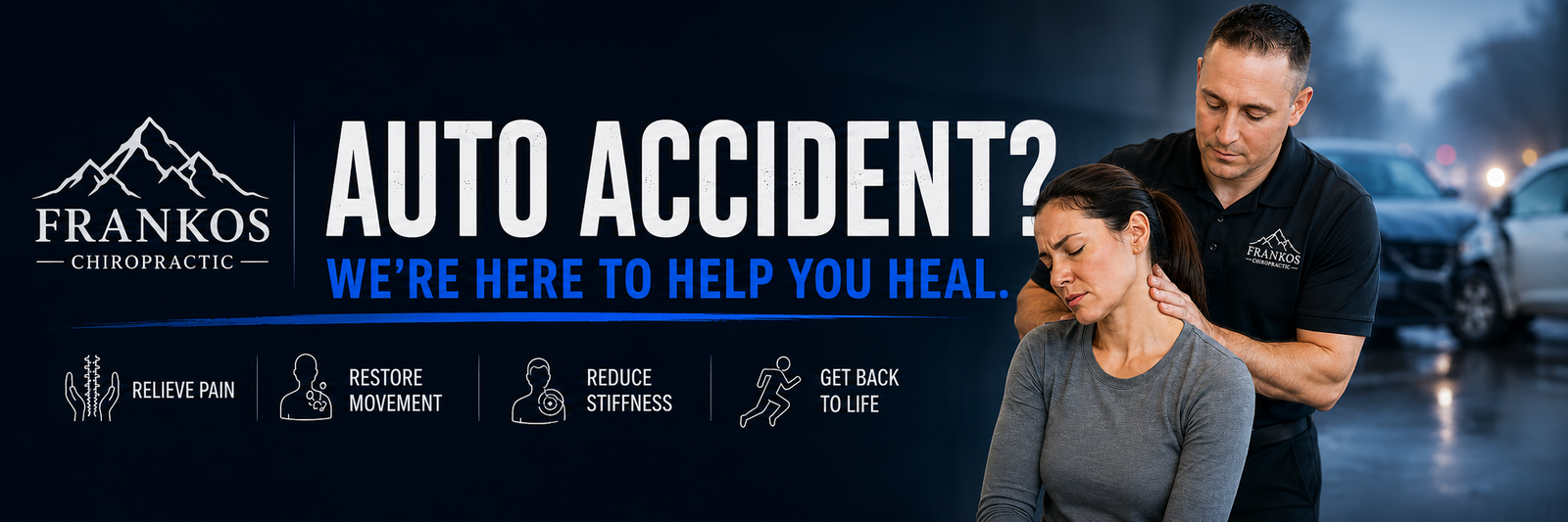
Why this page matters
After a crash, symptoms can be delayed and confusing.
Many people feel shaken up at the scene, then notice neck pain, back pain, headaches, shoulder tension, dizziness, or stiffness later. Some symptoms are mechanical and respond to conservative care. Others need urgent medical evaluation. The first step is not guessing. It is screening and documenting clearly.
Book based on the accident, not just today’s pain.
Tell us the crash date, direction of impact, seatbelt use, airbag deployment, symptoms at the scene, what changed later, and whether you went to urgent care, ER, primary care, or another provider.
Crash-related symptoms may include…
- Neck pain, stiffness, and whiplash-type symptoms
- Headaches, dizziness, brain fog, or concentration changes
- Upper trap, shoulder, rib, and seatbelt-area pain
- Mid-back, low-back, SI, hip, or glute pain
- Numbness, tingling, weakness, or arm/leg symptoms
- Delayed pain that starts hours or days later
- Sleep disruption, soreness, guarding, and reduced range of motion
Common auto accident injury patterns
What type of crash-related pain are you dealing with?
Patients often search for an auto accident chiropractor near Logan or Smithfield because they do not know whether the pain is whiplash, muscle strain, nerve irritation, rib pain, SI/pelvic pain, concussion-related symptoms, or something more serious.
Whiplash and neck pain
Neck pain, stiffness, headaches, upper trap tension, shoulder pain, dizziness, or symptoms that start hours or days after the crash.
Low back and SI pain
Pain near the beltline, pelvis, SI joints, glutes, hips, or low back after the body braces, twists, or absorbs impact.
Headaches after a crash
Headaches that start at the base of the skull, temples, forehead, jaw, upper traps, or after a head/neck jolt need careful screening.
Shoulder, seatbelt, and rib pain
Seatbelt strain, chest wall soreness, rib irritation, shoulder pain, clavicle-area pain, and upper back guarding can happen after impact.
Mid-back pain and muscle guarding
Thoracic stiffness, rib restriction, shoulder blade pain, spasms, and protective guarding can build after a crash.
Arm or hand symptoms
Pain, numbness, tingling, weakness, or symptoms traveling into the arm or hand may indicate nerve involvement and should be screened carefully.
Sciatica-like leg symptoms
Low back, glute, hamstring, calf, or foot symptoms after a crash may need nerve, pelvis, hip, and lumbar screening.
Delayed symptoms
Some patients feel okay at the scene, then notice pain, stiffness, headaches, or dizziness later that day or over the next several days.
The Frankos approach
The exam decides the auto accident care plan.
Auto accident care should be specific. The visit looks at the accident mechanism, red flags, concussion concerns, neurological signs, neck and back motion, soft tissue guarding, rib/pelvic mechanics, and whether chiropractic care is appropriate.
Crash history
We review date of accident, vehicle position, direction of impact, seatbelt use, airbag deployment, head position, symptoms at the scene, and delayed symptoms.
Red flag and concussion screen
Head injury signs, neurological symptoms, severe trauma, chest pain, shortness of breath, dizziness, weakness, or worsening symptoms may need urgent care first.
Neck and whiplash evaluation
Range of motion, pain with movement, tenderness, headaches, upper trap guarding, shoulder/arm symptoms, and upper back involvement are checked.
Back, pelvis, and rib exam
Lumbar spine, SI joints, hips, thoracic spine, ribs, shoulder blades, and breathing-related pain patterns may be evaluated.
Neurological screening
Reflexes, strength, sensation, nerve tension, balance, coordination, and symptoms into the arms or legs help determine next steps.
Documentation and care plan
Findings, diagnoses, treatment, response to care, visit dates, and symptom changes are documented to support continuity of care.
Visit process
What happens at an auto accident visit?
You should leave with a clearer understanding of what was screened, what findings were documented, what treatment was chosen, and what the next step should be.
History
We review crash details, symptoms at the scene, delayed symptoms, prior care, work demands, and functional limits.
Screen
We check for red flags, concussion danger signs, nerve symptoms, fracture concerns, and referral needs.
Exam
We test neck, back, ribs, shoulders, pelvis, hips, neurological findings, range of motion, and tenderness patterns.
Treat
Care may include adjustments, low-force care, soft tissue, IASTM, cupping, flexion distraction, or traction when appropriate.
Document
Findings, diagnoses, treatment dates, symptom changes, referrals, and response to care are documented clearly.
Treatment options
Auto accident care may include more than one treatment tool.
Frankos Chiropractic uses conservative options based on the exam. Some patients need gentle care early. Some need soft tissue work. Some need neck and upper back mobility. Some need low back or pelvis care. Some need imaging, urgent care, neurology, orthopedics, or co-management before or alongside chiropractic care.
Chiropractic adjustments
When appropriate, care may address restricted motion in the neck, upper back, ribs, low back, pelvis, hips, or extremities after a crash.
Learn moreLow-force and modified care
Care can be modified for acute pain, guarding, post-crash sensitivity, pregnancy, youth, older adults, or patients who prefer a gentler setup.
Learn moreSoft tissue therapy
Muscle-focused care for whiplash-related guarding, upper trap tension, mid-back spasm, low back tightness, and crash-related soft tissue irritation.
Learn moreIASTM and cupping
Tools may be used for selected soft tissue restriction, chronic tightness, protective guarding, and mobility limitations when appropriate.
Learn moreTraction / decompression
May be considered for selected neck or low back presentations when unloading changes symptoms and the exam supports that direction.
Learn moreFlexion distraction
A table-assisted option that may be used for selected low back stiffness, disc-style presentations, or guarded lumbar pain patterns.
Learn moreHome movement guidance
Simple guidance for sleep, walking, driving, work posture, heat/ice, activity modification, and avoiding movements that keep symptoms flared.
Learn moreReferral when needed
Some crashes need urgent care, imaging, primary care, neurology, orthopedics, emergency care, or co-management before or alongside chiropractic care.
Learn moreDocumentation and insurance
Clear records matter after a car accident.
Auto accident care is different from a routine wellness visit because the timeline, injury mechanism, symptoms, exam findings, diagnoses, treatment dates, functional limits, referrals, and response to care all matter. Frankos Chiropractic documents care clearly while avoiding legal promises or claim advice.
We document clinically relevant details.
- Date of crash and symptom onset
- Impact direction, seatbelt use, airbags, and vehicle position
- Neck, back, headache, shoulder, rib, arm, or leg symptoms
- Exam findings, diagnoses, treatment provided, and response to care
- Referrals, imaging recommendations, and functional limitations when appropriate
Legal and insurance details vary.
Auto insurance, health insurance, PIP/medical benefits, attorney involvement, and billing rules can vary by policy and claim. The office can provide clinical records and documentation, but patients should contact their insurer or attorney for claim-specific advice.
Active accident injury vs maintenance
An auto accident is not a quick wellness visit.
If symptoms started after a crash, book a problem-focused auto accident visit. Crash-related pain needs history, screening, exam, documentation, and a clear plan rather than a quick maintenance adjustment.
Book auto accident care if…
- You were recently in a crash, even if pain was delayed.
- You have neck pain, back pain, headaches, shoulder pain, rib pain, or stiffness.
- You have numbness, tingling, weakness, dizziness, or symptoms into an arm or leg.
- You need clinical documentation for accident-related care.
- You are unsure whether symptoms are normal after the crash.
Maintenance care is different.
Wellness or membership visits are not built for evaluating new crash-related injuries, delayed symptoms, neurological concerns, or documentation needs. If a crash caused the symptoms, choose an auto accident visit first.
Safety first
When auto accident symptoms need urgent medical care first.
Some crash symptoms should not wait for a chiropractic appointment. If symptoms feel severe, unusual, neurological, chest-related, or emergency-level, get urgent or emergency care.
Do not wait on these symptoms.
Seek urgent or emergency care for worsening headache, repeated vomiting, confusion, slurred speech, seizure, one pupil larger than the other, loss of consciousness, extreme drowsiness, weakness, numbness, decreased coordination, chest pain, shortness of breath, severe neck/back pain after trauma, loss of bowel/bladder control, or symptoms that feel like an emergency.
Head injury signs
Worsening headache, vomiting, confusion, seizure, slurred speech, unusual behavior, loss of consciousness, or extreme drowsiness.
Nerve or spine signs
Weakness, numbness, decreased coordination, arm or leg symptoms, severe trauma, severe neck/back pain, or loss of bowel/bladder control.
Chest or emergency signs
Chest pain, shortness of breath, fainting, severe abdominal pain, severe dizziness, or symptoms that do not feel musculoskeletal.
What to do after a crash
Early steps after an accident should protect safety and documentation.
After a crash, do not assume pain will simply go away and do not force activity to “test it.” Pay attention to delayed symptoms, write down what you notice, and choose the right level of medical care based on severity.
Usually helpful first steps
- Seek urgent care first for emergency symptoms or severe trauma.
- Write down when symptoms started and what changed over time.
- Avoid heavy lifting, aggressive stretching, and repeated testing of painful motion early on.
- Move gently if it does not worsen symptoms.
- Bring ER, urgent care, imaging, claim, or attorney information if you have it.
Delayed symptoms still matter.
Neck pain, headaches, dizziness, back pain, shoulder tension, rib pain, or nerve symptoms can show up after the adrenaline fades. If symptoms are new, worsening, spreading, or unusual, get evaluated instead of ignoring the timeline.
Local auto accident care
Auto accident chiropractor near Logan, Smithfield, and Cache Valley.
Frankos Chiropractic is located at 115 N Main St in Smithfield, Utah. Patients visit from Logan, North Logan, Hyde Park, Richmond, Lewiston, Providence, Hyrum, Nibley, Wellsville, Preston, Franklin, and nearby communities for crash-related neck pain, back pain, headaches, shoulder pain, rib pain, and soft tissue injury care.
Frankos Chiropractic
115 N Main St, Smithfield, UT 84335
One Smithfield office serving Cache Valley with practical, exam-based conservative care and documentation for selected auto accident injury patterns including whiplash, neck pain, back pain, headaches, rib pain, shoulder pain, and sciatica-like symptoms.
Related pages
Build the right internal pathway for auto accident patients.
Auto accident patients often need to understand neck pain, back pain, headaches, shoulders, sciatica-like symptoms, soft tissue therapy, and decompression options before they book. These pages help them choose the right next step.
Frequently asked questions
Auto accident injury questions before you schedule.
These answers are educational and do not replace an exam, emergency care, insurance guidance, or legal advice. Your care plan depends on your history, symptoms, exam findings, crash details, goals, and whether chiropractic care is appropriate.
Should I see a chiropractor after a car accident?
A chiropractic evaluation may be appropriate for selected crash-related neck pain, back pain, headaches, stiffness, rib pain, shoulder pain, or soft tissue symptoms. Severe trauma, head injury danger signs, neurological symptoms, chest pain, or shortness of breath should be evaluated urgently first.
Can whiplash symptoms show up later?
Yes. Whiplash and mild TBI symptoms may not be obvious immediately. Some symptoms appear within hours or days, so delayed neck pain, headaches, dizziness, stiffness, or arm symptoms should not be ignored.
What symptoms after an accident should not wait?
Seek urgent care for worsening headache, repeated vomiting, confusion, slurred speech, weakness, numbness, seizures, loss of consciousness, chest pain, shortness of breath, severe neck/back pain after trauma, or symptoms that feel like an emergency.
Do you document auto accident injuries?
Yes. Frankos Chiropractic documents history, exam findings, diagnoses, treatment, visit dates, response to care, functional limitations, referrals, and symptom changes when treating crash-related injuries.
Do I need x-rays or an MRI after an accident?
Not every crash-related pain case needs imaging. Imaging may be needed when trauma severity, neurological findings, red flags, severe symptoms, or failure to improve suggests that imaging could change the plan.
Can you treat headaches after a car accident?
Frankos Chiropractic evaluates post-accident headaches that may involve whiplash, neck tension, upper cervical irritation, jaw tension, or soft tissue guarding. Sudden severe headache or neurological symptoms need urgent care first.
Can you help with low back pain after a crash?
Yes, selected low back, SI, pelvic, hip, glute, and sciatica-like symptoms after a crash may be evaluated and treated conservatively when appropriate.
Do you work with attorneys or auto insurance claims?
The office can provide records and documentation for auto accident care. Coverage, billing, attorney involvement, and insurance details vary, so patients should contact their insurer or attorney for claim-specific advice.
Should I use my health insurance or auto insurance?
That depends on your policy, claim situation, and coverage. Frankos Chiropractic can help with office-level documentation, but patients should verify benefits with their insurer and seek legal advice from an attorney when needed.
Where is Frankos Chiropractic located?
Frankos Chiropractic is located at 115 N Main St in Smithfield, Utah and serves Cache Valley from one Smithfield office.
Schedule at Frankos Chiropractic
Ready to document and evaluate your auto accident symptoms?
Book online or call the Smithfield office. If you are a new patient, complete intake forms before your visit when possible. If you have head injury danger signs, chest pain, shortness of breath, severe trauma, progressive weakness, numbness, loss of consciousness, or urgent symptoms, seek urgent medical care first.
Frankos Chiropractic • 115 N Main St, Smithfield, UT 84335 • One Smithfield office serving Cache Valley