Posture correction and mobility care in Smithfield, Utah
Posture and Mobility Care for Tech Neck, Rounded Shoulders, Upper Back Stiffness, and Movement That Feels Locked Up
Posture is not about forcing yourself to sit perfectly all day. It is about how your neck, upper back, ribs, shoulders, low back, pelvis, hips, and daily habits share load. Frankos Chiropractic evaluates the full movement pattern so care can target the reason you keep feeling tight, slouched, stiff, or restricted.
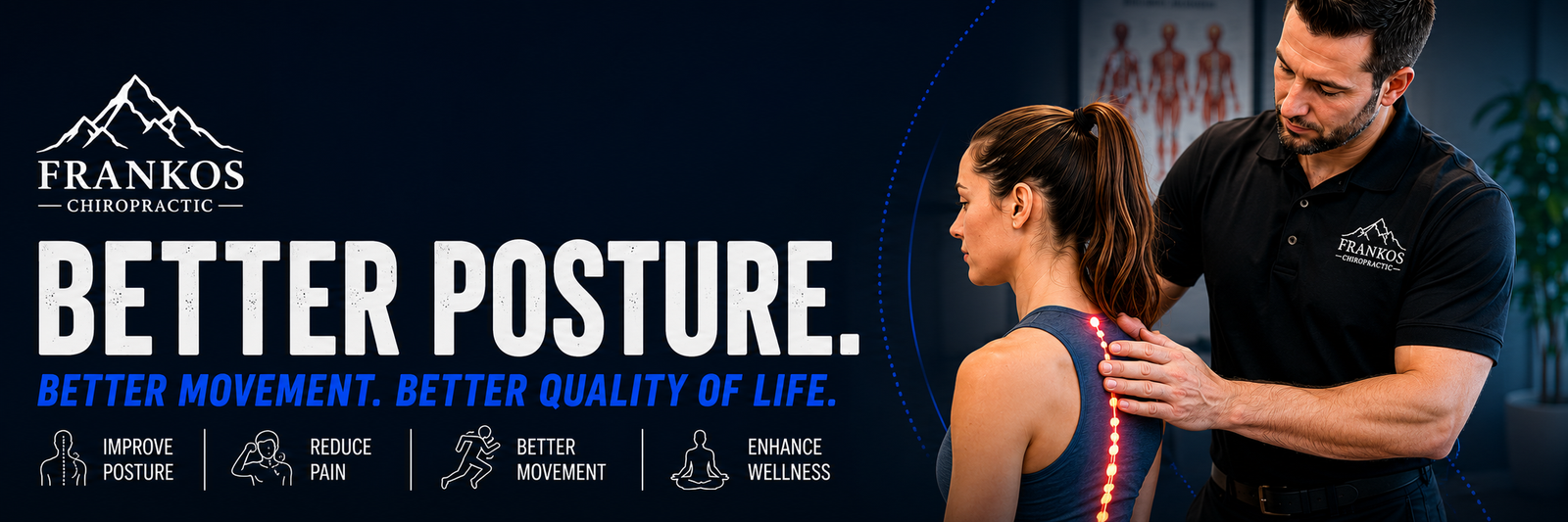
Posture problems are usually movement problems.
Most people already know they slouch. The real question is why the body keeps returning to the same pattern. Is it upper back stiffness, rib restriction, weak endurance, tight hip flexors, desk setup, phone posture, stress breathing, poor sleep position, repeated lifting, or lack of movement breaks?
You do not need a perfect posture. You need better options.
A rigid “perfect” posture is not the goal. A better goal is being able to move, sit, stand, breathe, rotate, lift, work, and train without the same areas constantly tightening up.
Posture strain may involve…
- Forward head posture and tech neck
- Rounded shoulders and upper-crossed patterns
- Upper trap, pec, scalene, and levator tension
- Rib, mid-back, and shoulder blade stiffness
- Anterior pelvic tilt, swayback, hip stiffness, and low back fatigue
- Desk, phone, driving, studying, gaming, and work positions
- Lifting, sports, and mobility limitations
Posture correction, explained clearly
Posture correction is not a brace, a reminder, or one adjustment.
Real posture care should find the pieces that keep pulling you back into the same position. That may include restricted spinal or rib motion, soft tissue tension, poor endurance, workstation setup, phone habits, lifting mechanics, hip mobility, or simply staying in one position too long.
The best posture is your next posture.
Supported posture matters, but the body also needs movement variety. A person can sit “correctly” and still hurt if they stay there too long. This page is built around mobility, endurance, ergonomics, and better movement options instead of shame-based “stand up straight” advice.
Frankos Chiropractic helps patients identify which positions, joints, muscles, and habits are likely feeding their symptoms so they can make realistic changes at work, school, in the car, at the gym, and at home.
Common posture and mobility patterns
What type of posture or mobility issue are you dealing with?
Patients often search for posture correction near Logan or Smithfield because they are tired of neck tension, upper back tightness, low back fatigue, shoulder stiffness, or feeling like they can never get comfortable.
Tech neck and forward head posture
Neck stiffness, upper trap tension, headaches, and shoulder tightness from phones, laptops, screens, studying, charting, or long desk days.
Rounded shoulders and upper-crossed patterns
Chest tightness, weak-feeling upper back, shoulder blade tension, neck strain, and posture that collapses forward during the day.
Desk, student, and driver posture
Pain or stiffness that builds with sitting, commuting, studying, computer work, gaming, or long periods in one position.
Rib and mid-back stiffness
Restricted rotation, shoulder blade pain, difficulty taking a deep breath comfortably, or a tight upper back that never seems to loosen.
Low back and pelvic posture patterns
Anterior pelvic tilt, swayback posture, stiff hips, tight hip flexors, glute weakness, and low back fatigue with standing or sitting.
Mobility limits for lifting and sports
Difficulty squatting, hinging, rotating, pressing overhead, golfing, running, lifting, or getting into good positions without compensation.
Posture fatigue and recurring tightness
You can sit up straight briefly, but your body quickly falls back into the same tight, tired, slouched pattern.
Work and family load patterns
Parents carrying kids, healthcare workers, desk workers, trades, drivers, students, and active families often repeat the same posture stress daily.
The Frankos approach
The exam decides the posture and mobility plan.
Posture care should be specific. The visit looks at symptoms, ergonomics, movement restrictions, soft tissue tension, breathing/rib mechanics, hip and pelvis position, activity demands, and red flags before deciding what treatment fits.
Posture and movement history
We review desk setup, phone use, driving, lifting, sleep, sports, work demands, school load, and where symptoms build during the day.
Red flag and nerve screen
Numbness, tingling, weakness, balance changes, trauma, chest pain, or progressive symptoms may need a different medical pathway first.
Neck and upper back mobility
Forward head posture, cervical motion, upper thoracic stiffness, rib motion, shoulder blade control, and rotation are assessed when appropriate.
Shoulder and rib mechanics
Rounded shoulders, pec tightness, shoulder blade motion, rib mobility, and overhead reach can all affect neck and upper back posture.
Low back, pelvis, hips, and ankles
Posture is not just the neck. Pelvis, hip mobility, glute control, ankle motion, and trunk stability can influence how the whole body stacks.
Simple home strategy
You leave with practical changes for screens, sitting, standing, mobility, microbreaks, lifting, and the exact habits that keep symptoms recurring.
Visit process
What happens at a posture and mobility visit?
You should leave with a clearer understanding of what is restricted, what is overloaded, which habits are feeding the problem, and what to do next.
Listen
We review desk setup, phone habits, driving, sleep, lifting, sports, symptoms, work/school demands, and goals.
Screen
We check for nerve symptoms, trauma concerns, progressive weakness, and medical red flags that change the plan.
Assess
We look at neck, upper back, ribs, shoulders, low back, pelvis, hips, and the movements that matter to you.
Treat
Care may include adjustments, soft tissue, IASTM, cupping, traction, rib work, hip mobility, or movement coaching.
Plan
You leave with practical posture, mobility, workstation, movement-break, and follow-up guidance.
Treatment options
Posture correction and mobility care may include more than an adjustment.
Frankos Chiropractic uses conservative options based on the exam. Some patients need upper back or rib mobility. Some need neck care. Some need soft tissue work. Some need hip mobility. Some need ergonomic changes. Some need referral or imaging if symptoms do not fit a routine posture pattern.
Chiropractic adjustments
When appropriate, adjustments may address restricted motion in the neck, upper back, ribs, low back, pelvis, hips, or extremities that affect movement.
Learn moreSoft tissue therapy
Muscle-focused care for upper traps, pecs, scalenes, levator scapulae, hip flexors, glutes, low back guarding, and recurring tightness.
Learn moreIASTM and cupping
Tools may be used for selected soft tissue restriction, chronic tension, and mobility limitations when appropriate.
Learn moreTraction / decompression
May be considered for selected neck or low back presentations when unloading changes symptoms and the exam supports that direction.
Learn moreMobility and movement coaching
Practical guidance for thoracic rotation, hip mobility, shoulder mobility, breathing mechanics, lifting positions, and daily movement breaks.
Learn moreDesk and phone ergonomics
Simple changes for screens, chair height, lumbar support, keyboard/mouse position, phone habits, driving posture, and study/work setups.
Learn moreSports and lifting mobility
Care for active patients who need better positions for lifting, running, golf, pickleball, hiking, training, and weekend sports.
Learn moreReferral when needed
Progressive neurological symptoms, severe pain, trauma, medical red flags, or non-mechanical symptoms may need urgent care or another provider.
Learn moreActive symptoms vs maintenance
Recurring posture pain is different than a quick wellness adjustment.
If posture-related symptoms include pain, headaches, arm symptoms, low back fatigue, reduced mobility, or repeated flare-ups, book a problem-focused visit so the pattern can be evaluated.
Book posture and mobility care if…
- You keep feeling tight in the same areas every day.
- Desk, phone, driving, studying, or work posture triggers symptoms.
- You have headaches, neck tension, upper trap pain, or shoulder blade tightness.
- You feel locked up in the upper back, ribs, hips, or low back.
- You want better movement for lifting, sports, work, or daily life.
Maintenance care is different.
Wellness visits are best for appropriate patients who are not trying to evaluate new symptoms, worsening pain, nerve symptoms, or functional limitations. If posture pain is the main complaint, choose a problem-focused visit first.
Safety first
When posture-related symptoms need urgent medical care first.
Most posture and mobility problems are not emergencies, but some symptoms should not be treated like routine tightness. Severe, progressive, neurological, chest-related, or trauma-related symptoms need the right medical pathway first.
Do not wait on these symptoms.
Seek urgent or emergency care for chest pain, shortness of breath, severe trauma, fever with severe spine pain, progressive weakness, numbness, loss of coordination, trouble walking, loss of bowel or bladder control, severe headache with neurological symptoms, or symptoms that feel like an emergency.
Chest or emergency signs
Chest pain, shortness of breath, fainting, severe dizziness, or symptoms that do not feel musculoskeletal.
Nerve signs
Progressive weakness, numbness, coordination changes, trouble walking, or loss of bowel/bladder control.
Trauma or illness signs
Severe injury, fever with severe spine pain, unexplained weight loss, or sudden severe symptoms.
What to do at home
Posture self-care should be simple enough to actually use.
The goal is not a 45-minute routine you will quit after three days. The goal is a few high-value changes repeated often enough to matter.
Usually helpful starting points
- Raise screens closer to eye level when possible.
- Bring keyboard, mouse, and phone closer instead of reaching forward all day.
- Use a supported sitting position, then change positions often.
- Take short movement breaks before symptoms build.
- Use gentle upper back, shoulder blade, hip, and neck mobility if it does not worsen symptoms.
Stop relying on reminders alone.
Most posture apps, braces, or sticky notes fail because they only remind you to sit up. If your upper back is stiff, hips are locked up, ribs do not rotate, or work setup keeps pulling you forward, reminders are not enough.
Local posture and mobility care
Posture correction and mobility care near Logan, Smithfield, and Cache Valley.
Frankos Chiropractic is located at 115 N Main St in Smithfield, Utah. Patients visit from Logan, North Logan, Hyde Park, Richmond, Lewiston, Providence, Hyrum, Nibley, Wellsville, Preston, Franklin, and nearby communities for posture and mobility care.
Frankos Chiropractic
115 N Main St, Smithfield, UT 84335
One Smithfield office serving Cache Valley with practical, exam-based conservative care for tech neck, forward head posture, rounded shoulders, upper back stiffness, rib mobility limits, hip stiffness, low back fatigue, desk posture strain, and movement limitations.
Related pages
Build the right internal pathway for posture and mobility patients.
Posture and mobility patients often need to understand neck pain, headaches, shoulders, back pain, sports mobility, soft tissue therapy, and chiropractic care options before they book. These pages help them choose the right next step.
Frequently asked questions
Posture correction and mobility questions before you schedule.
These answers are educational and do not replace an exam. Your care plan depends on your history, symptoms, exam findings, goals, ergonomics, movement habits, and whether chiropractic care is appropriate.
Can a chiropractor help posture?
Chiropractic care may help selected posture-related pain and mobility patterns when restricted joints, muscle guarding, soft tissue tension, ergonomics, or movement habits are contributing. The goal is not forcing a perfect rigid posture. The goal is better motion, better load tolerance, and fewer recurring triggers.
What is posture correction?
Posture correction is not just telling someone to sit up straight. A better approach evaluates mobility, strength habits, joint restrictions, soft tissue tension, workstation setup, phone habits, lifting positions, and the daily positions that keep symptoms returning.
What is tech neck?
Tech neck is a common phrase for neck and upper back strain associated with prolonged phone, laptop, gaming, studying, or desk posture. It is not a formal diagnosis, but it describes a common pattern involving forward head posture, upper trap tension, and neck stiffness.
Is there one perfect posture?
No. The body usually does best with variety. A neutral, supported posture can reduce strain, but staying in any one position too long can still create stiffness. Movement breaks and better mobility matter as much as posture awareness.
What areas are checked for posture and mobility?
Depending on symptoms, we may check the neck, upper back, ribs, shoulders, shoulder blades, low back, pelvis, hips, ankles, breathing mechanics, and the movement patterns that matter for work, school, sports, or daily life.
Can posture cause headaches?
Some headache patterns may be influenced by neck tension, upper trap tightness, suboccipital irritation, screen posture, and upper back stiffness. Headaches still need screening for warning signs and other causes.
Can mobility work help lifting or sports?
Better mobility can help selected patients move into safer, stronger positions for squatting, hinging, rotating, pressing, running, golf, and sports. Pain, weakness, instability, or injury signs should be evaluated first.
What should I change at my desk?
Common starting points include screen closer to eye level, feet supported, elbows relaxed, lower back supported, keyboard and mouse close, phone raised instead of looking down, and frequent movement breaks.
When should posture-related pain get urgent care?
Seek urgent care for chest pain, shortness of breath, severe trauma, progressive weakness, numbness, loss of coordination, loss of bowel/bladder control, fever with severe spine pain, or symptoms that feel like an emergency.
Where is Frankos Chiropractic located?
Frankos Chiropractic is located at 115 N Main St in Smithfield, Utah and serves Cache Valley from one Smithfield office.
Schedule at Frankos Chiropractic
Ready to find out what is driving your posture and mobility pattern?
Book online or call the Smithfield office. If you are a new patient, complete intake forms before your visit when possible. If you have chest pain, shortness of breath, severe trauma, progressive weakness, numbness, loss of coordination, or urgent symptoms, seek urgent medical care first.
Frankos Chiropractic • 115 N Main St, Smithfield, UT 84335 • One Smithfield office serving Cache Valley
Chiropractic care for posture correction & mobility care
We look at movement, joint restriction, muscle tension, posture, and daily activities that may contribute to your symptoms.
Find contributing factors
We look beyond the painful spot when needed.
Support mobility
Care may focus on better movement and less irritation.
Clear next steps
You leave knowing what we recommend and why.
Ready to schedule?
Book online or call Frankos Chiropractic if you have questions before scheduling.