Headache chiropractor in Smithfield, Utah
Headache Care for Neck Tension, Upper Trap Tightness, and Posture Strain
Headaches can come from many causes. Some are medical emergencies. Some are migraines. Some are tension-related. Some appear connected to the neck, upper back, jaw, posture, stress, screens, sleep, or whiplash. Frankos Chiropractic focuses on the headache patterns where neck mechanics, muscle guarding, and movement may be part of the problem.
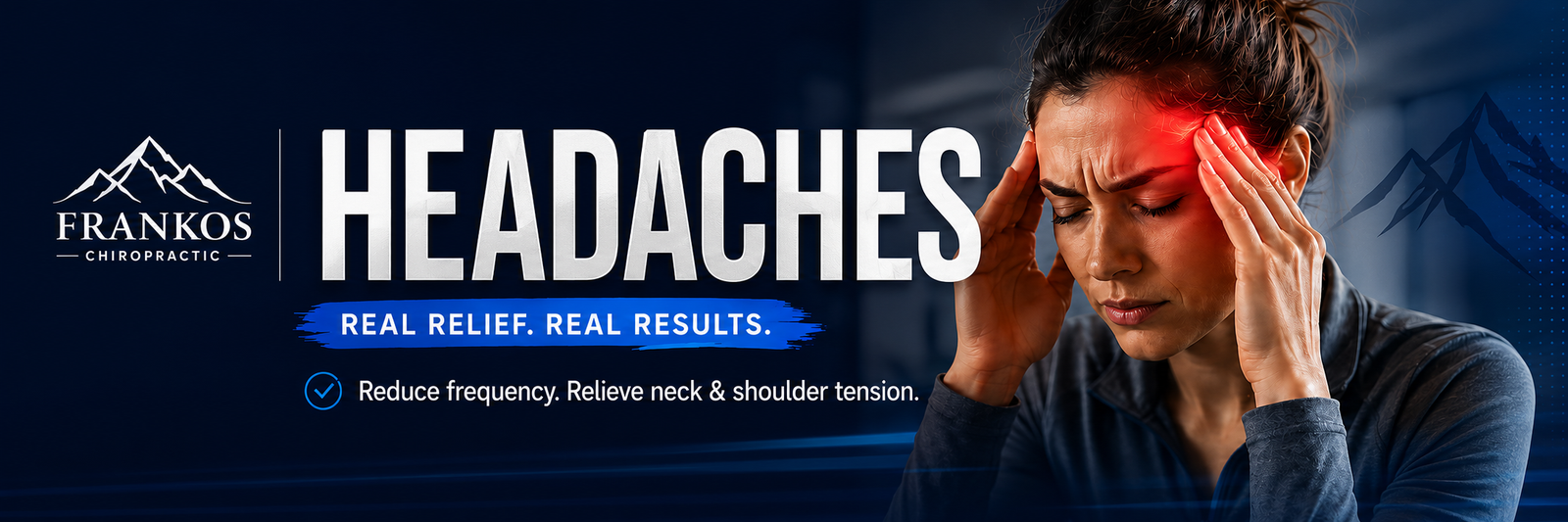
Not every headache belongs in a chiropractic office.
That is exactly why the first step is not treatment. The first step is listening, screening, and deciding whether the headache pattern looks appropriate for conservative chiropractic care or whether urgent care, primary care, imaging, neurology, dental/TMJ care, or another provider makes more sense.
Book based on the pattern, not the pain level.
A headache visit should not automatically mean a neck adjustment. It should clarify whether the pattern appears related to neck tension, restricted motion, posture strain, whiplash, jaw tension, upper back mechanics, or something that needs medical evaluation.
Headaches may overlap with…
- Neck pain and stiffness
- Base-of-skull tension
- Upper trap and shoulder blade tightness
- Desk, phone, and driving posture
- Jaw clenching or TMJ tension
- Whiplash after an auto accident
- Sleep, stress, dehydration, skipped meals, and other non-spine triggers
Common headache patterns
What type of headache pattern are you dealing with?
Patients often search for a headache chiropractor near Logan or Smithfield because they feel head pain and neck tension together. These are common patterns we screen and evaluate.
Headaches with neck tension
Pressure or aching that seems to start in the neck, base of the skull, upper traps, or shoulder blade area.
Cervicogenic-style headache patterns
Head pain that may be connected to cervical joints, soft tissue, restricted neck motion, or symptoms that worsen with neck movement.
Tension-type headache patterns
Band-like pressure, forehead tension, scalp tightness, upper trap tightness, or stress/posture-related muscle guarding.
Headaches with desk and phone posture
Symptoms that build with laptops, phones, studying, charting, driving, or long days looking down.
Headaches after an auto accident
Post-accident headaches may involve whiplash, neck pain, dizziness, shoulder tension, jaw tension, or delayed symptoms.
Headaches with jaw or upper trap tension
Jaw clenching, TMJ tension, upper neck tightness, and shoulder tension can overlap with headache patterns.
Headaches with shoulder and upper back stiffness
Upper thoracic restriction, rib irritation, shoulder mechanics, and trap guarding can feed neck and head tension.
Migraine-like or recurring headaches
Recurring or severe headaches need proper medical screening. Chiropractic care may be considered when neck, posture, or muscle tension appears to be part of the picture.
The Frankos approach
The exam decides whether chiropractic care fits.
Headache care should be careful. The visit looks for warning signs, headache type, neck motion limits, muscle guarding, upper back restriction, posture strain, accident history, and whether symptoms need another provider.
Headache history
We review location, timing, frequency, triggers, severity, duration, medication use, sleep, stress, injury history, and how symptoms behave.
Red flag screen
The visit should screen for sudden severe headache, neurological signs, fever, trauma, vision/speech/walking problems, or other symptoms that need urgent care.
Neck motion testing
We check range of motion, stiffness, pain with movement, guarded motion, upper cervical irritation, and whether neck positions influence symptoms.
Upper back and rib motion
The neck does not work alone. Upper thoracic and rib restriction can feed shoulder and neck tension.
Muscle and soft tissue
Suboccipitals, upper traps, scalenes, levator scapulae, jaw tension, pecs, and shoulder blade muscles may be involved.
Posture and daily triggers
Desk setup, phone use, driving, pillows, sleep habits, gym training, stress, hydration, and repetitive daily loading are reviewed.
Visit process
What happens at a headache visit?
You should leave with a clearer understanding of what was screened, what appears to be contributing, what treatment was chosen, and what to do between visits.
Listen
We review headache location, timing, triggers, severity, frequency, stress, sleep, work posture, medications, and injury history.
Screen
We check for warning signs that need urgent care, primary care, neurology, imaging, or another provider.
Test movement
We look at neck motion, upper back motion, shoulder mechanics, jaw/upper trap tension, and whether movement changes symptoms.
Treat
Care may include adjustments, low-force care, soft tissue, IASTM, cupping, traction, or posture guidance when appropriate.
Plan
You leave with practical guidance for triggers, positions, movement, hydration, screen habits, and follow-up timing.
Treatment options
Headache care may include more than a neck adjustment.
Frankos Chiropractic uses conservative options based on the exam. Some patients need neck mobility. Some need soft tissue work. Some need upper back or rib work. Some need posture changes. Some need medical referral instead.
Chiropractic adjustments
When appropriate, cervical, upper thoracic, rib, or shoulder-area adjustments may help restore motion and reduce mechanical irritation.
Learn moreLow-force and modified care
Care can be modified for sensitive patients, post-accident cases, pregnancy, youth, older adults, or anyone who prefers a lighter approach.
Learn moreSoft tissue therapy
Muscle-focused work may be used for suboccipitals, upper traps, scalenes, levator scapulae, jaw-related tension, and shoulder blade tightness.
Learn moreIASTM and cupping
Tools may be used for selected chronic soft tissue tension, upper trap tightness, and mobility limitations.
Learn moreTraction / decompression
May be considered in selected neck-related presentations when unloading changes symptoms and the exam supports that direction.
Learn morePosture and movement guidance
Simple changes for screens, phones, pillows, driving, workouts, and daily habits can reduce repeat irritation.
Learn moreAuto accident care
Post-crash headaches and neck pain require more careful screening, documentation, and the right visit type.
Learn moreReferral when needed
If headache symptoms suggest another provider, imaging, urgent care, or co-management, the plan should change accordingly.
Learn moreActive symptoms vs maintenance
Recurring or changing headaches are not a quick wellness visit.
Headaches that are new, worsening, post-accident, severe, changing, or associated with neurological symptoms need more evaluation than a routine maintenance adjustment.
Book active headache care if…
- Headaches are new, worsening, or changing.
- They are connected to neck pain, stiffness, or shoulder tension.
- They started after an auto accident, fall, or sports injury.
- You have headaches with jaw tension, posture strain, or upper trap tightness.
- You are unsure whether chiropractic care is appropriate.
Maintenance care is different.
Wellness or membership visits are best for appropriate patients who are not trying to evaluate a new headache pattern, post-accident issue, or worsening symptoms. If headaches are the main complaint, choose a problem-focused visit first.
Safety first
When a headache needs urgent medical care first.
Some headaches can be a sign of a serious condition. Do not wait for a chiropractic appointment if the headache feels like an emergency, is sudden and severe, or comes with neurological or infection-like symptoms.
Do not wait on these symptoms.
Seek urgent or emergency care for the worst headache of your life, sudden severe headache, headache with confusion, fainting, high fever, numbness or weakness on one side, stiff neck, vision trouble, speech trouble, walking trouble, unexplained vomiting, severe trauma, or stroke-like symptoms.
Sudden or severe
Worst headache of your life, thunderclap onset, sudden severe pain, or a dramatic change from your usual pattern.
Neurological signs
Confusion, fainting, numbness, weakness, paralysis, trouble seeing, speaking, or walking.
Illness or trauma signs
High fever, stiff neck, vomiting not clearly explained, severe trauma, or symptoms after a head/neck injury.
What to do at home
Headache self-care should reduce triggers, not provoke symptoms.
Until you know what is driving the headache pattern, avoid aggressive neck stretching, repeated cracking, and heavy loading into symptoms. Safer starting points usually focus on reducing obvious triggers.
Usually helpful early steps
- Hydrate and avoid skipped meals when possible.
- Change screen, phone, and driving posture frequently.
- Use easy neck and shoulder blade motion if it does not worsen symptoms.
- Reduce jaw clenching and upper trap shrugging.
- Use heat or ice based on comfort and your doctor’s guidance.
Stop guessing if the headache is unusual.
If the headache is sudden, severe, different, associated with neurological symptoms, after trauma, or worsening quickly, seek medical care first. If it is recurring with neck tension and posture strain, call and ask which visit type makes sense.
Local headache care
Headache chiropractor near Logan, Smithfield, and Cache Valley.
Frankos Chiropractic is located at 115 N Main St in Smithfield, Utah. Patients visit from Logan, North Logan, Hyde Park, Richmond, Lewiston, Providence, Hyrum, Nibley, Wellsville, Preston, Franklin, and nearby communities for headache care when neck tension, posture strain, or upper back mechanics may be part of the pattern.
Frankos Chiropractic
115 N Main St, Smithfield, UT 84335
One Smithfield office serving Cache Valley with practical, exam-based chiropractic care for selected headache patterns involving neck tension, upper trap tightness, posture strain, and whiplash-type symptoms.
Related pages
Build the right internal pathway for headache patients.
Headache patients often need to understand neck pain, posture, shoulders, soft tissue, auto accidents, and service options before they book. These pages help them choose the right next step.
Frequently asked questions
Headache questions before you schedule.
These answers are educational and do not replace an exam. Your care plan depends on your history, symptoms, exam findings, goals, and whether chiropractic care is appropriate.
Can a chiropractor help headaches?
Chiropractic care may help selected patients when headaches appear connected to neck stiffness, upper back restriction, muscle tension, posture strain, or a cervicogenic-style pattern. The visit should screen for warning signs and determine whether chiropractic care is appropriate.
What is a cervicogenic headache?
A cervicogenic headache is head pain that may be referred from the neck. It can involve cervical joints, soft tissues, nerve roots, injury history, and reduced neck range of motion.
Can neck tension cause headaches?
Neck and upper trap tension can contribute to some headache patterns. The exam should check the neck, upper back, shoulder blade region, jaw tension, and daily triggers rather than assuming one cause.
Are headaches always safe to treat with chiropractic care?
No. Sudden severe headaches, headaches with neurological symptoms, fever, stiff neck, fainting, vision changes, speech problems, walking trouble, trauma, or worsening patterns need medical screening and may require urgent care.
Can you help headaches after an auto accident?
Frankos Chiropractic sees patients for post-accident headaches, neck pain, whiplash-type symptoms, and shoulder tension. Severe trauma, neurological symptoms, or emergency signs should be evaluated urgently first.
Do migraines respond to chiropractic care?
Migraine is complex and should be medically diagnosed when appropriate. Chiropractic care is not presented as a cure for migraine, but some patients with migraine-like symptoms also have neck tension or posture-related factors worth evaluating.
What should I avoid during a headache flare?
Avoid aggressive neck stretching, repeatedly cracking your neck, heavy overhead lifting, long phone posture, dehydration, skipped meals, and positions that clearly worsen symptoms.
Do I need imaging for headaches?
Not every headache needs imaging. Imaging or referral may be discussed when headaches are sudden, severe, changing, associated with neurological symptoms, related to trauma, or not improving as expected.
Do you accept insurance for headache-related visits?
Frankos Chiropractic accepts most major insurance plans. Coverage varies by plan, deductible, visit type, and medical necessity. The office can help verify benefits.
Where is Frankos Chiropractic located?
Frankos Chiropractic is located at 115 N Main St in Smithfield, Utah and serves Cache Valley from one Smithfield office.
Schedule at Frankos Chiropractic
Ready to find out whether your headaches may be connected to your neck?
Book online or call the Smithfield office. If you are a new patient, complete intake forms before your visit when possible. If your headache is sudden, severe, unusual, post-trauma, or comes with neurological symptoms, seek urgent medical care first.
Frankos Chiropractic • 115 N Main St, Smithfield, UT 84335 • One Smithfield office serving Cache Valley