Frankos Chiropractic Blog
Understanding IT Band Tightness and Outer Hip Pain: Causes, Symptoms, and Solutions
Helpful patient education for Smithfield, Logan, and Cache Valley.
IT Band & Outer Hip Pain Guide • Smithfield, Utah
IT Band Pain and Outer Hip Pain: What’s Actually Going On—and What Can Help?
Lateral knee pain and outer hip pain are often both called an “IT band problem,” but they are not always the same condition. This guide explains the difference, why aggressive stretching may not be the answer, and how progressive rehabilitation can help.

Pain along the outside of the hip, thigh, or knee is often described as an “IT band problem.” That description is common, but it can also be misleading.
The iliotibial band—or IT band—is a thick band of connective tissue running along the outside of the thigh. It helps transmit forces between the hip and knee and contributes to stability during walking, running, hiking, cycling, and other weight-bearing activities.
But the IT band itself is not a muscle, and many cases of “IT band tightness” are not simply caused by a band that needs to be stretched or rolled until it becomes loose.
In fact, pain at the outside of the knee and pain at the outside of the hip often represent different conditions and may require different rehabilitation strategies.
Understanding that distinction can make treatment much more effective.
Patient Education
The IT Band Is More Than a “Tight Muscle”
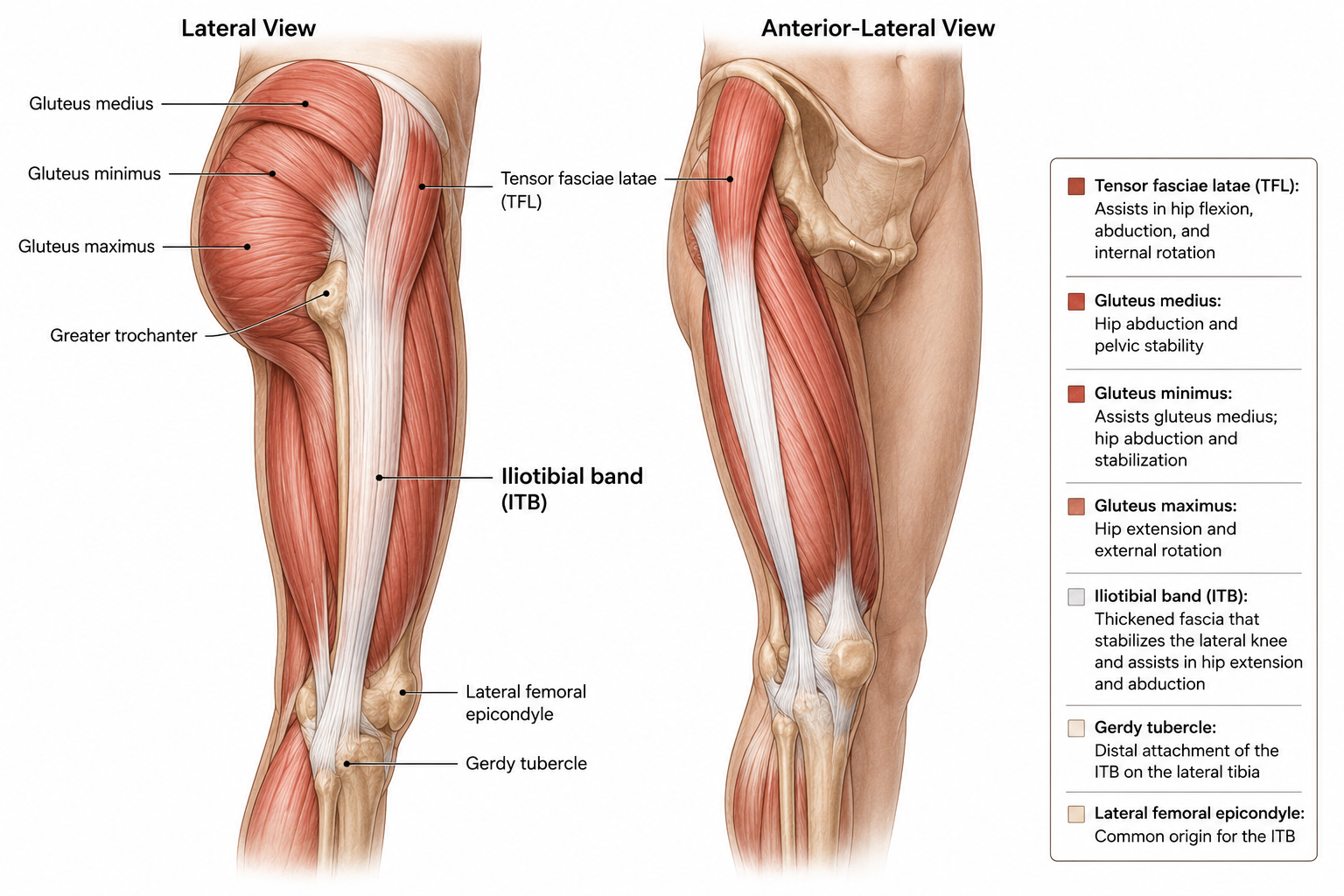
The iliotibial band is a strong fascial structure connected proximally with the tensor fasciae latae and gluteus maximus and distally with several structures around the lateral knee.
Because it is dense connective tissue rather than contractile muscle, it does not behave like a hamstring or calf muscle.
This matters because one of the most common approaches to IT band problems has traditionally been:
- Stretch the IT band.
- Foam roll it aggressively.
- Massage it until it “loosens.”
- Repeat.
That may temporarily feel good for some people, but current research does not support the idea that we can substantially lengthen or mechanically release the IT band through a brief stretching or foam-rolling session.
A better question is:
Why is this area being overloaded in the first place?
That leads us to two different clinical patterns.
Patient Education
Pattern 1: IT Band Syndrome at the Outside of the Knee
Classic iliotibial band syndrome, commonly abbreviated ITBS, is predominantly an overuse-related lateral knee condition.
It is especially common in runners and may also occur in cyclists and people participating in repetitive endurance activities.
Symptoms often include:
- Pain near the outside of the knee.
- Pain that develops after running for a certain distance or time.
- Symptoms with repetitive knee bending and straightening.
- Increased symptoms with downhill running.
- Pain that improves when activity stops but returns when training resumes.
ITBS was historically described as a “friction syndrome,” in which the IT band supposedly snapped backward and forward across the lateral femoral epicondyle.
Modern anatomical and biomechanical research suggests that this explanation is probably incomplete. Compression of sensitive tissues beneath the IT band appears to be an important component of the condition.
Training load, running mechanics, hip and knee control, strength, terrain, and individual anatomy may all contribute.
There is no single movement fault that explains every case.
Patient Education
Pattern 2: Pain at the Outside of the Hip
Pain centered over the bony prominence on the outside of the hip—the greater trochanter—should not automatically be labeled IT band syndrome.
A common diagnosis in this region is greater trochanteric pain syndrome (GTPS).
GTPS is an umbrella term that can include several structures, but research increasingly identifies gluteus medius and gluteus minimus tendinopathy as important sources of lateral hip pain.
People with gluteal tendinopathy or GTPS commonly report:
- Tenderness directly over the outside of the hip.
- Pain lying on the affected side.
- Pain walking or hiking for longer periods.
- Pain climbing stairs or hills.
- Pain during single-leg activities.
- Pain when standing with most of the body weight shifted onto one hip.
- Difficulty sleeping because of hip discomfort.
This is clinically important because aggressively stretching the outside of the hip may not be the best solution.
Patient Education
Why Aggressive “IT Band Stretching” Can Sometimes Make Hip Pain Worse
The gluteus medius and minimus tendons attach around the greater trochanter.
When the leg moves significantly across the body’s midline into hip adduction, these tendons can become compressed against the greater trochanter.
That means positions commonly used as “IT band stretches” can actually increase compression in someone whose primary problem is gluteal tendinopathy.
Examples can include:
- Aggressive cross-body IT band stretches.
- Hanging the hip outward while standing.
- Sitting with the legs crossed for prolonged periods.
- Sleeping directly on the painful hip.
- Some deep hip-opening stretches.
This does not mean stretching is inherently harmful.
It means the exercise needs to match the diagnosis.
If lateral hip pain is caused primarily by a sensitized gluteal tendon, repeatedly compressing that tendon because it feels “tight” may be counterproductive.
Patient Education
What About Foam Rolling the IT Band?
Foam rolling is another popular treatment.
Some people enjoy it and experience temporary improvements in how the thigh feels. There is nothing inherently wrong with using a foam roller when it is comfortable.
However, foam rolling should not be described as physically “breaking up” the IT band, scar tissue, or adhesions.
Research evaluating immediate changes in IT-band stiffness has not demonstrated meaningful reduction in IT-band stiffness after a single session of foam rolling or stretching.
A more reasonable approach is to use foam rolling as an optional symptom-management or warm-up technique, while making strength, load management, and movement capacity the foundation of rehabilitation.
And there is rarely a reason to grind aggressively over a painful lateral knee or directly over an irritated greater trochanter.
Patient Education
The Role of Hip Strength
Hip strengthening is one of the more consistent components of conservative rehabilitation for both ITBS and lateral hip tendon problems.
That does not mean every patient with ITBS simply has “weak glutes.”
The relationship is more complicated than that.
But strengthening the muscles responsible for controlling the pelvis, hip, femur, and knee can improve the body’s ability to tolerate repetitive loading.
Depending on the patient, rehabilitation may include:
Standing Hip-Abduction Wall Press
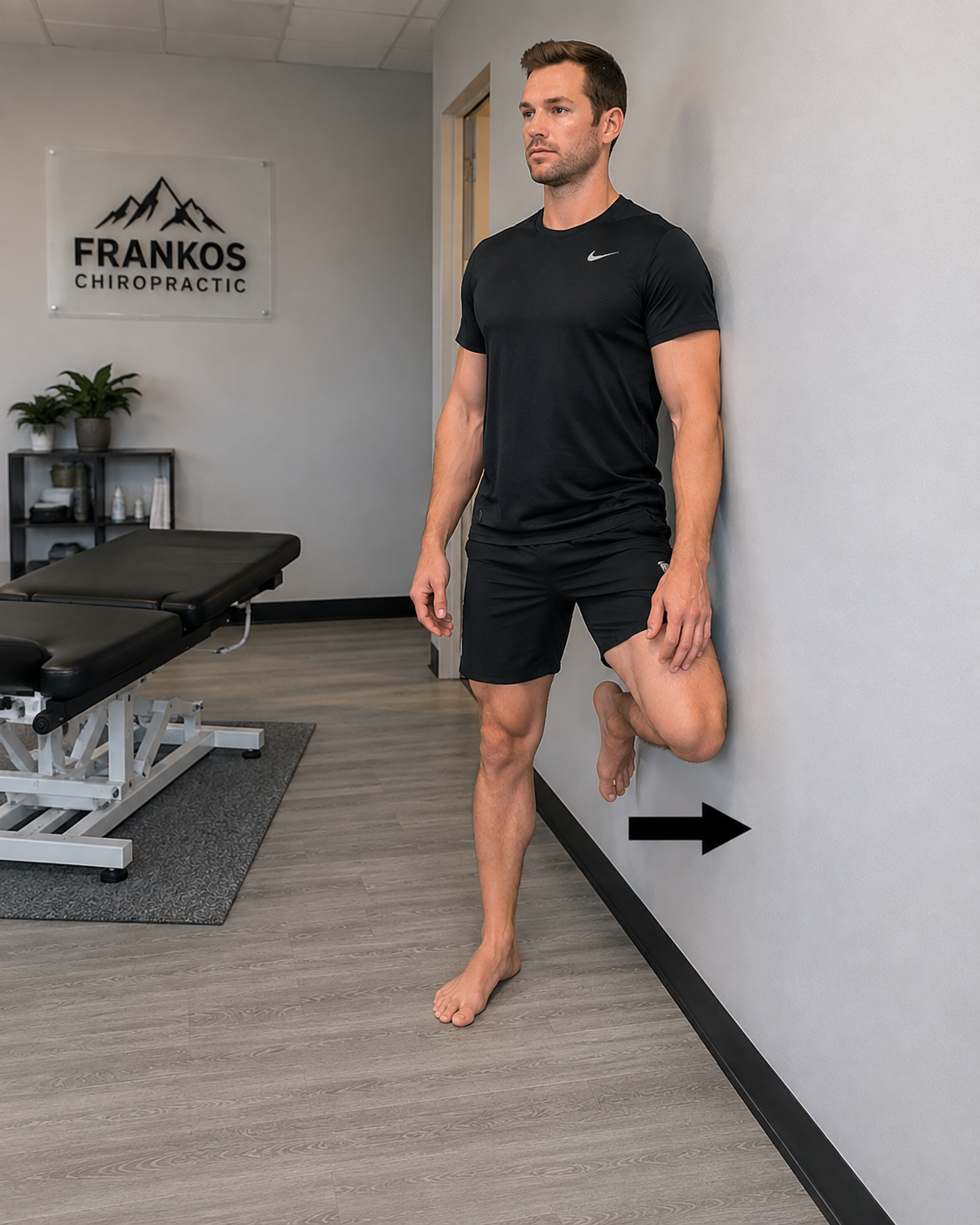
Stand beside a wall with the affected leg away from the wall.
Bend the opposite knee slightly and press it into the wall while keeping your pelvis level.
You should feel the muscles along the outside of the standing hip working.
The goal is controlled activation without forcing the painful hip into an extreme position.
Glute Bridge
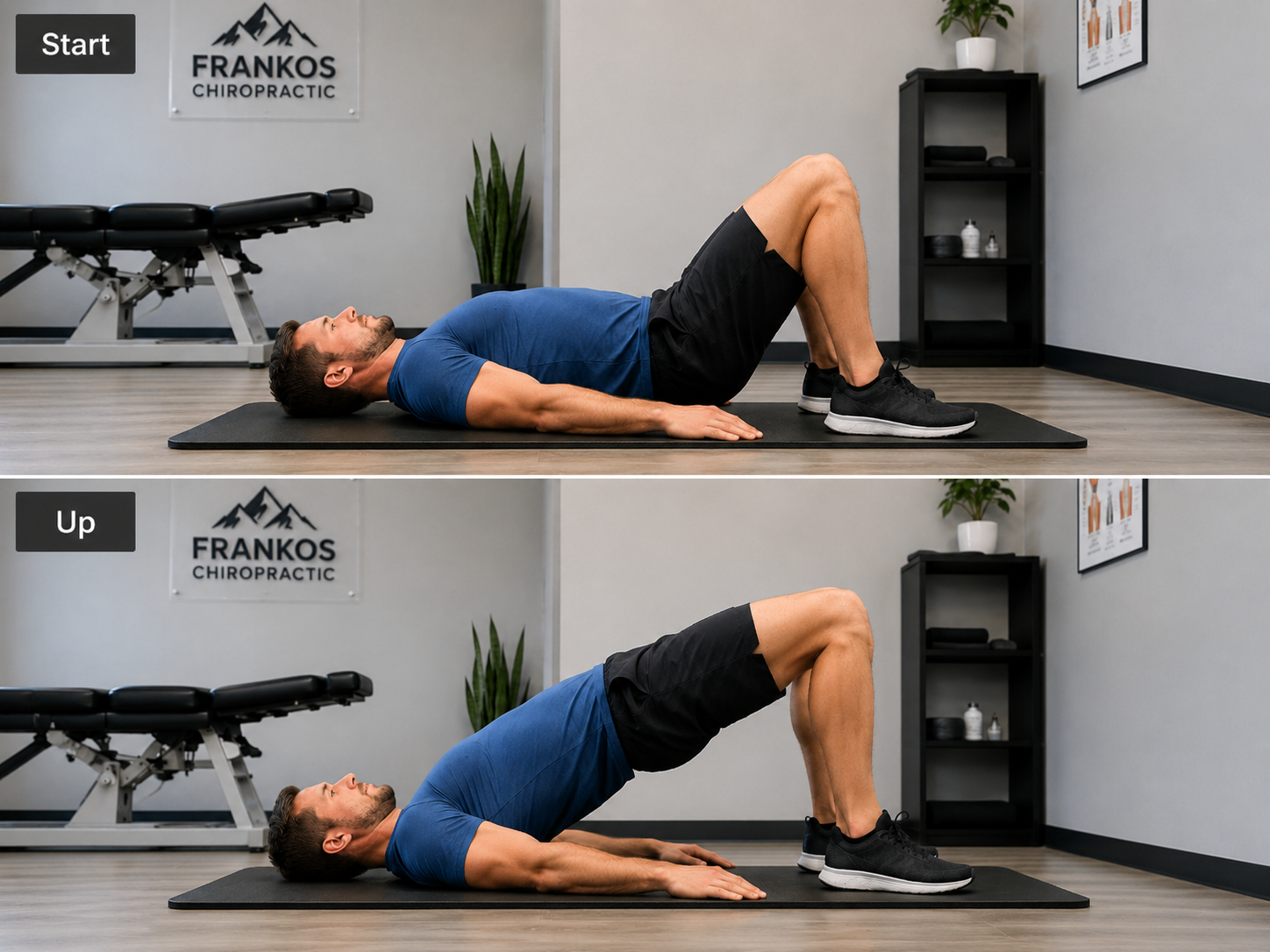
Lie on your back with the knees bent.
Brace comfortably through the trunk and lift the hips while maintaining control through the pelvis.
Avoid excessively arching the lower back.
As capacity improves, bridges can be progressed rather than simply adding more repetitions forever.
Controlled Sit-to-Stand or Squat
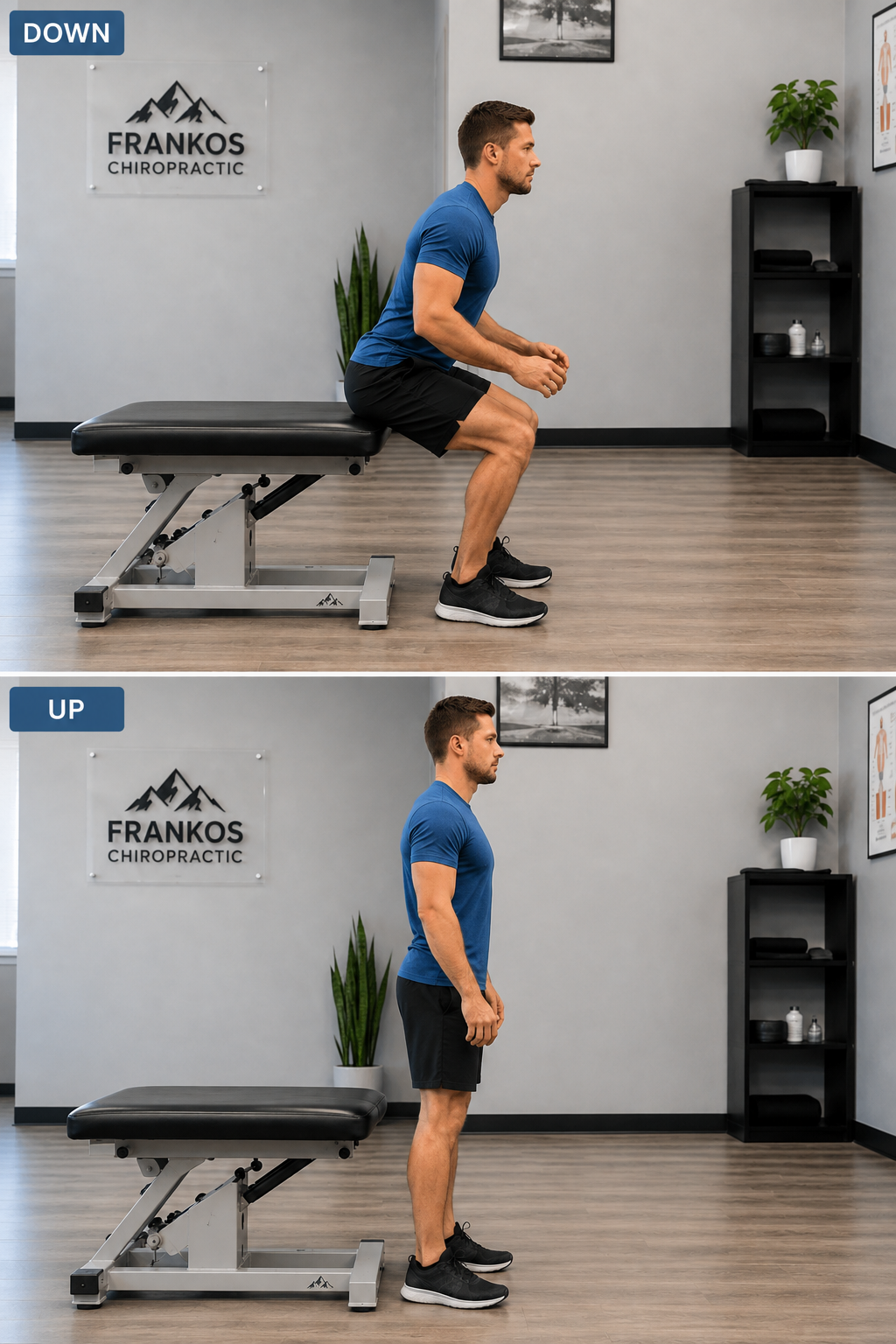
Hip rehabilitation eventually needs to move beyond isolated exercises.
Controlled sit-to-stands and squatting patterns help train the hip musculature during functional weight bearing.
Keep the pelvis controlled and allow the knee and hip to move naturally rather than forcing the legs into an artificially rigid position.
Step-Up or Step-Down Training
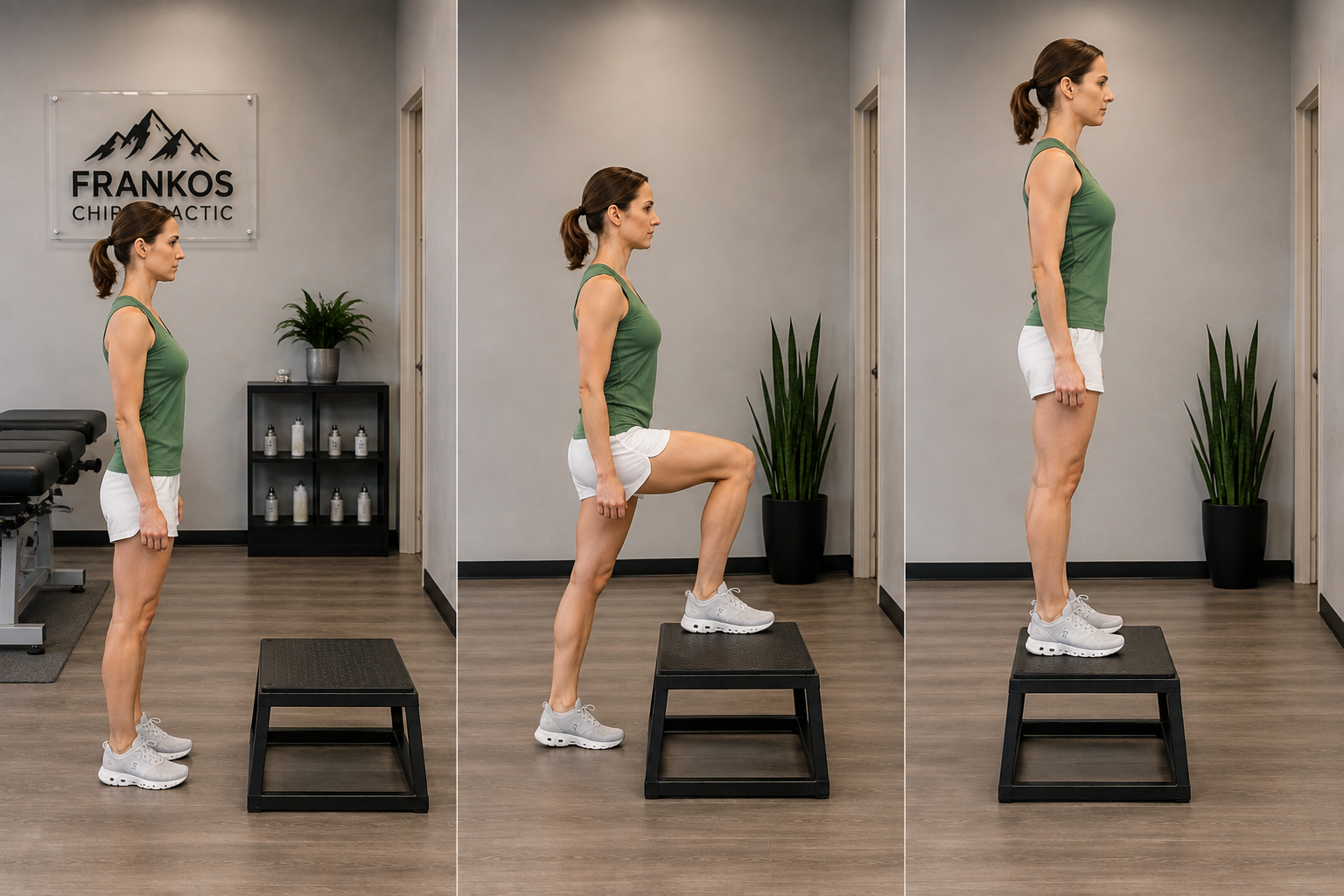
Stairs, hills, hiking, and running all require the pelvis and femur to be controlled while the body is supported on one leg.
Step training can therefore be useful as rehabilitation progresses.
The goal is smooth control—not simply completing as many repetitions as possible.
Lateral Band Walking
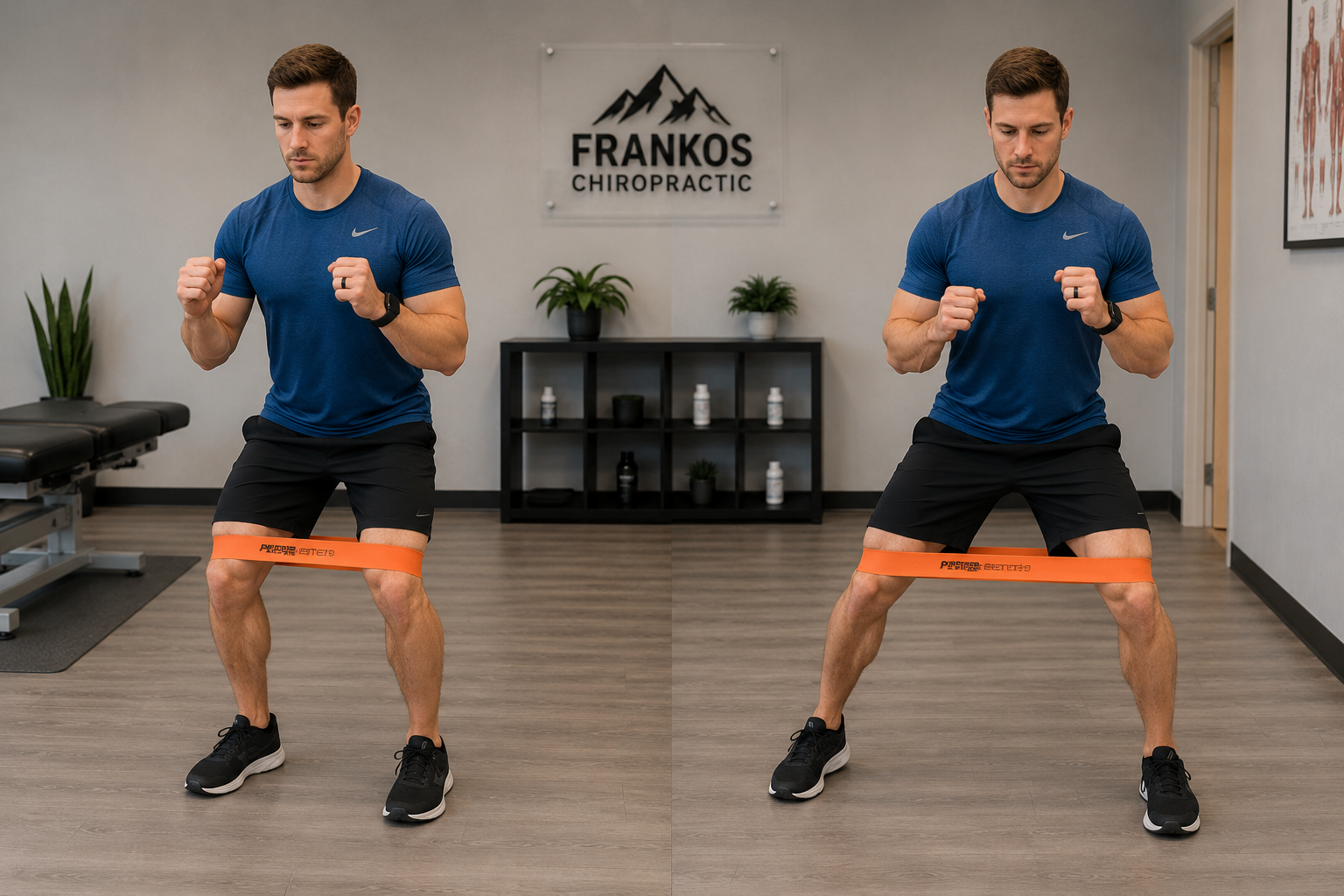
A resistance band can be used to progressively challenge the hip abductors.
Maintain an athletic stance and move deliberately rather than taking large uncontrolled steps.
This should create muscular effort rather than sharp pain.
Patient Education
Should You Stretch at All?
Yes—when there is an actual mobility restriction that matters.
Hip-flexor, quadriceps, calf, or other mobility work may be useful depending on the individual.
But rehabilitation should not revolve around the idea that every person with lateral knee or hip pain needs to make the IT band longer.
For someone with lateral hip tendon pain, aggressive stretches that pull the hip deeply across the midline may actually increase tendon compression.
For someone with distal ITBS at the knee, comfortable mobility work can be an adjunct, but improving training tolerance, strength, and movement capacity is usually more important than trying to permanently stretch the IT band itself.
Patient Education
Load Management Is Often the Missing Piece
Strengthening an irritated tissue while continuing to overload it every day can make rehabilitation frustrating.
An important part of recovery is temporarily modifying the activities that repeatedly reproduce symptoms.
That does not necessarily mean complete rest.
For runners, this could mean temporarily adjusting:
- Weekly mileage.
- Running frequency.
- Long runs.
- Downhill running.
- Hill volume.
- Running pace.
- Sudden increases in training.
- Repetitive running on heavily cambered surfaces.
For hikers, it may mean temporarily reducing steep descents or unusually long hikes.
For lateral hip pain, reducing prolonged positions that compress the gluteal tendons may also help.
For example, a person who experiences pain sleeping on one side may benefit from sleeping on the opposite side with support between the knees or sleeping on the back when comfortable.
The objective is not to avoid loading forever.
The objective is to reduce excessive or provocative loading long enough to rebuild the tissue’s capacity and then gradually return to the desired activity.
Patient Education
What About Running Form?
Running mechanics can matter, but there is no universal “perfect” running form.
Research has identified biomechanical differences in some runners with ITBS, but findings are not identical across every patient.
For that reason, gait retraining should be individualized.
A runner may need consideration of:
- Training errors.
- Cadence and stride characteristics.
- Hip and knee control.
- Fatigue-related changes in mechanics.
- Footwear changes.
- Running surface.
- Hill exposure.
- Previous injury.
- Strength and conditioning history.
Simply telling every runner to “activate the glutes” or forcing every person into the same running style is unlikely to solve the problem.
Patient Education
Where Chiropractic Care Can Fit
Evidence-based chiropractic management of lateral hip or IT-band-related pain should involve more than simply adjusting the pelvis.
A musculoskeletal evaluation may include examination of the:
- Hip.
- Knee.
- Lumbar spine.
- Pelvis.
- Muscle and tendon system.
- Strength and functional control.
- Walking or running mechanics when relevant.
- Training history and recent workload changes.
This is important because pain around the hip or lateral thigh can sometimes originate from the lumbar spine, hip joint, gluteal tendons, or other structures rather than from the IT band itself.
Chiropractic treatment may incorporate manual therapy when clinically appropriate, particularly when pain or restricted motion is interfering with rehabilitation.
Soft-tissue mobilization, instrument-assisted techniques, joint mobilization, or manipulation may be used selectively as adjuncts to care.
However, passive therapy should not be presented as permanently “realigning” the pelvis, breaking up an IT band, or correcting the underlying problem by itself.
The longer-term objective is to improve the patient’s ability to tolerate the activities that matter to them.
That frequently requires a combination of:
accurate assessment + appropriate load management + progressive exercise + return to activity.
Patient Education
Do IASTM or Cupping Have a Role?
Instrument-assisted soft-tissue mobilization (IASTM) may produce short-term changes in pain or range of motion for some musculoskeletal conditions, although the certainty and condition-specific evidence vary.
That is different from claiming that an instrument physically breaks apart scar tissue or adhesions.
Cupping may also provide temporary symptom relief for some musculoskeletal pain conditions, but evidence is heterogeneous and does not establish that cupping heals ITBS or gluteal tendinopathy by increasing blood flow or “pulling inflammation out” of the tissue.
If these treatments are used, they are best viewed as optional adjuncts rather than the foundation of rehabilitation.
Patient Education
When Outer Hip or Knee Pain Should Be Evaluated
Not every pain along the outside of the hip or knee is an IT-band-related problem.
Evaluation is particularly important when:
- Pain persists despite reducing the aggravating activity.
- Walking or normal daily activities are becoming increasingly difficult.
- Symptoms repeatedly return whenever training resumes.
- Significant weakness develops.
- Pain radiates from the back into the leg or is accompanied by numbness or tingling.
- There was a significant fall, collision, or other trauma.
- The person cannot comfortably bear weight.
- Symptoms are associated with fever or systemic illness.
- The diagnosis is uncertain.
Other conditions involving the hip joint, lumbar spine, femur, tendons, nerves, or knee can mimic an “IT band problem.”
Getting the diagnosis right matters.
Patient Education
The Bottom Line
If you have been stretching and foam rolling your IT band for weeks without solving the problem, the issue may not be that you simply have not stretched enough.
For lateral knee IT band syndrome, management commonly involves addressing training load, strength, functional mechanics, and gradual return to running or sport.
For lateral hip pain, particularly gluteal tendinopathy or greater trochanteric pain syndrome, current evidence strongly supports education about tendon loading combined with progressive exercise.
And in some cases, aggressive “IT band stretching” may actually be irritating the tissues you are trying to help.
At Frankos Chiropractic in Smithfield, we evaluate the entire movement system rather than assuming every case of outside hip or knee pain has the same cause. For runners, hikers, cyclists, athletes, and active adults throughout Smithfield, Logan, and Cache Valley, the goal is not simply temporary relief—it is identifying what is limiting activity and developing a plan for a confident return to movement.
Outer hip or lateral knee pain that keeps coming back?
Frankos Chiropractic in Smithfield evaluates the hip, knee, lumbar spine, pelvis, strength, movement control, and training history so care is based on the actual problem—not just the label “tight IT band.”