Frankos Chiropractic Blog
Golf Injuries & Chiropractic Care in Smithfield
Helpful patient education for Smithfield, Logan, and Cache Valley.
Golf Injury Guide • Smithfield & Cache Valley
Golf Injuries & Chiropractic Care in Smithfield
Golf is a great way to stay active in Cache Valley, but the swing is not as gentle on the body as it looks. Repeated rotation, gripping, walking, bending, and power generation can irritate the low back, hips, shoulders, elbows, wrists, neck, and upper back — especially when mobility is limited or pain is ignored.
A golf swing is a full-body movement. When the hips, upper back, shoulders, or core do not share the load, the back often pays for it.

Low back pain is one of the most common golf-related complaints because the swing requires repeated rotation and force transfer through the spine. Elbow, wrist, shoulder, hip, and neck symptoms are also common when a golfer keeps playing through tightness, poor mechanics, or overuse.
Chiropractic care may help selected golf-related musculoskeletal pain patterns when an exam shows joint restriction, muscle guarding, mobility limitations, or related mechanical issues. Care should be matched to the pattern — not every golfer needs the same adjustment, stretch, or exercise.
Frankos Chiropractic is located at 115 N Main St in Smithfield, Utah, serving golfers from Smithfield, Logan, North Logan, Hyde Park, Richmond, Lewiston, Preston, Franklin, and throughout Cache Valley.
Why golf causes pain
The swing loads the whole body — not just the arms.
A golf swing requires the feet, hips, pelvis, spine, ribs, shoulders, elbows, wrists, and neck to coordinate in a fast sequence. When one area is stiff or irritated, another area often compensates.
Repeated twisting through the low back
The low back can get irritated when the hips and upper back do not rotate well, or when a golfer repeatedly swings through pain.
Limited hips and thoracic spine
If hip or mid-back motion is limited, the body may steal rotation from the low back, shoulders, or neck.
Too many swings too soon
Spring golf, tournaments, practice sessions, range balls, and weekend play can overload tissues that are not conditioned for repeated swings.
Elbow, wrist, and forearm strain
Gripping, striking the ground, repetitive practice, and poor recovery can irritate the elbow and wrist tendon regions.
Neck and upper back tension
Golf posture, desk posture, phone use, and looking down at the ball can all contribute to neck and upper back tightness.
Power without stability
Trying to swing harder without enough core, hip, and shoulder control can increase stress on joints and soft tissue.
Common golf injury patterns
Where golfers commonly feel pain.
Golf pain can be overuse-related, traumatic, or a combination of both. The location of the pain helps guide the exam, but the cause often involves movement patterns across the whole body.
Low Back Pain
Often connected to repeated rotation, limited hip mobility, limited upper back rotation, poor warmup, long practice sessions, or swinging through fatigue.
Hip and Pelvis Pain
Hip tightness, SI/pelvis irritation, glute guarding, and limited internal rotation can affect swing mechanics and low back load.
Shoulder Pain
Shoulder irritation may involve rotator cuff load, scapular control, thoracic mobility, follow-through mechanics, or neck contribution.
Golfer’s Elbow
Medial elbow pain can be related to gripping, flexor tendon overload, repeated practice, impact with the ground, or poor load management.
Wrist and Forearm Pain
Wrist pain may come from repetitive impact, gripping, tendon irritation, mobility issues, or sudden contact with the ground or roots.
Neck and Upper Back Pain
Neck stiffness, upper trap tension, and headaches can show up when posture, shoulder motion, upper back rotation, or stress load are involved.
Exam-based care
Good golf injury care looks beyond the painful spot.
If a golfer has low back pain, the exam should not only check the low back. It should also consider hip motion, pelvic mechanics, upper back mobility, shoulder motion, muscle guarding, nerve signs, and the activity pattern that flares symptoms.
History and symptom pattern
When pain starts, which part of the swing hurts, how long it lasts, and whether there are arm, leg, numbness, tingling, or weakness symptoms.
Mobility check
Low back, hip, pelvis, ribs, thoracic spine, neck, shoulder, elbow, and wrist motion may all matter depending on the complaint.
Soft tissue and loading
Muscle guarding, tendon irritation, grip-related symptoms, and training load are considered before choosing care.
Care plan
Care may include chiropractic adjustments, soft tissue therapy, mobility work, shockwave therapy for selected chronic tendon cases, or referral when needed.
Return-to-golf advice
The plan should help you know whether to rest, modify, shorten practice, avoid certain shots, or gradually return to normal play.
Prevention strategy
Warmups, hip mobility, upper back mobility, strength, pacing, and recovery can reduce repeat flares.
Prevention before the next round
Golfers should treat the first tee like an athletic movement, not a cold start.
Most golfers warm up by taking a few practice swings. A better approach is to prepare the hips, upper back, shoulders, wrists, and core before hitting full-speed shots.
Warm up before full swings
Start with walking, hip turns, upper back rotation, shoulder circles, easy half swings, and gradually build up to full swings.
Improve hip and upper back mobility
When the hips and thoracic spine move better, the low back and neck usually do not have to compensate as much.
Do not hit through sharp pain
Pain that changes your swing is a warning sign. Continuing to practice around pain often reinforces bad mechanics and irritation.
Build practice volume gradually
Jumping from winter inactivity to a bucket of range balls and 18 holes can overload the back, elbows, wrists, and shoulders.
Watch grip and equipment stress
Grip pressure, club fit, ground impact, and repetitive range sessions can feed elbow and wrist symptoms.
Recover like an athlete
Sleep, hydration, mobility, walking, strength work, and rest days all help reduce the chance that soreness becomes chronic pain.
When golfers should get checked
Do not treat every golf injury like normal soreness.
Many golf aches are mechanical and can start with conservative evaluation, but some symptoms need medical attention or referral.
Get evaluated quickly if golf-related pain:
- Is severe, worsening, or does not improve with rest and gentle activity.
- Travels below the knee or causes numbness, tingling, weakness, or foot drop.
- Causes arm numbness, hand weakness, grip loss, or coordination changes.
- Follows a fall, major twist, direct blow, or sudden traumatic event.
- Comes with fever, unexplained weight loss, night pain, or symptoms that feel unusual.
- Stops you from walking, working, sleeping, or swinging normally.
Frankos Chiropractic care options
Golf injury care in Smithfield should match the golfer and the pattern.
Care may include chiropractic adjustments, soft tissue therapy, mobility guidance, traction/decompression for selected spine cases, radial shockwave therapy for selected chronic tendon or soft tissue conditions, or referral when needed.
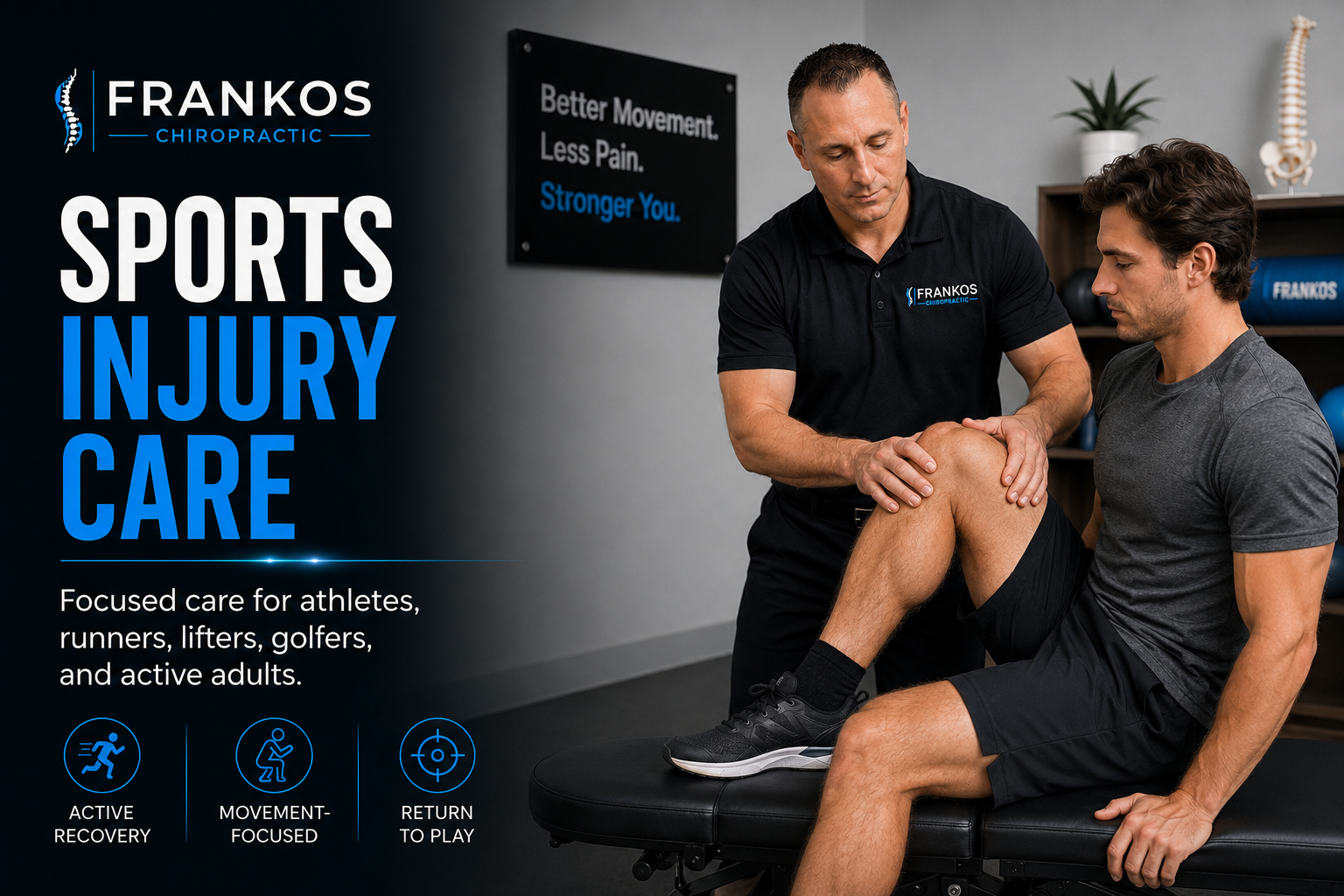
Sports Injury Care
For selected golf-related pain patterns involving the back, neck, shoulders, elbows, wrists, hips, or pelvis.
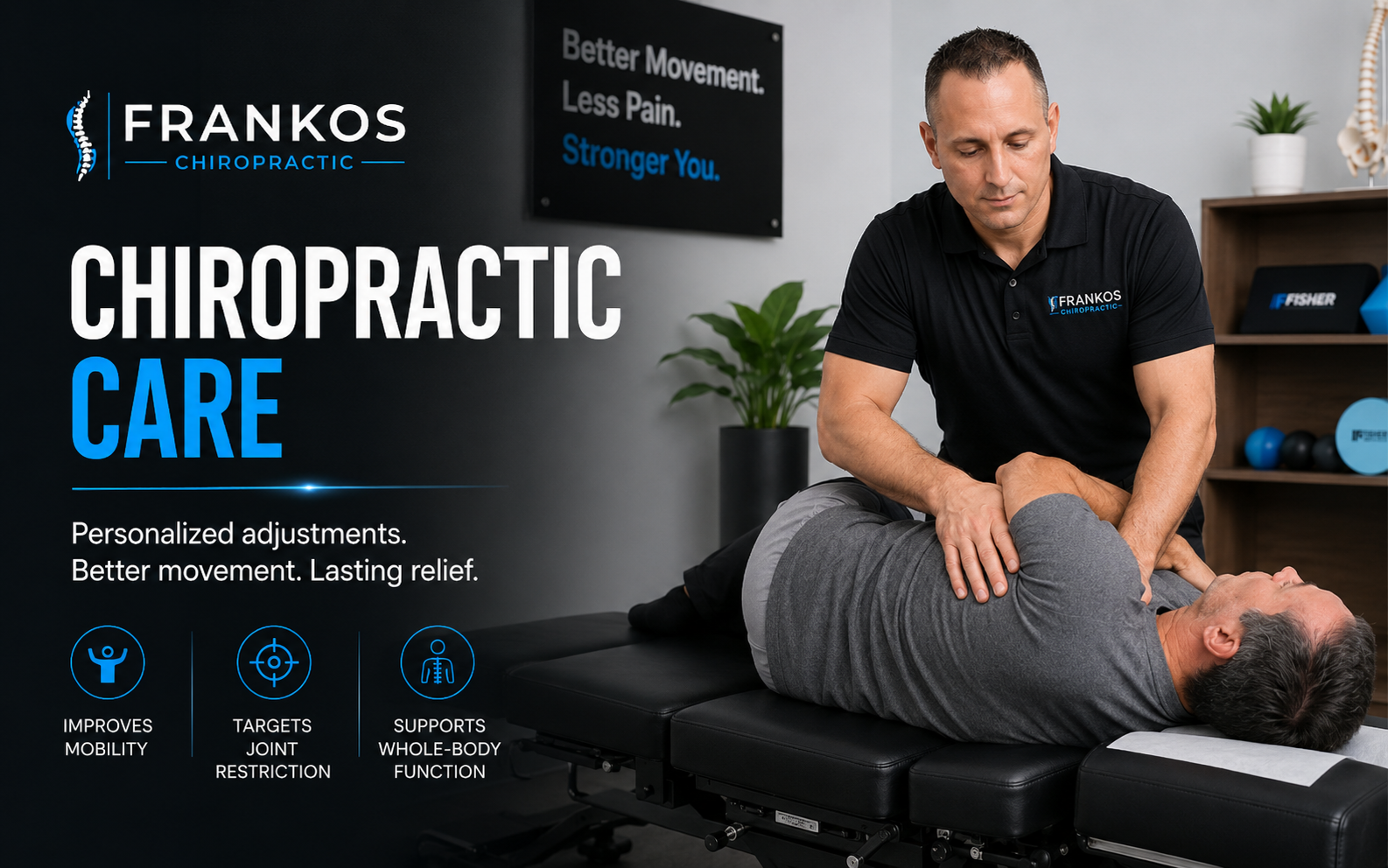
Back Pain Care
Evaluation and care for selected low back, hip, pelvis, and sciatica-like patterns related to golf or active life.

Shoulder Pain Care
For selected shoulder motion, rotator cuff, upper back, and neck-related patterns.
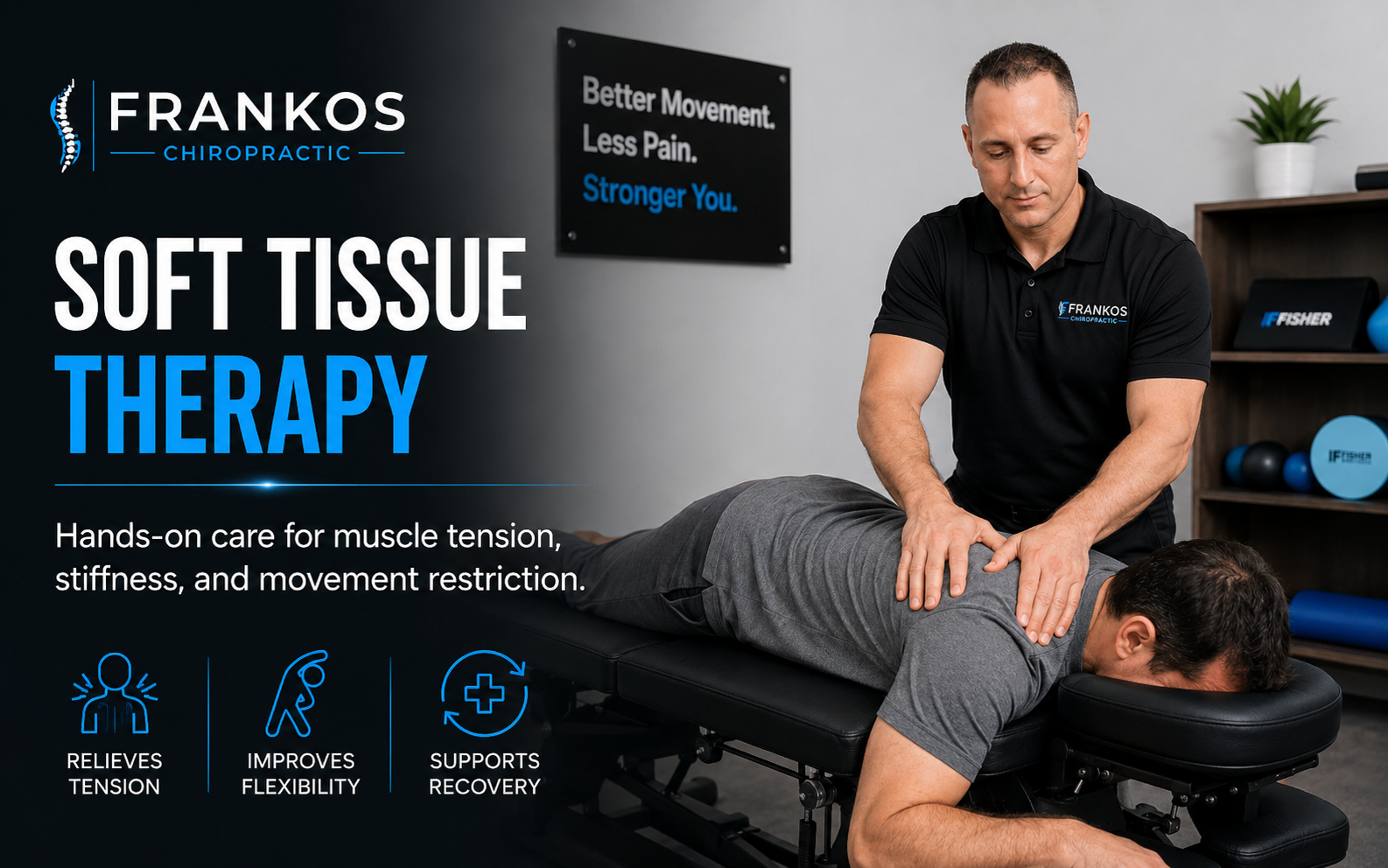
Soft Tissue Therapy
For selected muscle guarding, trigger points, soft tissue irritation, and movement restrictions.

Radial Shockwave Therapy
May be considered for selected chronic tendon, fascia, or soft tissue pain patterns when appropriate.
Book an Evaluation
If golf pain keeps returning or changes your swing, schedule an exam-based visit.
Golf injury FAQs
Common questions from golfers in Cache Valley.
These answers are educational and do not replace a personal exam.
Why does my low back hurt after golf?
The golf swing repeatedly loads rotation through the hips, pelvis, spine, ribs, and shoulders. Limited hip or upper back motion can shift extra stress into the low back.
Can chiropractic care help golfers?
It may help selected musculoskeletal golf pain patterns when an exam shows joint restriction, muscle guarding, mobility limits, or movement-related irritation.
What is golfer’s elbow?
Golfer’s elbow often refers to medial elbow tendon irritation. It can be aggravated by gripping, repetitive practice, impact, and overload.
Should I keep playing through pain?
If pain changes your swing, worsens during play, causes numbness or weakness, or keeps returning, stop forcing it and get evaluated.
Can shockwave therapy help golf injuries?
Shockwave therapy may be considered for selected chronic tendon, fascia, or soft tissue pain patterns, not every acute injury or nerve problem.
Where is Frankos Chiropractic?
Frankos Chiropractic is located at 115 N Main St in Smithfield, Utah and serves Cache Valley from one Smithfield office.
Golf pain should not have to ruin your season.
If low back pain, shoulder pain, elbow pain, wrist pain, hip tightness, or neck stiffness is affecting your swing, schedule an evaluation at Frankos Chiropractic in Smithfield.
Get golf injury care in Smithfield before the pain changes your swing.
Frankos Chiropractic helps golfers from Smithfield, Logan, North Logan, Hyde Park, Richmond, Lewiston, and Cache Valley understand what may be driving their pain and what care may be appropriate.
Frankos Chiropractic is located at 115 N Main St, Smithfield, UT 84335. We do not operate fake locations in other towns.