Frankos Chiropractic Blog
Hiking & Mountain Trail Injuries in Northern Utah
Helpful patient education for Smithfield, Logan, and Cache Valley.
Hiking Injury Guide • Northern Utah
Hiking & Mountain Trail Injuries in Northern Utah
Cache Valley and Northern Utah are built for hiking, but uneven trails, steep climbs, rocky descents, heavy packs, heat, altitude, and long mileage can irritate the feet, ankles, knees, hips, low back, and shoulders. This guide explains common hiking injury patterns, what to do early, and when it is time to get checked.
The trail often exposes the weak link: ankle control, knee load, hip mobility, or low back tolerance.
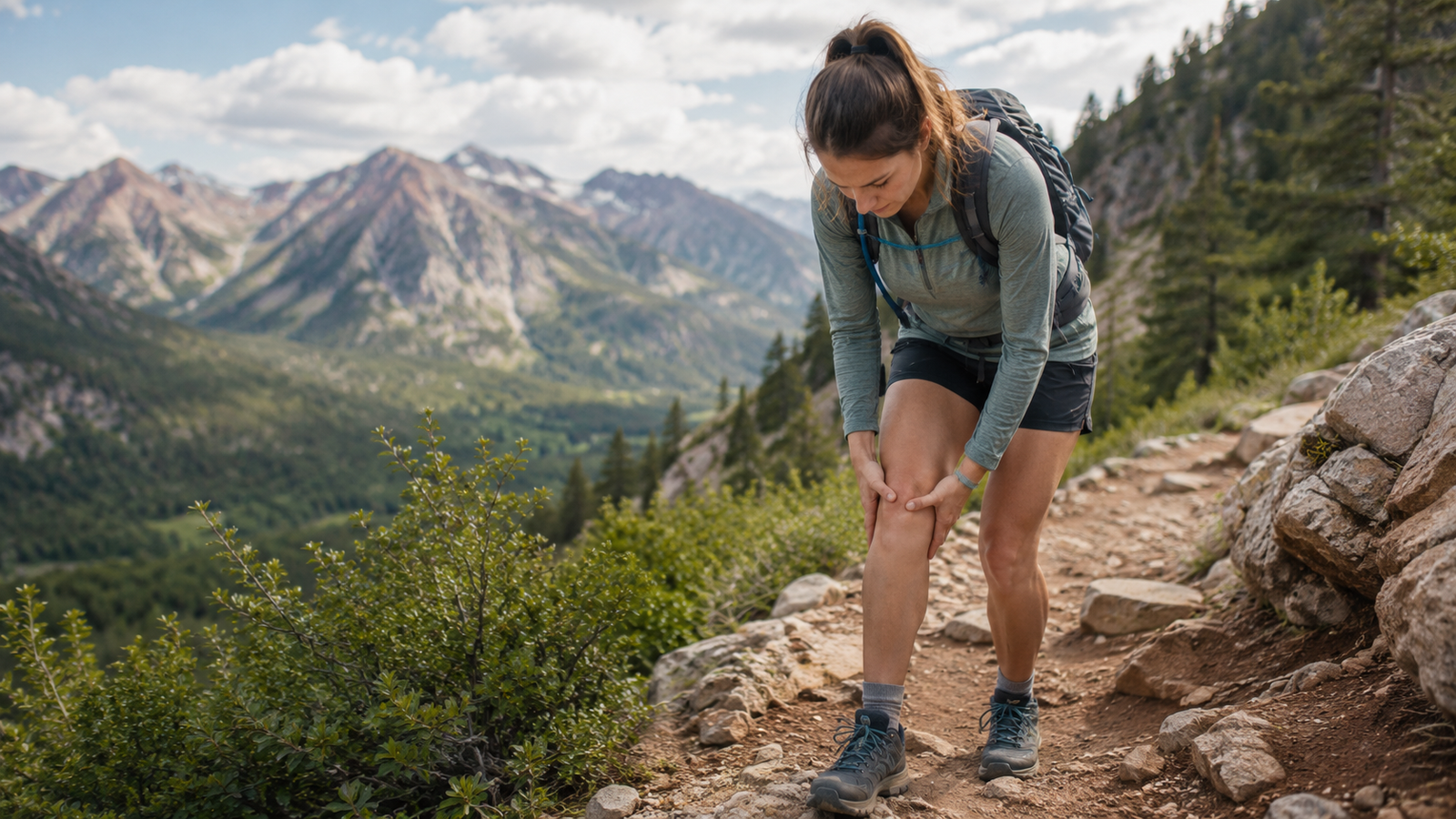
Many hiking injuries are not caused by one dramatic moment. They build up from repeated downhill braking, unstable footing, tired hips, shoes that do not fit the terrain, pack weight, or pushing mileage before the body is ready.
Frankos Chiropractic is located at 115 N Main St in Smithfield, Utah, serving hikers, students, athletes, workers, and active families from Smithfield, Logan, North Logan, Hyde Park, Richmond, Lewiston, Providence, Hyrum, Nibley, Wellsville, Cache Valley, Preston, Franklin, and nearby Southeast Idaho.
Before trying to walk it off
Some hiking injuries need medical evaluation quickly.
Most trail soreness can be managed conservatively, but certain symptoms should not be treated like a normal ache. If you cannot safely bear weight, have major swelling, deformity, neurological symptoms, or symptoms that are getting worse, get evaluated.
Do not keep hiking through these symptoms.
- Severe ankle, knee, hip, or back pain after a fall or twist.
- Inability to bear weight or walk normally after the injury.
- Visible deformity, major swelling, or rapidly increasing bruising.
- Numbness, tingling, weakness, foot drop, or pain traveling down the leg.
- Back pain with fever, loss of bladder or bowel control, or saddle numbness.
- Chest pain, severe shortness of breath, confusion, heat illness symptoms, or dehydration that does not improve.
Common trail problems
The most common hiking injuries we think about in Northern Utah.
Hiking loads the body differently than flat walking. Uphill climbs stress calves, hips, and low backs. Downhill sections load knees and ankles. Uneven rocky trails challenge balance and foot control. Long mileage can expose tendon, fascia, and soft tissue irritation.
Ankle Sprains
Rolling an ankle on uneven terrain is one of the most common trail injuries. Mild sprains may improve with protection, swelling control, and gradual return to motion. More serious sprains need evaluation, especially if walking is difficult.
Knee Pain
Steep descents can irritate the kneecap region, IT band area, tendons, or joint surfaces. Downhill knee pain often relates to repeated braking, hip control, step length, footwear, and fatigue.
Plantar Fascia Pain
Long miles, rocky ground, tight calves, poor footwear, or sudden mileage increases can flare heel and arch pain. Early load management matters because chronic plantar fascia pain can become stubborn.
Hip or SI Irritation
Climbing, side-hilling, pack weight, and uneven ground can irritate the hip, glute, or SI region. This can feel like one-sided low back pain, outer hip tightness, or glute soreness after a hike.
Back Pain from Packs and Terrain
A heavy pack, long drive to the trailhead, repeated climbing, and downhill fatigue can flare the low back. Pain that radiates, causes numbness, or changes strength deserves evaluation.
Blisters, Heat, and Overuse
Blisters, dehydration, cramping, and overuse soreness can turn a manageable hike into a miserable one. Good socks, shoe fit, pacing, water, and trail planning matter more than people think.
First steps after a hiking injury
Protect the area, keep safe motion, and do not turn a small injury into a bigger one.
Early care should match the severity. A mild sore area after a long hike is different from a swollen ankle after a twist, sharp knee pain on every step, or back pain that travels down the leg.
Reduce the load
Shorten mileage, avoid steep descents, lighten the pack, and stop testing the painful movement every few minutes.
Use pain-guided motion
Gentle motion is usually better than total stiffness, but aggressive stretching or forcing range can irritate a fresh injury.
Control swelling
For sprains or acute irritation, compression, elevation, and short-term cold can help with swelling and comfort.
Progress gradually
Return to trails with flatter terrain first, then add distance, hills, pack weight, and uneven surfaces one at a time.
Get checked if it lingers
If pain is not improving, keeps returning, changes your gait, or limits normal activity, an exam can help identify the pattern.
Do not ignore nerve signs
Radiating pain, numbness, tingling, weakness, or foot symptoms should be evaluated rather than pushed through.
Trail prevention
Small planning choices can prevent a lot of trail pain.
Prevention is not just stretching. It includes footwear, pack setup, step choice, pacing, hydration, strength, balance, and whether your body is ready for the trail you picked.
Use poles on steep descents
Trekking poles can reduce load on the knees and improve stability, especially when descending rocky trails or carrying a pack.
Build mileage before big elevation
Do not jump from short flat walks to long steep hikes. Add distance, elevation, and pack weight gradually.
Train ankles and hips
Balance work, calf strength, hip control, and step-down strength can help prepare the body for uneven terrain.
Check shoes before the trail
Shoes that are too narrow, too worn, or wrong for the terrain can contribute to blisters, arch pain, ankle rolls, and knee irritation.
Pack lighter than you think
A heavy or poorly adjusted pack can increase fatigue and irritate the back, hips, neck, and shoulders.
Plan for heat and altitude
Water, electrolytes, pace, sun exposure, and route planning matter. Fatigue changes mechanics and increases injury risk.
How Frankos Chiropractic may help
Care depends on what the exam shows.
Hiking pain can involve joints, muscles, tendons, fascia, nerve sensitivity, movement control, or compensation from another area. The goal is to identify the likely pattern and choose care that fits.
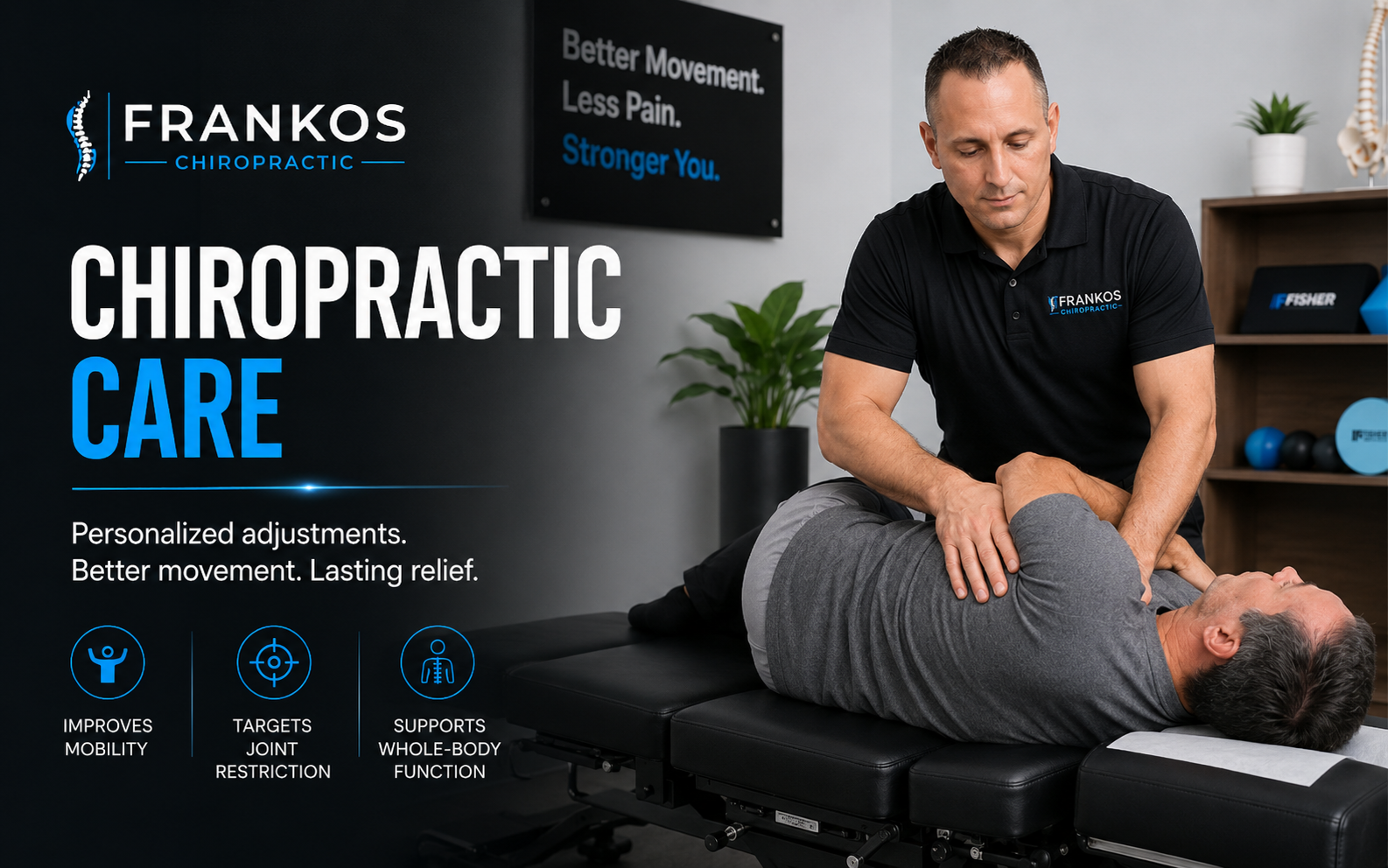
Chiropractic Care
For selected back, hip, pelvis, neck, rib, ankle, or shoulder restrictions when appropriate.
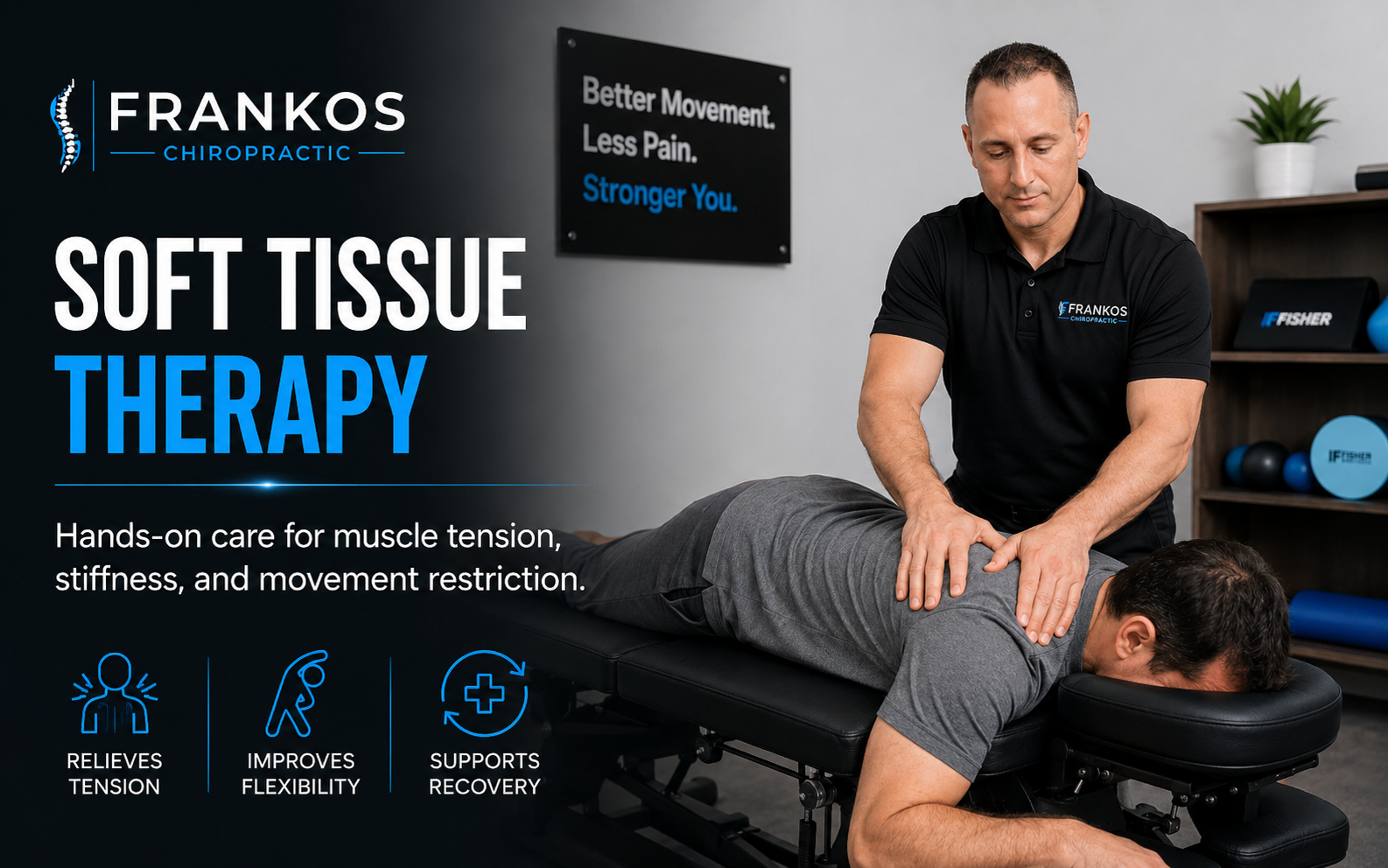
Soft Tissue Therapy
For tight calves, glutes, hips, low back, traps, or other overloaded areas that may limit movement.

Shockwave Therapy
For selected chronic tendon, fascia, or soft tissue problems such as stubborn plantar fascia patterns when appropriate.
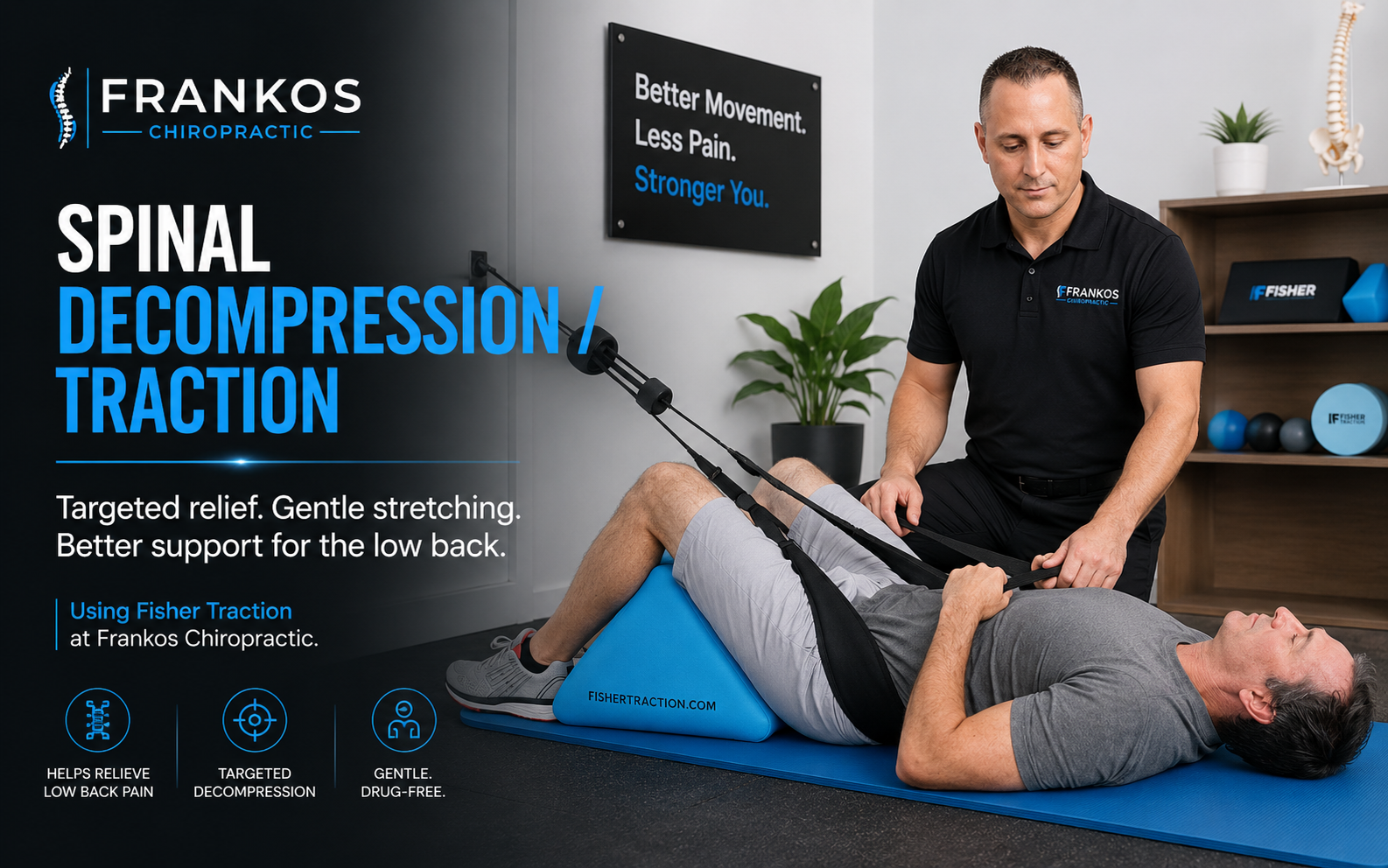
Traction / Decompression
For selected low back or neck presentations based on symptoms, exam findings, and response to unloading.
Sports Injury Care
For hikers, runners, lifters, students, golfers, and active adults who want to keep moving.

Book an Evaluation
If hiking pain is lingering, worsening, changing your gait, or limiting daily life, schedule an exam.
Hiking injury FAQs
Common questions after a painful hike.
These answers are educational and do not replace a personal exam.
Should I keep hiking if my knee hurts downhill?
If mild soreness improves quickly, reduce steep descents and mileage. If pain is sharp, worsening, swelling, or changing your gait, stop pushing it and get evaluated.
When should an ankle sprain be checked?
Get checked if you cannot bear weight, have major swelling or bruising, feel instability, or pain does not steadily improve.
Can hiking cause sciatica-like symptoms?
Long drives, steep terrain, pack weight, and irritated low back or hip patterns can contribute to glute or leg symptoms. Radiating pain, numbness, tingling, or weakness should be evaluated.
Can chiropractic care help hiking injuries?
It depends on the injury. Chiropractic care, soft tissue therapy, traction, shockwave, home movement advice, or referral may be considered based on the exam.
How soon can I return to the trail?
Return should be based on pain, swelling, walking quality, strength, balance, and the demands of the trail. Start with easier terrain before returning to steep or rocky hikes.
Where is Frankos Chiropractic located?
Frankos Chiropractic is located at 115 N Main St in Smithfield, Utah and serves Cache Valley from one Smithfield office.
Ready to get back to the trail?
If hiking pain is limiting your stride, changing how you walk, or returning every time you hit the mountains, schedule a visit at Frankos Chiropractic in Smithfield.
Hiking injuries do not have to end your season.
Get clear answers, exam-based care, and practical guidance from Frankos Chiropractic in Smithfield, Utah.
Frankos Chiropractic is located at 115 N Main St, Smithfield, UT 84335. We do not operate fake locations in other towns.