Frankos Chiropractic Blog
Sciatica Relief: What Actually Works
Helpful patient education for Smithfield, Logan, and Cache Valley.
Sciatica Relief Guide • Smithfield, Utah
Sciatica Relief: What Actually Works
Sciatica can feel sharp, burning, electric, achy, numb, or tight as symptoms travel from the low back or glute into the hip, leg, calf, or foot. This guide explains what actually helps many sciatica-like cases, what to avoid, when symptoms need urgent care, and when to schedule an exam at Frankos Chiropractic in Smithfield, Utah.
Start by finding the source, not just stretching the nerve.

Sciatica relief depends on why the nerve is irritated. A disc-related nerve root problem, spinal stenosis, piriformis irritation, hip referral, SI irritation, and muscle guarding can all feel similar to patients, but they often respond to different strategies.
Frankos Chiropractic is located at 115 N Main St in Smithfield, Utah, serving patients from Logan, North Logan, Hyde Park, Richmond, Lewiston, Providence, Hyrum, Nibley, Wellsville, Cache Valley, Preston, Franklin, and nearby Southeast Idaho.
Before trying home care
First, know when sciatica needs urgent medical attention.
Most sciatica-like symptoms are not an emergency, but some patterns should not be treated with stretching, waiting, or internet advice. If symptoms suggest severe nerve compression or another serious condition, medical evaluation should come first.
Get urgent care now if leg pain or numbness comes with any of these symptoms.
- Loss of bladder or bowel control, new leaking, or trouble starting or stopping urination.
- Numbness around the groin, inner thighs, buttocks, or saddle area.
- Severe or worsening weakness in the leg, foot, or ankle, especially foot drop.
- Sciatica symptoms on both sides with worsening numbness or weakness.
- Fever, unexplained weight loss, history of cancer, major trauma, or pain that is constant and not affected by position.
Understand the symptom pattern
Sciatica is a symptom pattern, not one single diagnosis.
Sciatica usually describes pain, numbness, tingling, burning, or weakness that travels from the low back or buttock into the leg. The sciatic nerve is made from lower lumbar and sacral nerve roots, so irritation can happen near the spine before symptoms show up down the leg.
Why the cause matters.
A patient with nerve root irritation from the low back may need a different approach than a patient with glute muscle guarding, hip mobility restriction, or piriformis-related irritation. That is why the best sciatica relief plan starts with a history, exam, movement testing, and basic nerve screening.
At Frankos Chiropractic, the goal is to understand whether chiropractic care is appropriate, what conservative tools make sense, and whether referral or imaging should be considered.
Common sciatica-like drivers
- Disc irritation or lumbar nerve root inflammation.
- Spinal stiffness or limited hip and low back motion.
- Piriformis or deep glute irritation around the sciatic nerve.
- Muscle guarding after lifting, bending, sitting, or twisting.
- Stenosis-type patterns that may worsen with standing or walking.
- SI, hip, or referral patterns that mimic sciatica.
What to do first
What actually helps during the first few days of a sciatica flare-up?
The goal is to calm the nerve, avoid repeated irritation, and keep the body moving enough to prevent stiffness. Many people make sciatica worse by forcing deep stretches, sitting too long, or trying to “push through” symptoms that are clearly increasing.
Find positions that reduce leg symptoms.
Pay attention to whether symptoms move farther down the leg or calm toward the back and glute. Positions that reduce leg pain are usually more useful than positions that simply stretch hard.
Walk in short, tolerable doses.
Gentle walking often helps many back and sciatica-like cases, but the dose matters. Start short, stay relaxed, and stop if symptoms clearly travel farther down the leg or weakness increases.
Use heat or ice for symptom control.
Heat may relax guarding. Ice may calm irritation. Use whichever gives short-term relief, and avoid using either one so long that it replaces movement altogether.
Change positions often.
Sciatica often hates long, repeated positions. Break up sitting, driving, bending, and standing with brief movement resets throughout the day.
Try gentle nerve-friendly motion.
Light nerve sliders can sometimes help, but they should feel mild. If a movement creates sharper leg pain, stronger numbness, or symptoms farther down the leg, stop and get checked.
Schedule if symptoms persist or worsen.
Book an exam if symptoms keep returning, limit normal life, travel below the knee, include numbness or weakness, or do not respond to simple conservative steps.
Movement that usually beats bed rest
A simple movement plan for sciatica-like pain.
There is no perfect exercise for every sciatica case. A good plan is based on symptom response: the right movement should feel tolerable and should not make leg symptoms progressively worse.
Short walks
Use several short walks instead of one long forced walk. Flat ground is usually easier than hills during a flare-up.
Standing resets
If sitting aggravates symptoms, stand up before the pain climbs. Do not wait until symptoms are already intense.
Gentle hip motion
Small, comfortable hip and pelvis motion can reduce guarding without aggressively pulling on the irritated area.
Directional preference
Some patients feel better with extension-based motion, while others tolerate flexion better. The right direction is based on response, not guessing.
Core bracing basics
Gentle bracing, breathing, and hip-hinge practice may help once symptoms are calmer. Avoid max effort core work during a hot flare-up.
Progress gradually
When symptoms calm down, slowly rebuild walking, lifting, exercise, and work demands instead of jumping back all at once.
Common mistakes
What often makes sciatica worse?
Many sciatica flare-ups last longer because patients keep irritating the same tissue over and over. Relief often starts with removing the repeated trigger long enough for symptoms to calm.
Deep hamstring stretching
Hamstring stretching can tug on an irritated nerve and increase leg symptoms. Stretching harder is not always better.
Sitting until symptoms spike
Long sitting and long drives can aggravate sciatica. Break the pattern before the leg pain climbs.
Heavy lifting too soon
Deadlifts, heavy squats, twisting lifts, and awkward yard work may be too much during an active flare-up.
Ignoring weakness
Pain is one thing. Progressive weakness, foot slap, or trouble raising the foot deserves prompt evaluation.
Only treating the pain location
Leg pain may come from the low back. Glute pain may be local or referred. The symptom location is not always the source.
Waiting too long
If symptoms keep returning, worsen, or limit daily life, an exam can help identify the next best step.
Conservative care options
How chiropractic care may fit into sciatica relief.
At Frankos Chiropractic, sciatica care starts with evaluation. The goal is not to force the same adjustment or stretch on every patient. The goal is to identify what seems to be driving symptoms, choose conservative care that fits the case, and refer when symptoms suggest something outside the office setting.
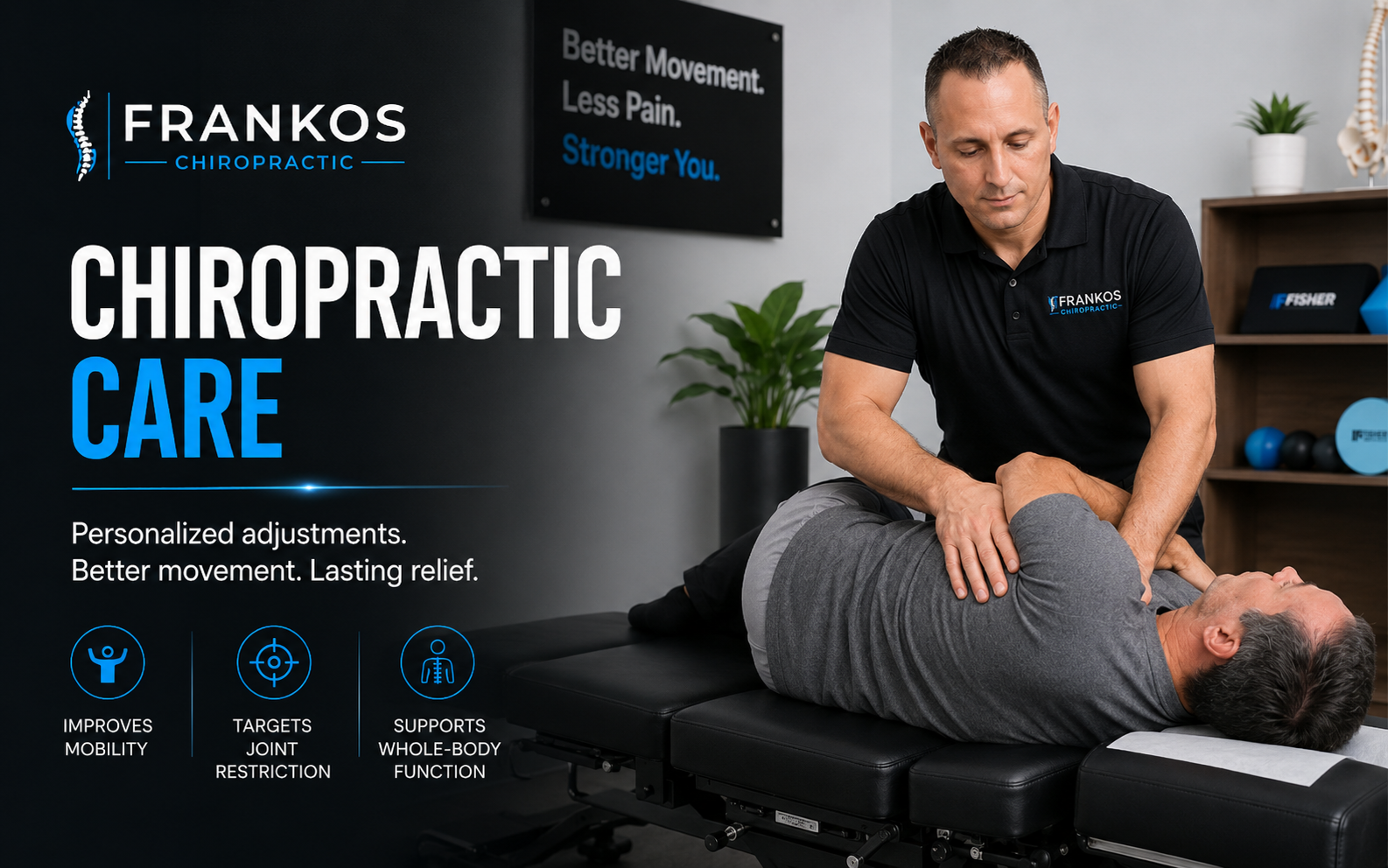
Chiropractic Adjustments
Specific care for restricted spinal, pelvic, hip, or extremity joints when exam findings suggest it is appropriate.
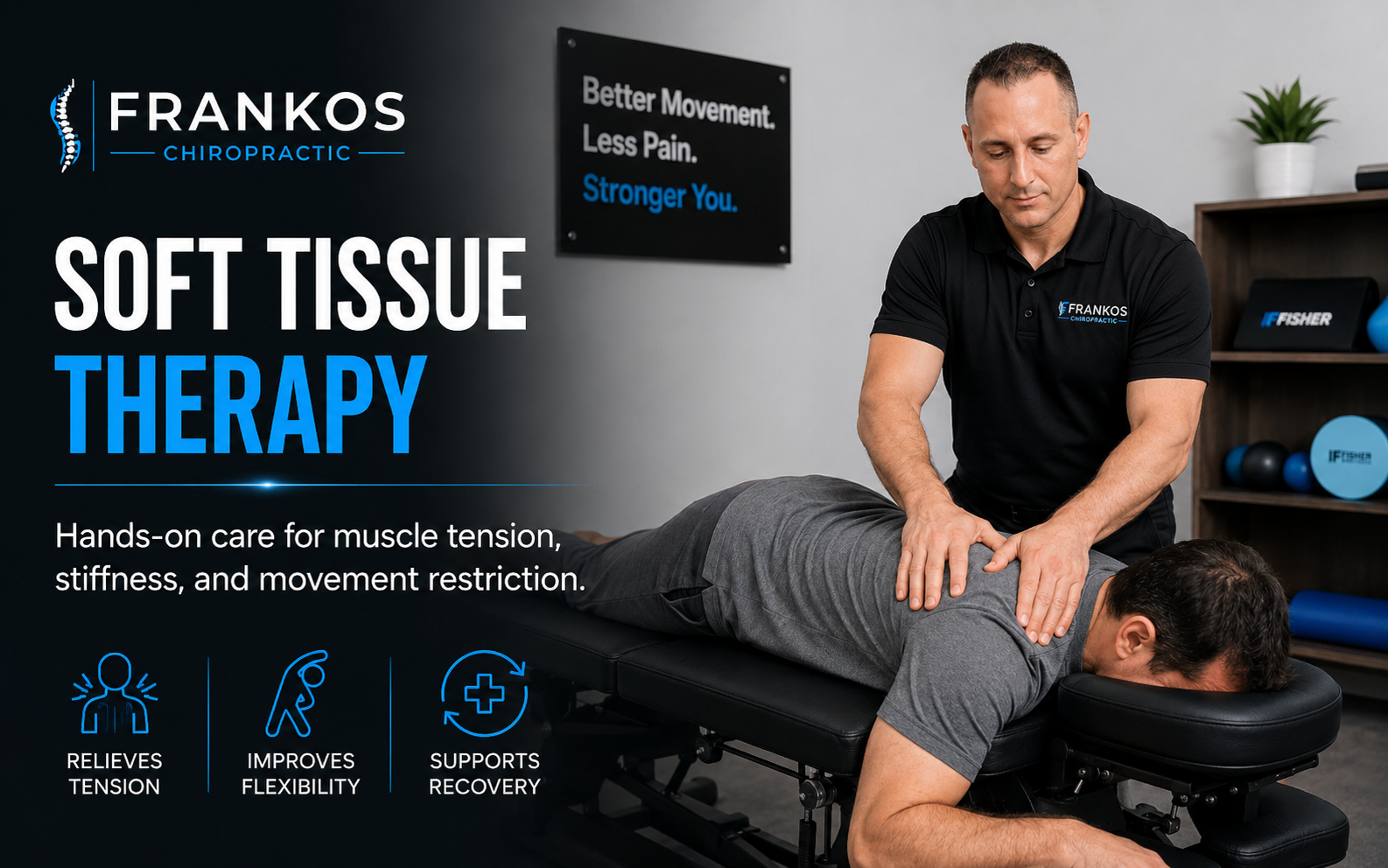
Soft Tissue Therapy
Muscle-focused care may help when guarding, trigger points, hip tension, or glute tightness are contributing to symptoms.
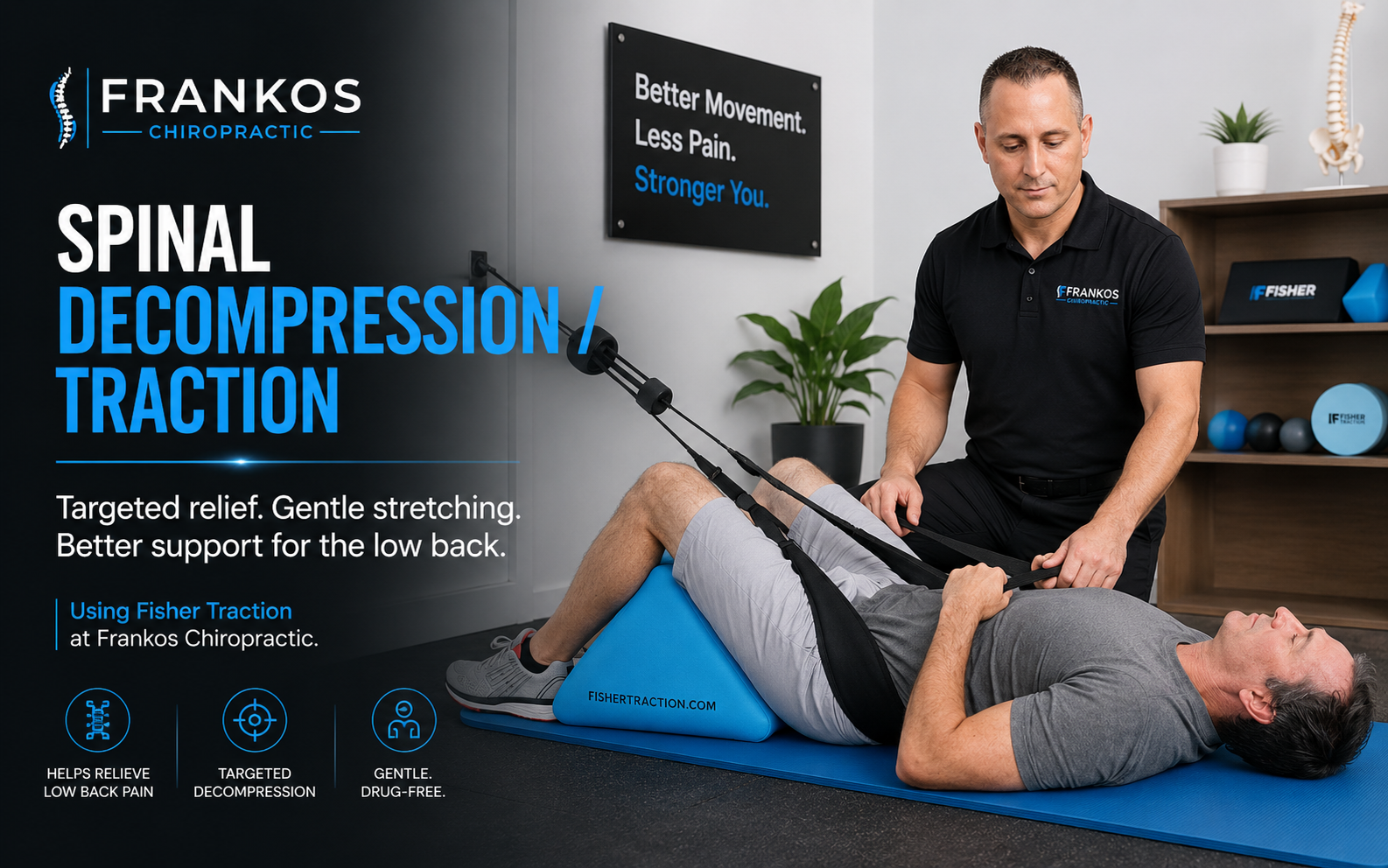
Spinal Decompression / Traction
Traction-style care may be considered for selected low back and leg symptom patterns based on presentation and tolerance.

Shockwave Therapy
Shockwave is not a direct nerve treatment, but it may be discussed for selected chronic tendon, fascia, or soft tissue problems that overlap with hip or glute pain.
Low Back Evaluation
A low back, pelvis, hip, and nerve screen helps determine whether the symptoms are appropriate for conservative care.

Schedule an Exam
Book online or call if symptoms are traveling, recurring, limiting activity, or not improving with simple home care.
Local care near Logan and Cache Valley
Sciatica care from one Smithfield office.
Frankos Chiropractic is physically located in Smithfield, Utah. Patients visit from nearby communities throughout Cache Valley and Southeast Idaho for chiropractic care, soft tissue therapy, traction, shockwave therapy for selected soft tissue issues, and practical movement guidance.
Not sure whether it is sciatica, piriformis, or something else?
That is exactly why an exam matters. The symptom pattern can look similar even when the driver is different. Schedule a visit and we will help you understand what may be going on and what conservative care options make sense.
Research-backed patient education
What the bigger picture says about sciatica relief.
Conservative sciatica care usually focuses on staying as active as tolerated, using the right movements for the person, avoiding prolonged bed rest, and considering hands-on care as part of a broader plan when appropriate.
NHS Sciatica Guidance
Patient-friendly guidance on sciatica symptoms, self-care, and urgent warning signs.
External guidelineNICE Low Back Pain & Sciatica
Guidance on assessment and management of low back pain and sciatica in adults.
External guidelineACP Conservative Care
Guidance supporting non-drug care options for many low back pain presentations.
Sciatica FAQs
Questions patients often ask about sciatica relief.
These answers are educational and not a substitute for an exam. Sciatica-like symptoms should be evaluated if they are persistent, worsening, recurring, or associated with numbness, weakness, or red flags.
What is the fastest way to relieve sciatica?
The fastest safe step is usually to find positions and movements that calm leg symptoms, avoid the motions that worsen them, take short walks if tolerated, and get evaluated if symptoms persist or worsen.
Should I stretch my hamstring for sciatica?
Not always. Aggressive hamstring stretching can irritate an already sensitive nerve. Gentle movement is often better than forcing a deep stretch during a flare-up.
Is walking good for sciatica?
Walking can help many sciatica-like cases when the dose is tolerable. Start short and stop if symptoms clearly worsen, travel farther down the leg, or weakness increases.
Can a chiropractor help sciatica?
Chiropractic care may help some sciatica-like presentations, depending on the cause and exam findings. Care may include adjustments, soft tissue work, traction, flexion distraction, and movement guidance when appropriate.
When should sciatica be checked?
Schedule an exam if symptoms travel below the knee, include numbness or tingling, limit walking or sitting, keep returning, or do not improve with simple conservative care.
Where is Frankos Chiropractic located?
Frankos Chiropractic is located at 115 N Main St in Smithfield, Utah, serving Cache Valley and nearby Southeast Idaho from one Smithfield office.
Need help with sciatica-like pain?
Schedule a visit at Frankos Chiropractic in Smithfield, Utah. We will help you understand whether your symptoms appear appropriate for conservative chiropractic care and what next steps make sense.