Frankos Chiropractic Blog
Chiropractor Near Logan, Utah | Frankos Chiropractic
Helpful patient education for Smithfield, Logan, and Cache Valley.
Patient Guide • Logan & Cache Valley
Choosing a Chiropractor Near Logan, Utah: A Patient Guide
Back pain, neck pain, headaches, stiffness, and sports injuries can make it difficult to know where to begin. This guide explains what a careful chiropractic evaluation should include, which questions to ask, how treatment plans differ, and when another type of medical care may be more appropriate.
What should a good chiropractic visit actually include?

A useful first visit should be more than a quick adjustment. It should begin with a conversation about how the problem started, what makes it better or worse, whether symptoms travel into an arm or leg, and how the condition affects work, sleep, exercise, driving, or family life.
The examination should help determine whether the problem appears mechanical and appropriate for conservative care, whether the treatment approach needs to be modified, or whether imaging, medical evaluation, or referral should be considered.
Frankos Chiropractic is located at 115 N Main St in Smithfield and serves patients from Logan, North Logan, Hyde Park, and throughout Cache Valley.
Start with the pattern, not just the pain score
When chiropractic care may be a reasonable option.
Chiropractic care is most commonly considered for musculoskeletal problems involving joints, muscles, movement, and function. The appropriate approach depends on the history, examination, symptom behavior, and the patient’s goals.
Mechanical pain often changes with position or movement
Many common back and neck complaints behave mechanically. The pain may increase after prolonged sitting, lifting, bending, turning the head, working overhead, sleeping in a particular position, or returning to activity too quickly. It may ease with walking, changing position, gentle movement, rest, or heat. That pattern does not prove a specific diagnosis, but it gives the examiner useful information about which tissues and movements may be involved.
For selected patients with uncomplicated low back pain, spinal manipulation is one of several non-drug options included in major clinical guidance. It is not the only option, and it should not be presented as a guaranteed or universal solution. Exercise, activity modification, education, soft tissue treatment, and time may also be important parts of recovery.
Symptoms that travel require more careful screening
Pain, tingling, numbness, or burning that travels into an arm or leg can come from several sources. A nerve root may be irritated, but hip, shoulder, peripheral nerve, muscle, and joint problems can create overlapping symptoms. A careful examination should assess strength, sensation, reflexes when indicated, range of motion, and symptom response before deciding whether chiropractic care is appropriate.
Headaches should not all be treated as the same problem
Some headaches are associated with neck stiffness, posture, muscle tension, or restricted cervical movement. Others are migraine, medication-related, vascular, infectious, traumatic, or connected to another medical condition. Because headache research and treatment response vary by headache type, the first step is identifying whether the presentation appears suitable for conservative neck care or needs medical evaluation.
Urgent symptoms can include new loss of bladder or bowel control, numbness in the saddle or groin region, rapidly worsening leg weakness, severe symptoms after major trauma, chest pain, difficulty breathing, fever with severe spinal pain, or a sudden unusual headache with neurologic changes. These presentations should not be managed as routine chiropractic visits.
Low Back Pain
Symptoms related to sitting, lifting, bending, workouts, yard work, pregnancy strain, or recurring mechanical flares may be evaluated for conservative care.
Neck and Upper-Back Pain
Desk work, driving, phone use, lifting, sleep position, and repeated strain can contribute to stiffness, limited motion, and muscle guarding.
Sports and Overuse Problems
Running, hiking, gym training, team sports, repetitive work, and sudden increases in activity can expose movement limitations or overload irritated tissues.
What to expect before treatment begins
A first visit should answer four practical questions.
The goal of an initial evaluation is not simply to find a painful spot. It is to determine what may be contributing to the problem, whether conservative care is appropriate, what the patient wants to return to, and how progress will be measured.
What happened?
The history should cover onset, aggravating and relieving factors, previous episodes, injuries, medical history, current treatment, and any neurologic or systemic warning signs.
What is limited?
The examination may assess posture, motion, strength, balance, orthopedic findings, neurologic signs, joint function, muscle tension, and movements that reproduce or reduce symptoms.
Is this appropriate for care?
A responsible clinician should explain whether the presentation appears suitable for chiropractic management, requires a modified approach, or should be referred for additional evaluation.
What is the plan?
The patient should understand the proposed treatment, alternatives, expected frequency, home recommendations, costs, and the findings that would lead to reassessment or referral.
Imaging is not automatically required for every episode of back pain
Many uncomplicated episodes of low back pain can be evaluated initially through the history and physical examination. Imaging becomes more relevant when the history or exam raises concern for fracture, infection, cancer, significant neurologic compromise, another serious condition, or when persistent symptoms may change the next step in management. A patient should be told why imaging is or is not being considered rather than receiving it as a routine formality.
Treatment on the first visit depends on the findings
Some patients can begin conservative treatment at the first appointment. Others may need a gentler approach, more information, communication with another provider, diagnostic imaging, or referral. A good visit is not defined by whether an adjustment occurs; it is defined by whether the decision is appropriate for that patient.
Treatment should match the examination
Chiropractic care can involve more than one technique.
Not every patient needs the same adjustment, the same amount of force, or the same supporting therapy. Care may combine joint treatment, soft tissue work, movement guidance, and other services when clinically appropriate.
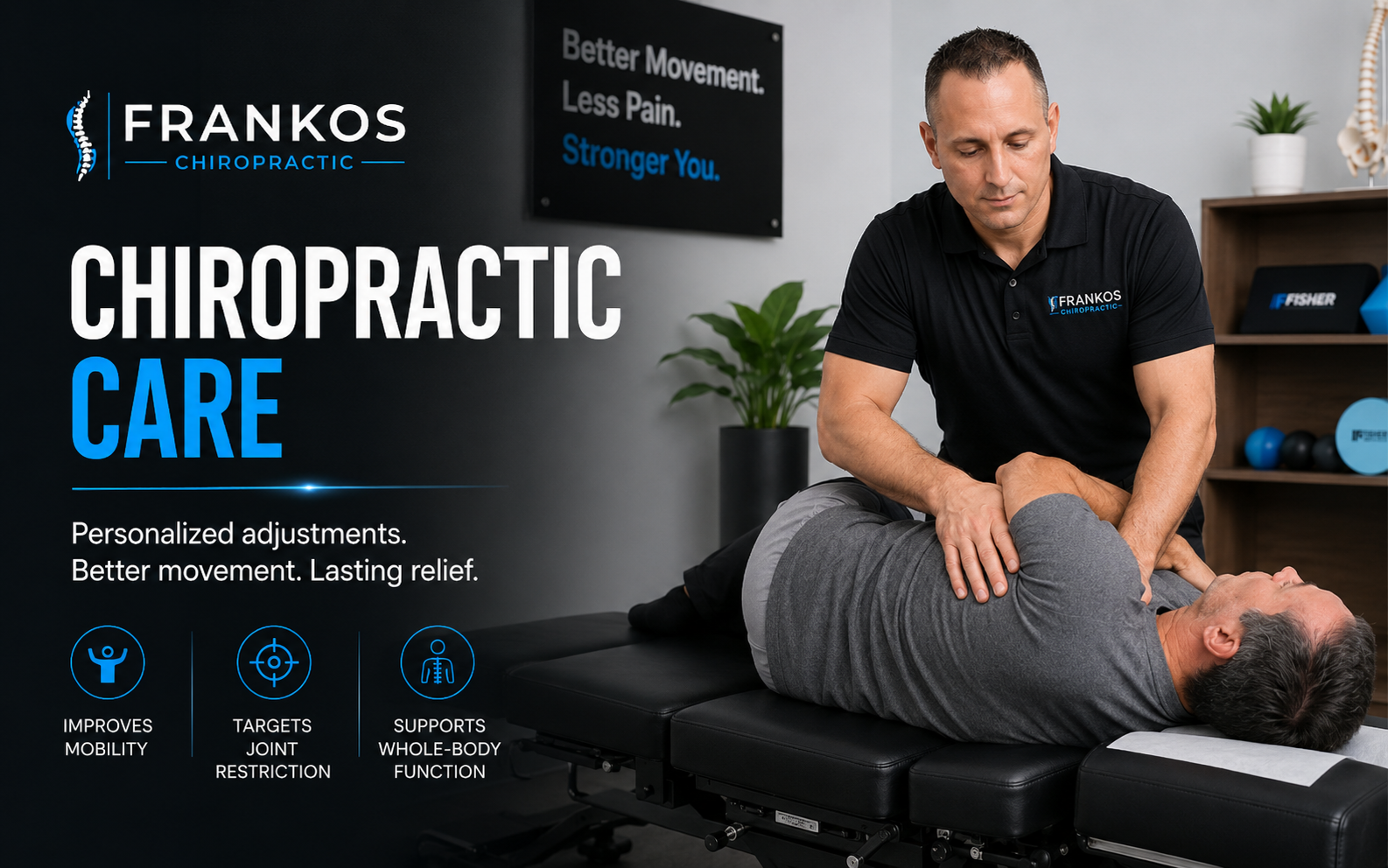
Chiropractic Adjustments
Manual or instrument-assisted techniques may be used to address selected joint restrictions and movement limitations. Technique and force should be adapted to the patient.
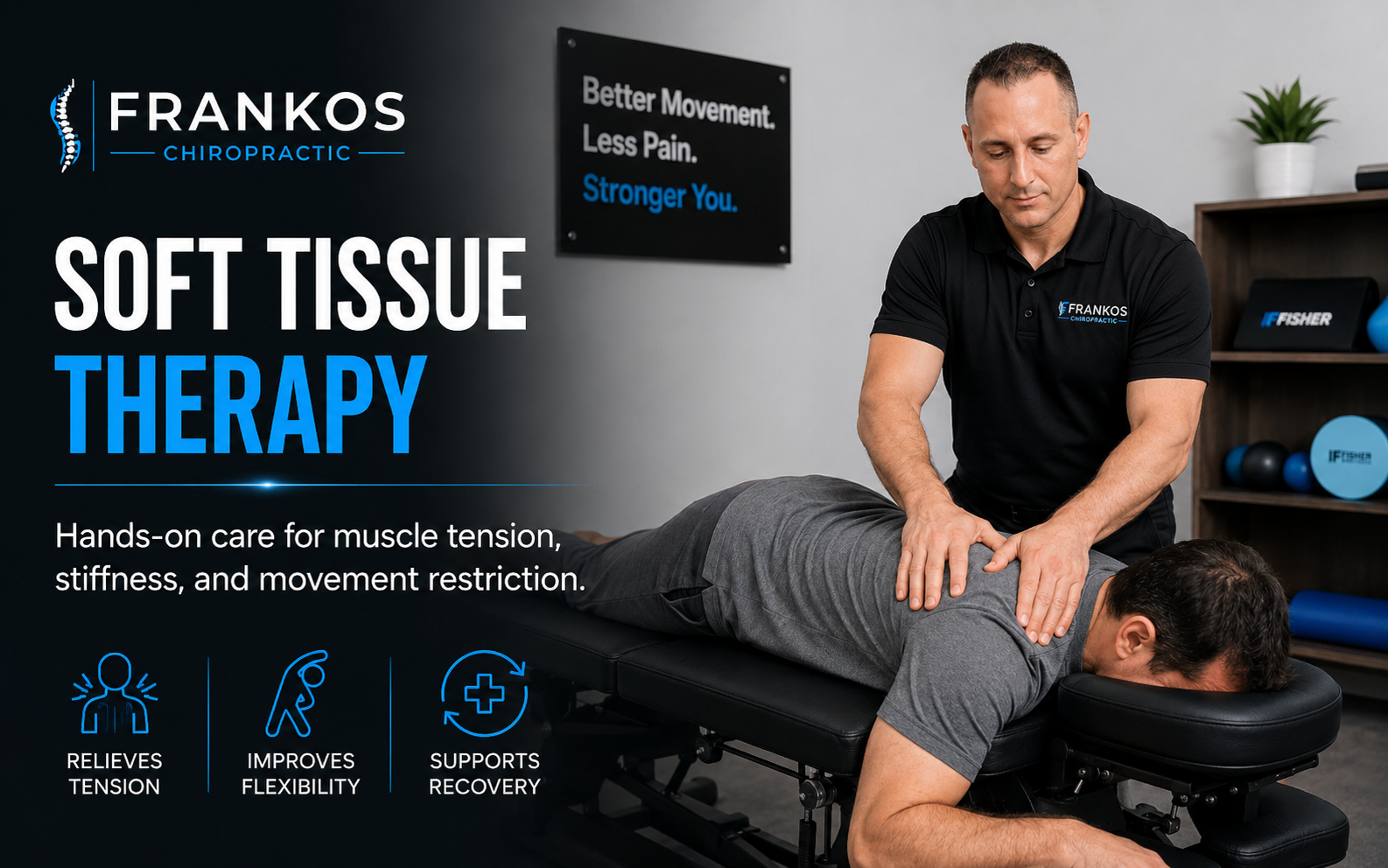
Soft Tissue Therapy
Selected techniques may be used for muscle guarding, tenderness, trigger points, and soft tissue restrictions that affect comfort or movement.
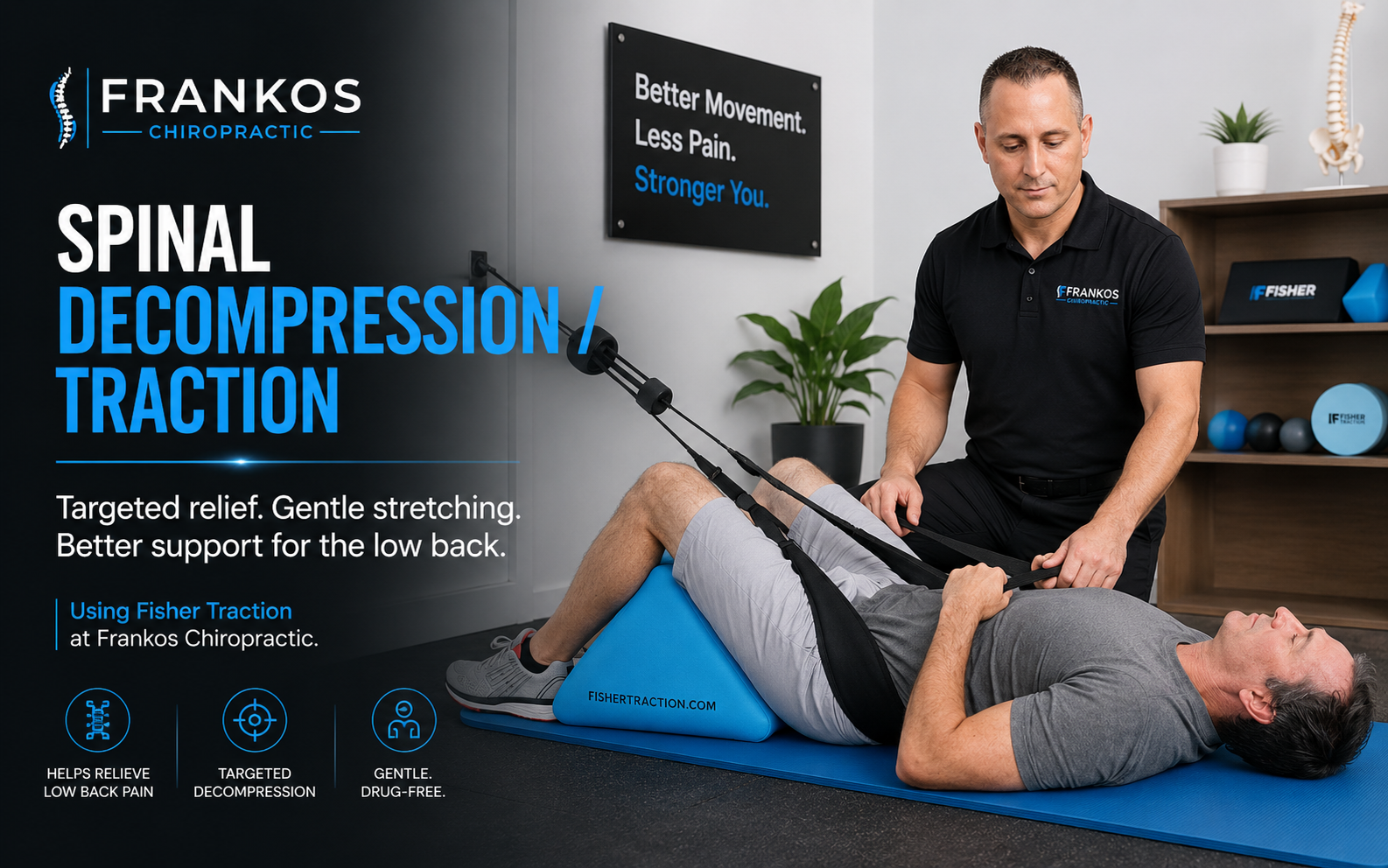
Traction and Decompression
Traction-based approaches may be considered for selected neck, low-back, disc-related, or radiating symptom patterns after evaluation.

Radial Shockwave Therapy
This service may be considered for selected chronic tendon, fascia, and soft tissue complaints. It is not used for every painful area or every patient.
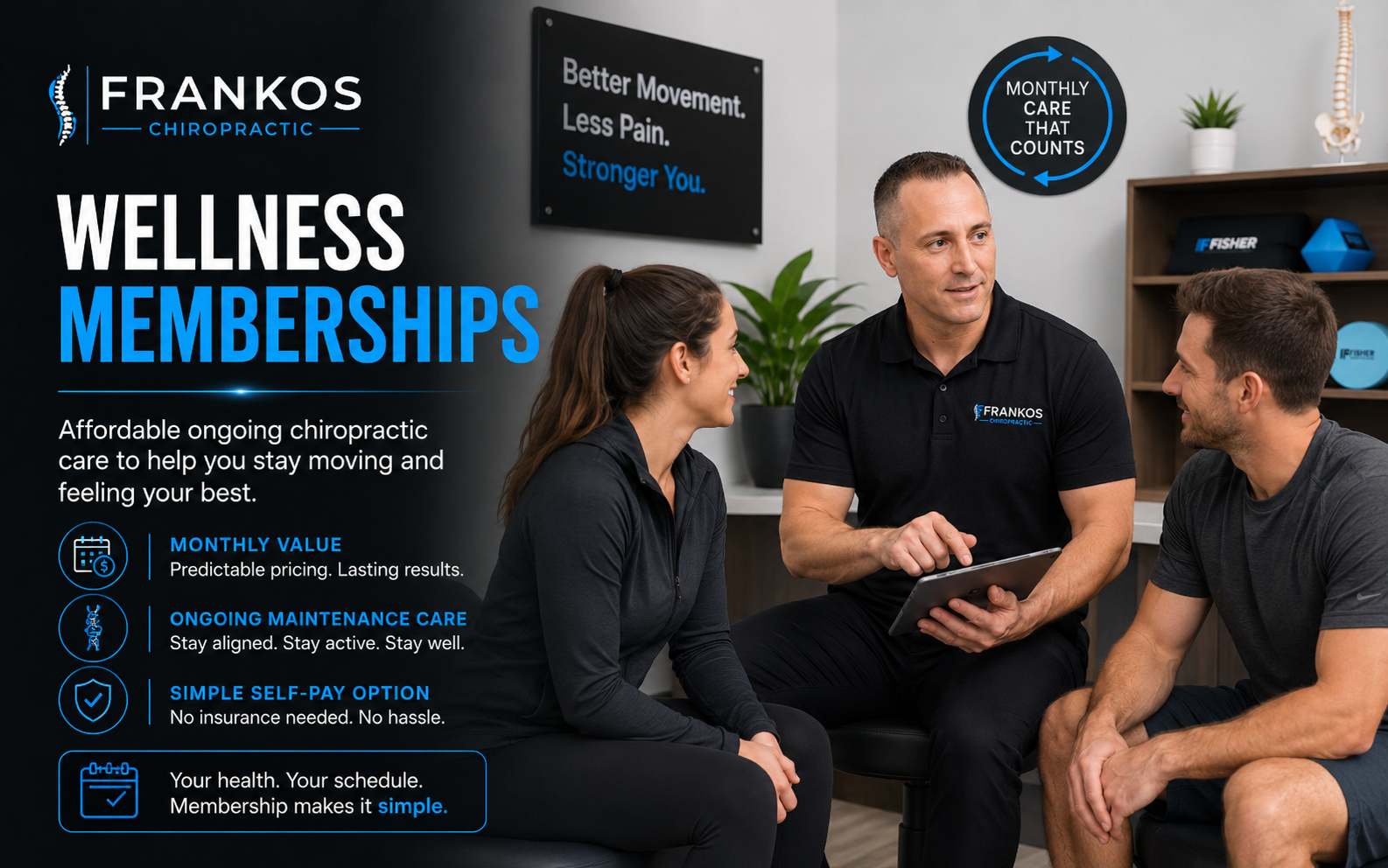
Wellness Memberships
Maintenance-style options are available for established patients who are not seeking evaluation of a new injury or active pain complaint.
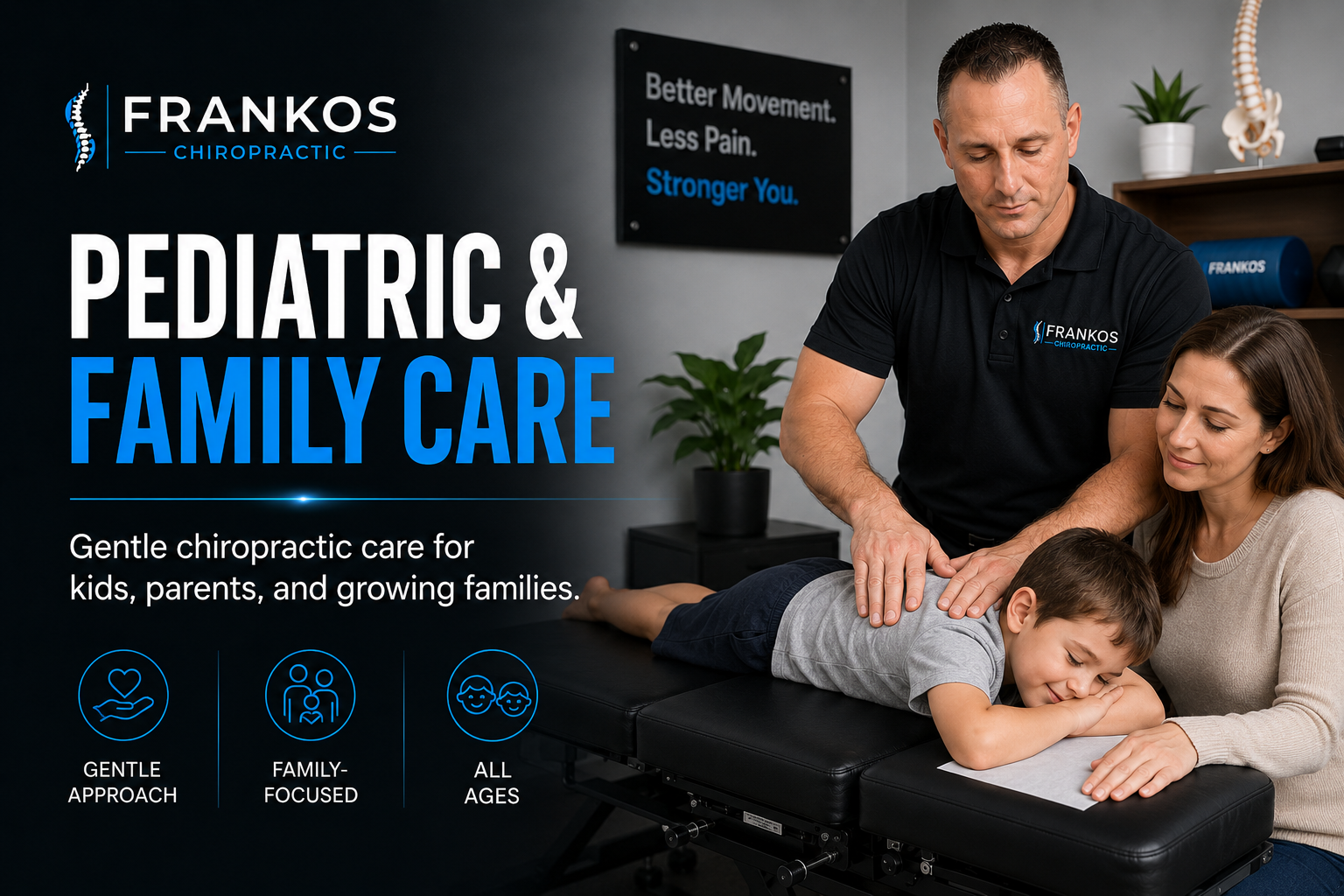
Family Chiropractic
Care for children, teens, adults, and older patients should be adapted to age, health history, examination findings, comfort, and goals.
Home recommendations should be realistic
A treatment plan may include temporary activity changes, walking, mobility work, simple strengthening, ergonomic adjustments, sleep-position changes, or pacing strategies. The best home plan is not the longest list of exercises. It is the smallest useful set that the patient understands and can perform consistently.
Some patients respond well to joint treatment alone. Others need a broader plan that addresses load tolerance, strength, work demands, recovery habits, or recurring movement patterns. Improvement should be judged by function as well as pain: walking farther, sleeping better, turning the head more easily, lifting with less limitation, or returning to normal activity.
No responsible provider can promise an exact timeline
How many visits should you expect?
The number and frequency of visits depend on the problem, how long it has been present, the examination findings, health history, daily demands, treatment response, and the patient’s goals.
Short-term active care
A recent uncomplicated strain may improve over a relatively short period, but the first goal is to restore useful movement and function rather than chase a perfectly pain-free day immediately.
Reassessment matters
Long-standing or repeatedly aggravated symptoms may need a broader strategy and a defined checkpoint. If meaningful progress is not occurring, the diagnosis or plan should be reconsidered.
Maintenance is optional
Some patients choose periodic wellness visits because they value how they feel or move afterward. Maintenance should be a clear choice, not presented as mandatory for every patient.
Progress should be measurable
A plan should include outcomes that matter to the patient. Examples include sitting through work with fewer interruptions, lifting a child, returning to the gym, sleeping without repeated waking, driving comfortably, or completing a hike. Pain scores are useful, but they are only one part of the picture.
Temporary soreness can occur after manual treatment, especially when an irritated area has not moved normally for some time. Persistent worsening, new neurologic symptoms, increasing weakness, or a major change in the pain pattern should be reported and reassessed rather than treated as routine.
Care should change as the patient changes
Early visits may focus on reducing irritation and restoring tolerable movement. Later care may emphasize strength, confidence, work capacity, sport-specific loading, or prevention of the same flare pattern. Repeating the exact same treatment indefinitely without reassessment is not a meaningful plan.
Questions worth asking before you schedule
How to choose a chiropractor near Logan.
A professional website and convenient location matter, but the quality of care depends more on clinical reasoning, communication, patient comfort, and whether the provider knows when to modify treatment or refer.
Ask how the first visit is structured
Find out whether a new pain or injury visit includes a history and examination before treatment. A brief wellness visit may be appropriate for an established patient who is doing well, but it is not a substitute for evaluating new symptoms, trauma, weakness, numbness, or a major change in condition.
Ask whether techniques can be adapted
Patients differ in age, bone health, pregnancy status, surgical history, pain sensitivity, prior treatment experience, and personal preference. A chiropractor should be able to explain available techniques and adjust the approach rather than insist that every patient receive the same method.
Ask how progress is reviewed
A reasonable plan includes a point at which response is reassessed. The provider should be willing to change the plan, coordinate care, or refer when the expected improvement does not occur.
Ask about costs and visit type
Patients should know the difference between an examination-based visit for active pain and a shorter maintenance or wellness visit. Ask what is included, whether additional therapies have separate charges, and how insurance or self-pay arrangements are handled.
Pay attention to the explanation
A clear explanation should help you understand the working impression, the proposed treatment, realistic benefits and limitations, alternatives, and signs that would change the plan. You should be able to ask questions without feeling pressured.
You should leave the first visit understanding what was found, what the next step is, and why that next step makes sense.
A nearby option for Logan-area patients
Frankos Chiropractic is located in Smithfield, Utah.
The office is at 115 N Main St, Smithfield, UT 84335. Patients visit from Logan, North Logan, Hyde Park, Richmond, Lewiston, and other Cache Valley communities for chiropractic care, soft tissue therapy, traction/decompression, radial shockwave therapy, family care, and wellness visits.
115 N Main St, Smithfield, UT 84335
Use the map button for current directions from Logan, North Logan, Utah State University, Hyde Park, or another Cache Valley starting point.
Frequently asked questions
Questions about chiropractic care near Logan.
These answers provide general education and do not replace an individual examination or medical advice.
Is chiropractic care appropriate for every kind of pain?
No. Chiropractic care is primarily used for selected musculoskeletal complaints. Some symptoms require medical testing, medication management, emergency care, surgical consultation, or another specialty. Screening and referral are part of responsible care.
Will I be adjusted at the first visit?
It depends on the history and examination. Some patients can begin treatment immediately. Others may need a modified approach, imaging, communication with another provider, or referral before treatment.
Do I need X-rays before chiropractic care?
Not automatically. Imaging decisions should be based on trauma, age and health factors, neurologic findings, red flags, persistent symptoms, and whether the result would change management.
What should I wear to an appointment?
Wear comfortable clothing that allows the affected area to move. Athletic clothing is often convenient. Bring relevant imaging reports, medication information, and details about prior injuries or treatment when available.
How quickly should chiropractic care help?
Response varies. Some patients notice early changes in movement or pain, while persistent conditions may improve more gradually. The plan should be reassessed if progress is limited or symptoms worsen.
Where is Frankos Chiropractic located?
Frankos Chiropractic is located at 115 N Main St in Smithfield, Utah. The office serves patients from Logan, North Logan, Hyde Park, and throughout Cache Valley.
Ready to discuss your symptoms and goals?
Schedule an examination-based visit at Frankos Chiropractic in nearby Smithfield or call the office with questions about the appropriate appointment type.
Clinical sources and further reading
This patient guide uses conservative language consistent with established clinical and public-health resources.
- National Center for Complementary and Integrative Health: Chiropractic—In Depth
- NCCIH: Spinal Manipulation—What You Need To Know
- American College of Physicians: Guideline for Nonradicular Low Back Pain
- American College of Radiology: Low Back Pain Appropriateness Criteria
- American Association of Neurological Surgeons: Cauda Equina Syndrome
Chiropractic care for Logan-area patients from one Smithfield office.
Frankos Chiropractic provides examination-based care for selected back pain, neck pain, headaches, sports injuries, pregnancy-related discomfort, soft tissue complaints, and wellness goals.
Frankos Chiropractic is located at 115 N Main St, Smithfield, UT 84335 and serves Logan, North Logan, Hyde Park, and communities throughout Cache Valley.