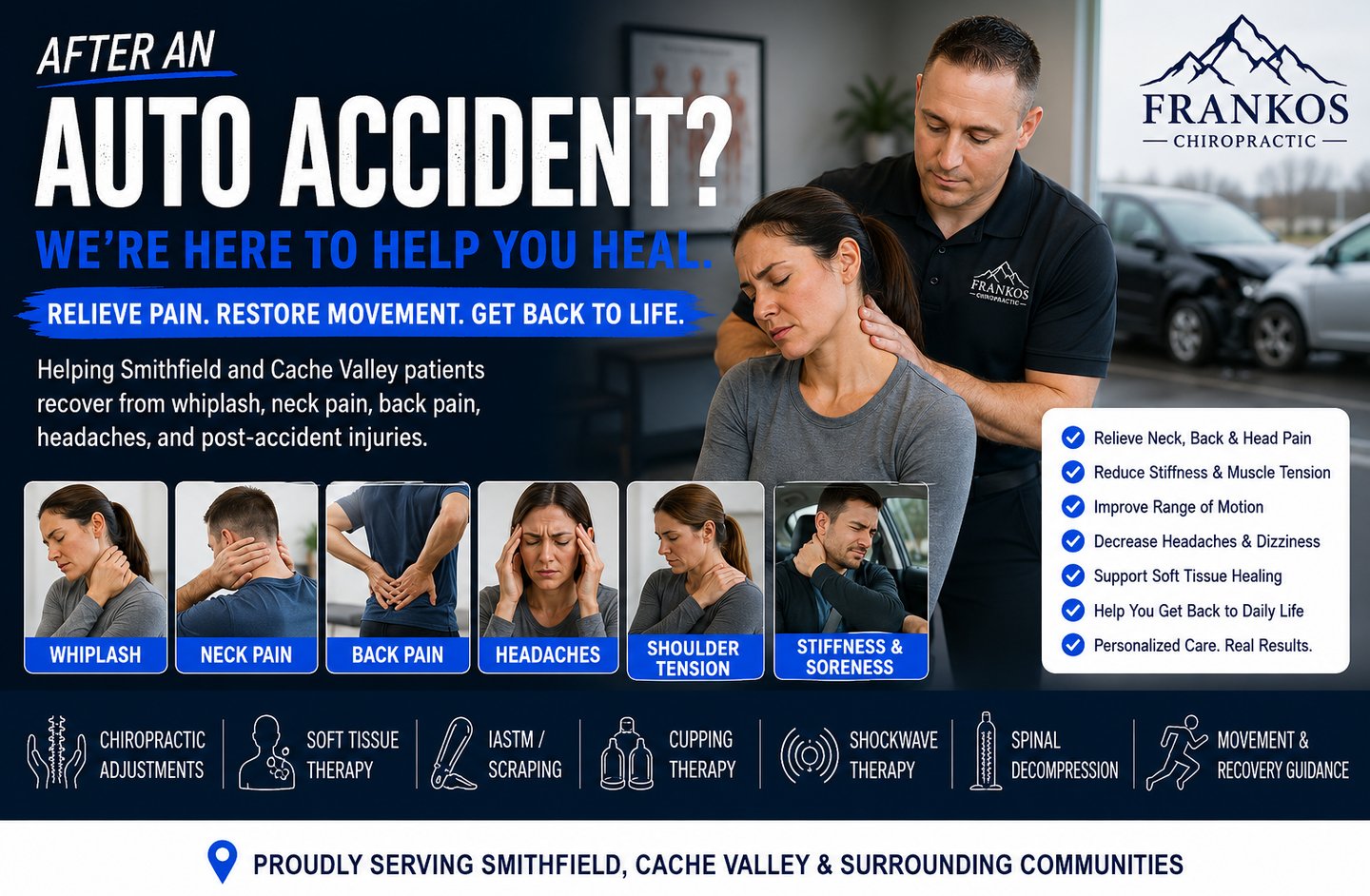
Auto Accident Chiropractor in Smithfield & Cache Valley
Chiropractic Care for Whiplash, Neck Pain, Back Pain, Headaches, and Post-Accident Stiffness
Pain after a car accident does not always show up right away.
Some people feel sore immediately. Others feel mostly fine at the scene, then wake up the next morning with neck stiffness, headaches, low back pain, shoulder tension, or soreness that keeps getting worse over the next few days.
That delayed pain can be confusing.
You may wonder if you are actually injured, if it will go away on its own, or if you should get checked.
At Frankos Chiropractic in Smithfield, Utah, we help patients throughout Cache Valley with auto accident injuries, whiplash-type symptoms, neck pain, back pain, headaches, shoulder tension, muscle stiffness, and mobility problems after a collision.
Our goal is not to scare you.
The goal is to understand what happened, identify what areas are irritated, rule out signs that need medical referral, and help you recover movement as safely as possible.
Auto Accident Pain Can Be Delayed
One of the most common things patients say after an accident is:
“I felt okay at first, but now I’m hurting.”
That is common.
After a collision, adrenaline and stress can temporarily mask symptoms. As the body calms down, soreness, stiffness, headaches, and muscle guarding may become more noticeable.
Symptoms may develop:
later that day
the next morning
over the next few days
sometimes even longer after the accident
Delayed symptoms do not automatically mean something severe happened, but they should not be ignored.
If pain, stiffness, headaches, numbness, tingling, or reduced movement appear after a crash, it is worth getting evaluated.
Common Symptoms After a Car Accident
Auto accident injuries can show up in different ways depending on the direction of impact, speed, position of your body, head position, seatbelt use, airbags, previous injuries, and how your body absorbed the force.
Patients commonly report:
neck pain
neck stiffness
whiplash-type symptoms
headaches
pain at the base of the skull
upper back tightness
shoulder tension
low back pain
mid-back pain
muscle spasms
soreness when turning the head
pain after sitting or driving
reduced range of motion
dizziness
jaw tightness
numbness or tingling
pain traveling into the arms or legs
sleep difficulty
fatigue after the accident
Some symptoms are mild and improve quickly.
Others keep building and start affecting work, sleep, driving, parenting, exercise, and normal daily life.
What Is Whiplash?
Whiplash is a neck injury that can happen when the head and neck move quickly back and forth or side to side during a collision.
It is commonly associated with rear-end accidents, but it can also happen in side-impact crashes, front-impact crashes, sports injuries, falls, and other trauma.
Whiplash can irritate:
muscles
ligaments
joints
discs
nerves
tendons
surrounding soft tissues
Whiplash is often called a soft tissue injury, but that does not mean it is fake or minor.
Soft tissues can become painful, inflamed, guarded, and restricted after trauma.
Whiplash Symptoms
Whiplash symptoms may include:
neck pain
neck stiffness
headaches
pain at the base of the skull
shoulder tightness
upper back pain
reduced neck movement
dizziness
jaw discomfort
fatigue
arm symptoms
numbness or tingling
muscle spasms
pain that worsens with movement
Some people feel symptoms right away.
Others notice symptoms later.
Because whiplash can overlap with other injuries, it is important to get evaluated after a crash if symptoms develop.
Neck Pain After an Accident
Neck pain is one of the most common complaints after a car accident.
It may feel like:
tightness
stiffness
sharp pain
aching
burning
pressure
pain turning the head
pain looking up or down
soreness into the shoulders
headache-related neck tension
Sometimes the neck pain is mostly muscular.
Other times, the joints, ligaments, discs, or nerves may be involved.
If pain is severe, travels into the arms, causes numbness, tingling, or weakness, or follows a major crash, it should be taken seriously.
Back Pain After an Accident
Low back pain after a crash is also common.
Even if the impact is mostly felt in the neck, the lower back can still be irritated by bracing, twisting, seatbelt force, or sudden loading through the spine and pelvis.
Back pain after an accident may include:
low back stiffness
muscle spasms
pain with sitting
pain while driving
pain standing up
hip or glute tightness
sciatica-like symptoms
pain into the leg
difficulty bending or lifting
If low back pain is accompanied by numbness, tingling, weakness, loss of bladder or bowel control, or pain after major trauma, urgent medical evaluation may be needed.
Headaches After a Car Accident
Headaches after a car accident can come from several sources.
They may be related to:
whiplash
neck muscle tension
upper cervical joint irritation
concussion
head impact
stress after the crash
jaw tension
poor sleep after the accident
A headache after an accident should not be dismissed, especially if it is severe, unusual, worsening, or comes with dizziness, confusion, vomiting, vision changes, memory problems, balance problems, or neurological symptoms.
If you hit your head or suspect a concussion, medical evaluation should come first.
Shoulder, Mid-Back, and Rib Pain After a Crash
Not all accident symptoms stay in the neck or low back.
Patients may also feel pain in the:
shoulders
upper back
shoulder blades
ribs
chest wall
collarbone area
arms
hands
Seatbelts, bracing during impact, airbag deployment, and sudden twisting can all irritate the upper body.
Shoulder and upper back tension may also develop as the neck guards after whiplash.
If chest pain, shortness of breath, severe rib pain, or pain with breathing is present, medical evaluation is important.
Numbness, Tingling, or Radiating Pain After an Accident
Numbness, tingling, burning, weakness, or pain traveling into the arms or legs may suggest nerve irritation.
This can happen when nerves are irritated in the neck, back, shoulder region, pelvis, or surrounding tissues.
Symptoms may include:
tingling into the hands
numbness in the fingers
pain down the arm
burning into the shoulder blade
sciatica-like leg pain
numbness in the foot
weakness gripping
heaviness in the arm or leg
These symptoms should be evaluated carefully.
If nerve symptoms are worsening, severe, or associated with weakness, medical evaluation may be necessary.
When to Seek Emergency Care After a Car Accident
Chiropractic care can be helpful for many post-accident musculoskeletal symptoms, but some symptoms need urgent medical care first.
Seek emergency care or urgent medical evaluation after a crash if you have:
loss of consciousness
suspected concussion
severe headache
confusion or memory problems
vomiting after head injury
vision changes
difficulty speaking
weakness, numbness, or tingling that is worsening
difficulty walking or balance problems
chest pain
shortness of breath
severe abdominal pain
severe neck or back pain after trauma
loss of bowel or bladder control
numbness in the groin or saddle area
obvious deformity
suspected fracture
severe swelling or bruising
pain that is rapidly worsening
Mayo Clinic advises emergency care for severe neck pain after a motor vehicle accident, fall, or other significant injury, and recommends medical evaluation when neck pain spreads into the arms or legs or comes with headache, numbness, weakness, or tingling.
If you are unsure, it is better to be cautious.
Why Getting Checked Matters
Some accident injuries are obvious.
Others are not.
After a crash, pain may come from irritated joints, stretched ligaments, strained muscles, inflamed soft tissues, nerve irritation, disc irritation, or protective muscle guarding.
An evaluation helps answer important questions:
What areas were affected?
Is this likely muscular, joint-related, nerve-related, or something else?
Are there red flags that need referral?
Is imaging needed?
What movements are limited?
What should you avoid temporarily?
What type of care makes sense?
How can you safely return to normal activity?
Waiting is sometimes fine for very mild soreness.
But if symptoms are present, worsening, or affecting daily function, it is better to understand what is going on.
How Chiropractic Care May Help After an Auto Accident
Chiropractic care after an auto accident focuses on restoring movement, reducing stiffness, calming muscle guarding, and addressing mechanical irritation.
Care may help with:
neck stiffness
back pain
headaches related to neck tension
restricted range of motion
muscle spasms
soft tissue tightness
joint restriction
shoulder and upper back tension
movement problems after the crash
The goal is not to force aggressive treatment immediately after trauma.
The goal is to use appropriate care based on the stage of injury, symptoms, comfort level, and exam findings.
Our Auto Accident Treatment Approach
At Frankos Chiropractic, post-accident care depends on the patient and the injury pattern.
Chiropractic Adjustments
Adjustments may be used when restricted spinal, rib, pelvic, or extremity motion appears to be contributing to pain or stiffness.
After an accident, treatment may be modified depending on soreness, inflammation, and comfort level.
Gentle Techniques
Some accident patients are too sore for aggressive treatment early on.
Gentle techniques may be used when appropriate to help improve movement without overwhelming irritated tissues.
Soft Tissue Therapy
Soft tissue therapy may help address muscle guarding, trigger points, tightness, and tension patterns after an accident.
This may involve the neck, shoulders, upper back, low back, hips, or other affected areas.
IASTM / Scraping
IASTM may be used later in care when soft tissue restrictions, chronic tightness, or stuck tissue patterns are contributing to limited movement.
Cupping Therapy
Cupping may help with muscle tension, stiffness, and soft tissue restriction when appropriate.
Spinal Decompression
Spinal decompression may be considered in certain cases involving low back pain, disc-related irritation, or sciatica-like symptoms.
Not every accident patient is a candidate.
Movement and Home Guidance
Recovery often works better when treatment is paired with practical guidance.
Depending on the case, we may discuss:
gentle movement
sleep positions
driving posture
work modifications
avoiding heavy lifting temporarily
heat or ice
activity pacing
return to exercise
when to seek further evaluation
What Your First Visit Looks Like
Your first visit is focused on understanding the crash and your symptoms.
We will talk through:
when the accident happened
direction of impact
whether airbags deployed
whether you hit your head
whether symptoms started immediately or later
where you feel pain
whether symptoms travel into arms or legs
whether you have headaches, dizziness, numbness, or tingling
what movements are limited
what makes symptoms better or worse
previous injuries
work and daily activity demands
From there, we decide whether chiropractic care is appropriate or whether medical referral, imaging, or co-management may be needed.
Should You Wait to See If Accident Pain Goes Away?
Some mild soreness may improve on its own.
But pain after a crash should be treated differently than ordinary soreness after a workout.
A car accident applies force to the body quickly and unexpectedly. Even a lower-speed collision can irritate soft tissues and joints, especially if your head was turned, your body braced, or you already had an old injury.
You should consider getting checked if:
pain lasts more than a few days
symptoms are getting worse
headaches develop
neck or back movement is limited
pain affects sleep
pain affects driving
pain travels into the arms or legs
numbness or tingling appears
you feel unusually stiff or guarded
Whiplash Recovery Timeline
Recovery varies.
Cleveland Clinic notes that many minor whiplash injuries improve within days or weeks, while more severe injuries may take weeks or months. Some people can develop longer-lasting symptoms.
Factors that may affect recovery include:
severity of impact
direction of impact
previous neck or back injuries
age
symptoms before the accident
speed of onset
headache involvement
nerve symptoms
sleep disruption
stress after the crash
how soon symptoms are evaluated
consistency with care and movement guidance
The focus should be steady improvement, not unrealistic promises.
Should You Use Ice, Heat, or Rest?
Early after an accident, many patients feel better with ice, gentle movement, and avoiding activities that clearly worsen symptoms.
Heat may help later when muscle tightness becomes more prominent.
Complete immobilization is not usually ideal for ordinary whiplash recovery unless specifically recommended by a healthcare professional. Mayo Clinic’s medical update on whiplash notes that collar immobilization is generally ineffective for acute whiplash-associated disorders and emphasizes mobility instead.
That does not mean you should push through pain.
It means recovery usually involves the right amount of movement at the right time.
Documentation After an Accident
After a car accident, documentation matters.
We recommend keeping track of:
date and time of the accident
symptoms and when they started
areas of pain
headaches, dizziness, numbness, or tingling
changes in sleep
difficulty driving or working
medical visits
imaging or referrals
treatment recommendations
changes in symptoms over time
This is helpful for your own care and for remembering how symptoms changed after the collision.
We do not provide legal advice, but clear documentation can be useful when dealing with accident-related care.
Auto Accident Care for Cache Valley Patients
Frankos Chiropractic is located in Smithfield, Utah and serves patients throughout Cache Valley and nearby Southeast Idaho.
Patients commonly visit us from:
Smithfield
Logan
North Logan
Hyde Park
Richmond
Lewiston
Providence
Hyrum
Wellsville
Nibley
Preston, Idaho
Franklin, Idaho
surrounding Cache Valley and Southeast Idaho communities
Our office is physically located in Smithfield, and patients from nearby communities often travel to us for auto accident injury care, whiplash treatment, neck pain care, back pain care, headache-related neck tension, soft tissue therapy, decompression, IASTM, and cupping.
Why Patients Choose Frankos Chiropractic After an Auto Accident
Patients choose our office because they want practical care, clear explanations, and treatment that matches what their body can tolerate.
We try to keep the process simple:
Listen to what happened.
Evaluate the painful areas.
Check for signs that need referral.
Treat what is actually contributing.
Help you understand the next step.
Patients often appreciate:
personalized post-accident care
same-day appointments when available
walk-ins when the schedule allows
chiropractic adjustments
gentle treatment options
soft tissue therapy
IASTM / scraping
cupping therapy
spinal decompression when appropriate
practical home recommendations
a smaller Smithfield clinic environment
We are not here to make the accident sound worse than it is.
We are here to help you understand what is going on and what care makes sense.
Frequently Asked Questions About Auto Accident Chiropractic Care
Should I see a chiropractor after a car accident?
If you have neck pain, back pain, headaches, stiffness, or reduced movement after a car accident, it is reasonable to get evaluated. If symptoms are severe or include red flags, medical or emergency care may be needed first.
Can pain show up days after a car accident?
Yes. Pain after an accident may develop later as adrenaline wears off and soft tissue irritation becomes more noticeable.
What is whiplash?
Whiplash is a neck injury caused by rapid movement of the head and neck, often after a rear-end or side-impact collision. It can affect muscles, ligaments, joints, discs, nerves, and other soft tissues.
What are common whiplash symptoms?
Common symptoms include neck pain, stiffness, headaches, shoulder tension, upper back pain, reduced range of motion, dizziness, jaw discomfort, and sometimes numbness or tingling.
Do you treat headaches after car accidents?
Yes. We see patients with headaches after accidents, especially when headaches are related to neck tension or whiplash-type symptoms. Severe or unusual headaches should be medically evaluated.
Do you treat low back pain after car accidents?
Yes. Low back pain, stiffness, muscle spasms, and sciatica-like symptoms can occur after a crash. Treatment depends on the cause and severity.
Do I need imaging after an accident?
Not every patient needs imaging, but imaging may be needed if there was major trauma, severe pain, neurological symptoms, suspected fracture, worsening symptoms, or other red flags.
Should I rest after whiplash?
Some rest may be needed early, but complete inactivity or prolonged immobilization is not usually ideal unless specifically recommended. Gentle movement is often part of recovery when appropriate.
Can you help with accident documentation?
We document symptoms, exam findings, treatment provided, and progress over time as part of normal patient care. We do not provide legal advice.
Do you accept walk-ins?
Walk-ins are welcome when the schedule allows. Booking ahead is recommended to make sure we have time available.
Schedule Auto Accident Care in Smithfield
If you are dealing with neck pain, back pain, headaches, whiplash symptoms, stiffness, or muscle soreness after a car accident, Frankos Chiropractic is here to help.
Our Smithfield office provides chiropractic care, soft tissue therapy, IASTM, cupping therapy, spinal decompression when appropriate, and movement-focused care for auto accident patients throughout Cache Valley.
Book an appointment today and take the next step toward understanding what happened and what can be done about it.