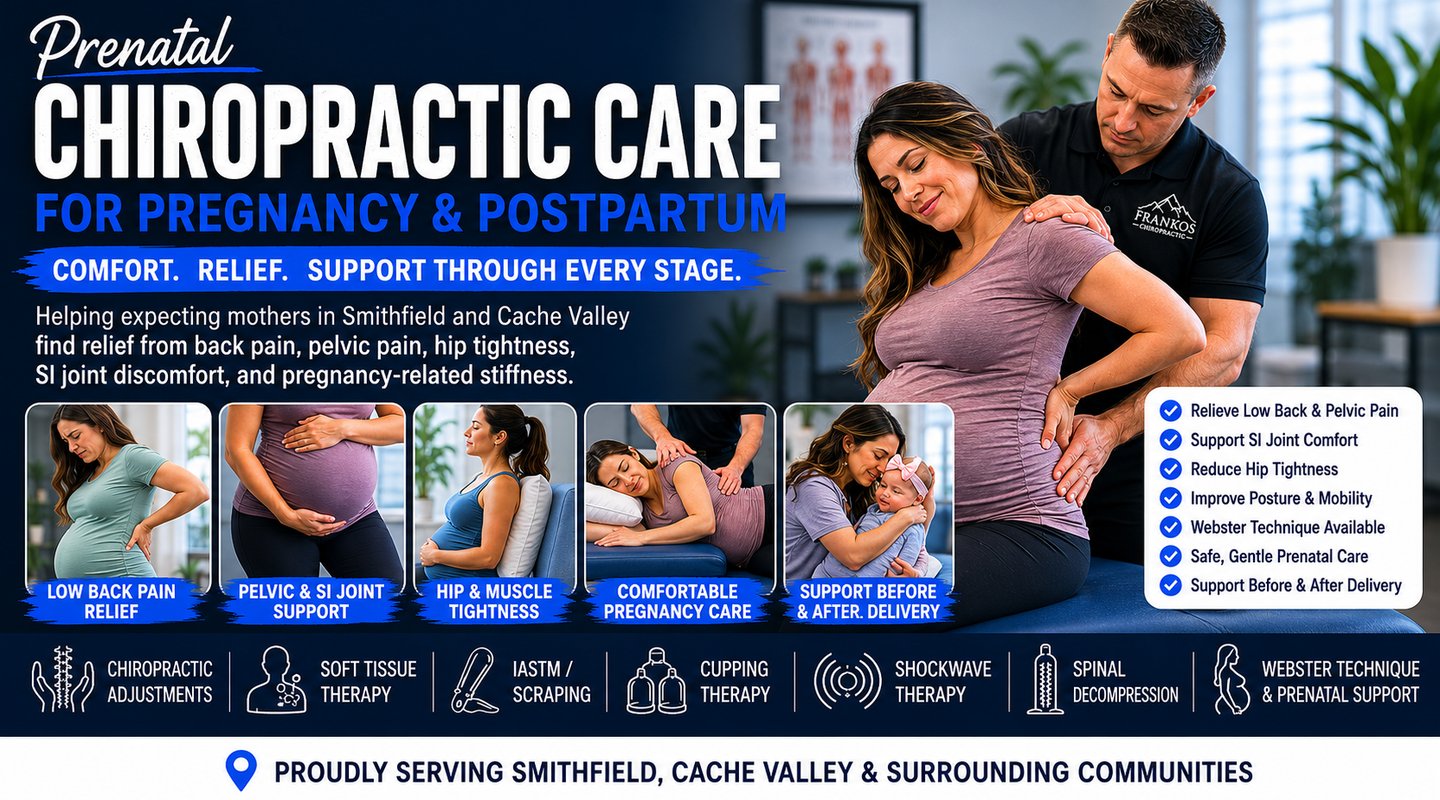
Pregnancy Back Pain Relief in Smithfield & Cache Valley
Prenatal Chiropractic Care for Low Back Pain, Pelvic Discomfort, Hip Tightness, and Pregnancy-Related Stiffness
Pregnancy changes the way your body moves.
As your baby grows, your center of gravity shifts, your posture changes, your pelvis handles more demand, and the muscles around your low back, hips, and abdomen have to work differently.
For some expecting mothers, those changes are manageable.
For others, pregnancy brings low back pain, pelvic discomfort, hip tightness, SI joint irritation, sciatica-like symptoms, round ligament discomfort, or stiffness that makes it harder to walk, sleep, work, sit, stand, or care for daily responsibilities.
At Frankos Chiropractic in Smithfield, Utah, we provide prenatal chiropractic care for expecting mothers throughout Cache Valley.
The goal is not to overcomplicate pregnancy care.
The goal is to help you feel more comfortable, move better, and receive care that is modified for pregnancy and your comfort level.
Pregnancy Back Pain Is Common, But You Still Deserve Support
Many women are told that back pain is just part of pregnancy.
It is true that pregnancy can create more stress through the low back, pelvis, hips, and surrounding muscles.
But that does not mean you just have to suffer through it.
Pregnancy-related discomfort can affect:
sleep
walking
sitting
standing
work
exercise
caring for children
getting in and out of the car
rolling over in bed
daily energy
overall comfort
Many expecting mothers come in saying:
“My low back hurts all the time.”
“My hips feel tight.”
“I have pain near my SI joint.”
“It hurts to roll over in bed.”
“I feel pressure in my pelvis.”
“I get pain down into my glute or leg.”
“I cannot get comfortable at night.”
“I want care that is gentle and pregnancy-safe.”
Those are real concerns, and they deserve to be taken seriously.
Why Back Pain Happens During Pregnancy
Pregnancy changes the body in several ways.
As the belly grows, the body’s center of gravity shifts forward. Many women naturally compensate by leaning back or changing posture, which can increase stress through the lower back.
At the same time, the pelvis, hips, low back, and supporting muscles are adapting to extra demand.
Common contributors to pregnancy back pain include:
changing posture
increased low back curve
pelvic and SI joint stress
hip tightness
muscle fatigue
ligament tension
altered walking mechanics
pressure through the low back and pelvis
difficulty sleeping comfortably
lifting or carrying other children
sitting or standing for long periods
reduced ability to move normally
This does not mean anything is “wrong” with your pregnancy.
It means your body is adapting, and sometimes those adaptations create pain, stiffness, or tension.
Common Pregnancy-Related Symptoms We See
Expecting mothers may visit Frankos Chiropractic for:
low back pain
pelvic discomfort
SI joint pain
hip tightness
glute pain
sciatica-like symptoms
pubic symphysis discomfort
round ligament discomfort
mid-back tension
neck and shoulder tightness
headaches related to tension
difficulty sleeping comfortably
pain when walking
pain rolling over in bed
stiffness after sitting
general pregnancy-related mobility issues
The exact pattern matters.
Some pregnancy discomfort is more low-back focused. Some is more pelvic. Some is muscle tension. Some involves nerve-like symptoms into the hip or leg. Some may need medical evaluation first.
Low Back Pain During Pregnancy
Low back pain is one of the most common reasons expecting mothers seek care.
It may feel like:
aching across the low back
one-sided low back pain
tightness near the belt line
pain after standing
pain after sitting
pain when lifting
difficulty bending
stiffness getting out of bed
pain getting in or out of the car
Low back pain during pregnancy often involves a mix of posture changes, muscle fatigue, pelvic mechanics, and joint stress.
Prenatal chiropractic care may help by improving mobility, reducing mechanical tension, and helping the body move more comfortably.
Pelvic Pain and SI Joint Discomfort
The sacroiliac joints, often called SI joints, are located near the back of the pelvis.
During pregnancy, these areas may become more irritated as the pelvis adapts.
SI joint or pelvic-related discomfort may feel like:
pain on one side of the low back
pain near the dimples of the low back
pain into the glute
discomfort when walking
pain rolling over in bed
pain climbing stairs
pain standing on one leg
pelvic pressure
hip tightness
Pelvic discomfort can be frustrating because it affects so many daily movements.
Care often focuses on gentle pelvic and sacral mobility, surrounding muscle tension, and comfortable positioning.
Sciatica-Like Symptoms During Pregnancy
Some pregnant patients feel pain that travels into the glute, hip, thigh, or leg.
This may feel like:
sharp pain
burning
tingling
numbness
deep glute pain
pain down one side
pain worse with sitting
pain worse when walking or standing
Not every leg symptom during pregnancy is true sciatica, but nerve-like symptoms should still be evaluated carefully.
Treatment may focus on reducing irritation around the low back, pelvis, hips, glutes, and surrounding soft tissues.
If numbness, weakness, severe pain, or worsening neurological symptoms are present, medical evaluation may be needed.
Hip Tightness During Pregnancy
Hip tightness is common during pregnancy because the hips, pelvis, and low back are all adapting together.
Patients may feel:
tight hip flexors
glute tightness
pain on the outside of the hip
difficulty getting comfortable
tightness after sitting
pain with walking
discomfort when sleeping on one side
Hip tightness may be connected to pelvic mechanics, posture changes, muscle guarding, or the way the body is carrying extra demand.
Prenatal care may include gentle soft tissue work, mobility support, and comfortable treatment positioning.
Round Ligament Pain
Round ligament pain is a common pregnancy symptom, often felt as sharp, pulling, or cramping discomfort in the lower abdomen, groin, or hip area.
Cleveland Clinic notes that round ligament pain is a common, normal pregnancy symptom, often occurring in the second trimester as the uterus and surrounding ligaments stretch. They also recommend calling your provider if abdominal pain is accompanied by symptoms like bleeding.
Round ligament pain may be triggered by:
standing quickly
rolling over
coughing
sneezing
sudden movement
walking
changing positions
Chiropractic care does not replace prenatal medical care, but some patients appreciate gentle support for the surrounding pelvis, hips, and low back when pregnancy-related tension is affecting movement.
Pubic Symphysis Discomfort
Some expecting mothers feel pain or pressure in the front of the pelvis near the pubic bone.
This may be worse with:
walking
stairs
rolling in bed
getting out of a car
standing on one leg
separating the knees
certain exercises
This type of pain should be handled carefully.
Care may focus on comfort, gentle pelvic support, movement modification, and avoiding positions that aggravate symptoms.
If pain is severe or significantly affects walking, your pregnancy provider may need to be involved.
What Is Prenatal Chiropractic Care?
Prenatal chiropractic care is chiropractic care modified for pregnancy.
That means positioning, technique, pressure, and treatment style are adjusted to the patient’s stage of pregnancy, comfort level, and symptoms.
Prenatal care may involve:
gentle chiropractic adjustments
pelvic and sacral mobility work
soft tissue therapy
pregnancy-specific positioning
comfort-focused care
home recommendations
mobility guidance
support for low back and hip tension
The goal is not aggressive treatment.
The goal is to help the body move more comfortably during pregnancy.
What Is the Webster Technique?
The Webster Technique is a pregnancy-focused chiropractic analysis and adjustment approach. The International Chiropractic Pediatric Association describes Webster as a specific chiropractic analysis and diversified adjustment that focuses on reducing the effects of sacral/pelvic dysfunction and improving neurobiomechanical function in the sacral and pelvic region.
At Frankos Chiropractic, we talk about Webster Technique carefully and honestly.
Webster Technique is not a promise to turn a baby.
It is not a guarantee of a certain birth outcome.
It is not a replacement for prenatal medical care.
It is a chiropractic approach focused on sacral motion, pelvic mechanics, and surrounding soft tissue tension during pregnancy.
The goal is to support better pelvic function and comfort for the expecting mother.
Why We Avoid Overpromising With Pregnancy Care
Pregnancy care should be honest.
You deserve clear expectations.
Prenatal chiropractic care may help some expecting mothers feel more comfortable, move better, and manage pregnancy-related back, hip, and pelvic tension.
But no responsible provider should promise:
a pain-free pregnancy
a certain birth position
a faster labor
a guaranteed delivery outcome
that chiropractic care replaces prenatal medical care
Your OB, midwife, or pregnancy provider remains the primary provider for your pregnancy and baby’s medical care.
Chiropractic care is supportive care for the musculoskeletal stress pregnancy places on the body.
When Pregnancy Back Pain Needs Medical Attention
Most pregnancy-related back pain is not an emergency, but some symptoms should be discussed with your healthcare provider right away.
Contact your pregnancy provider promptly if back pain comes with:
vaginal bleeding
fever
burning during urination
cramping
contractions
fluid leakage
severe abdominal pain
severe or worsening pelvic pain
weakness, numbness, or neurological symptoms
pain after a fall or accident
symptoms that feel unusual or concerning
Mayo Clinic notes that back pain during pregnancy can sometimes be a sign of preterm labor or urinary tract infection, especially when accompanied by vaginal bleeding, fever, or burning with urination.
If you are unsure, call your pregnancy provider.
It is always better to be cautious during pregnancy.
How Chiropractic Care May Help During Pregnancy
Prenatal chiropractic care may help by addressing movement and tension patterns involving the spine, pelvis, hips, and surrounding soft tissues.
Care may focus on:
improving low back mobility
supporting pelvic motion
reducing muscle tension
addressing SI joint discomfort
helping hip tightness
improving comfort with walking
reducing stiffness after sitting
improving movement tolerance
helping the body adapt to changing posture
The goal is not to force the body into a certain position.
The goal is to reduce unnecessary stress and help you feel more comfortable as your body changes.
Our Prenatal Chiropractic Approach
At Frankos Chiropractic, pregnancy care is based on comfort, safety, and the individual patient.
Pregnancy-Modified Adjustments
Adjustments are modified for pregnancy and may involve gentler techniques, side-lying positions, seated positions, or pregnancy-supportive positioning.
Webster Technique
Webster Technique may be used to assess sacral motion, pelvic mechanics, and surrounding soft tissue tension.
Soft Tissue Therapy
Soft tissue therapy may be used for muscle tightness in the low back, hips, glutes, upper back, and surrounding areas.
Gentle Mobility Support
Depending on your symptoms, we may talk through gentle movement, walking, stretching, and position changes that are realistic during pregnancy.
Comfort-Focused Positioning
We avoid positions that are uncomfortable or inappropriate for pregnancy.
Care is adjusted to your stage of pregnancy and your comfort level.
What You Can Do at Home for Pregnancy Back Pain
Helpful strategies may include:
using supportive shoes
avoiding standing in one position too long
changing positions frequently
sleeping with a pillow between the knees
using a pregnancy pillow if helpful
using heat on tight muscles if approved by your provider
walking gently if tolerated
avoiding sudden twisting or heavy lifting
practicing good posture
keeping shoulders relaxed
bending with the knees instead of the back
using a support belt if recommended
ACOG notes that back exercises can strengthen and stretch the muscles that support the back and legs, promote good posture, and help prepare for labor and delivery.
As always, follow your pregnancy provider’s guidance, especially if you have pregnancy complications or activity restrictions.
Sleep and Pregnancy Back Pain
Sleep can become difficult as pregnancy progresses.
Low back pain, hip pressure, pelvic discomfort, and difficulty rolling over can all make rest harder.
Some patients feel better with:
a pillow between the knees
a pregnancy pillow
side-lying support
avoiding twisting while rolling
changing positions slowly
supporting the belly when needed
gentle movement before bed
Small changes do not fix every problem, but they can reduce nightly irritation.
Lifting, Toddlers, and Daily Life During Pregnancy
Pregnancy does not pause normal life.
Many expecting mothers are still working, caring for children, lifting toddlers, cleaning, driving, exercising, and trying to keep life moving.
That can make back and pelvic pain more difficult to manage.
Common triggers include:
lifting a child
carrying car seats
bending into cribs
doing laundry
prolonged standing
sitting at work
walking on hard surfaces
getting in and out of the car
climbing stairs
rolling over in bed
Care should be practical.
We try to help you find realistic ways to reduce irritation without pretending you can stop being a parent, employee, spouse, or busy person.
Exercise During Pregnancy
Movement can be helpful during pregnancy when approved by your healthcare provider.
Many expecting mothers tolerate gentle walking, stretching, prenatal yoga, swimming, or pregnancy-appropriate strength work.
But exercise should be adjusted if it causes:
sharp pain
pelvic pressure
worsening symptoms
dizziness
bleeding
contractions
unusual shortness of breath
symptoms that feel concerning
If you are unsure what movement is safe for your pregnancy, ask your OB, midwife, or pregnancy provider.
What Your First Visit Looks Like
Your first visit is focused on understanding your symptoms and comfort level.
We will talk through:
how far along you are
where you feel pain
when symptoms started
what movements make pain worse
whether pain travels into the leg
whether there is numbness or tingling
sleep position
work and daily activity demands
previous pregnancies
previous injuries
your comfort level with chiropractic care
whether your pregnancy provider has given restrictions
From there, we decide what type of care makes sense.
If your symptoms suggest something that needs your pregnancy provider’s attention, we will tell you.
Prenatal Chiropractic Care for Cache Valley Patients
Frankos Chiropractic is located in Smithfield, Utah and serves expecting mothers throughout Cache Valley and nearby Southeast Idaho.
Patients commonly visit us from:
Smithfield
Logan
North Logan
Hyde Park
Richmond
Lewiston
Providence
Hyrum
Wellsville
Nibley
Preston, Idaho
Franklin, Idaho
surrounding Cache Valley and Southeast Idaho communities
Our office is physically located in Smithfield, and patients from nearby communities often travel to us for prenatal chiropractic care, pregnancy back pain relief, pelvic discomfort, hip tightness, Webster Technique care, and pregnancy-related mobility support.
Why Patients Choose Frankos Chiropractic for Pregnancy Care
Expecting mothers choose our office because they want gentle care, clear explanations, and a provider who respects pregnancy comfort and safety.
Patients often appreciate:
prenatal chiropractic care
Webster Technique availability
pregnancy-modified positioning
gentle treatment options
care for low back pain and pelvic discomfort
support for hip tightness and SI joint discomfort
soft tissue therapy when appropriate
practical home recommendations
same-day appointments when available
walk-ins when the schedule allows
a smaller Smithfield clinic environment
We are not here to make dramatic promises.
We are here to support comfort, movement, and function during pregnancy.
Frequently Asked Questions About Pregnancy Chiropractic Care
Is chiropractic care safe during pregnancy?
Many expecting mothers seek prenatal chiropractic care for back pain, hip discomfort, pelvic tension, and mobility support. Care should be modified for pregnancy and based on the patient’s comfort level. If you have pregnancy complications or medical concerns, talk with your pregnancy provider first.
What does prenatal chiropractic care help with?
Patients often seek care for low back pain, pelvic discomfort, SI joint pain, hip tightness, glute pain, sciatica-like symptoms, round ligament discomfort, and pregnancy-related stiffness.
What is the Webster Technique?
Webster Technique is a pregnancy-focused chiropractic approach that evaluates sacral motion, pelvic mechanics, and surrounding soft tissue tension. It is not a guarantee of a specific birth outcome.
Can Webster Technique turn a breech baby?
No chiropractic care should be presented as a guaranteed way to turn a baby. Webster Technique focuses on sacral and pelvic function. Your pregnancy provider should guide medical decisions about baby position and birth planning.
Can chiropractic care help pregnancy sciatica?
Chiropractic care may help some patients with sciatica-like symptoms by addressing low back, pelvic, hip, and soft tissue irritation. Numbness, weakness, or worsening nerve symptoms should be evaluated carefully.
How is treatment modified during pregnancy?
Care may use side-lying, seated, or supported positions. Techniques are adjusted based on comfort level, stage of pregnancy, and symptoms.
When should pregnancy back pain be checked by my OB or midwife?
Contact your pregnancy provider if back pain comes with vaginal bleeding, fever, burning during urination, cramping, contractions, fluid leakage, severe abdominal pain, or symptoms that feel unusual or concerning.
Do you treat postpartum discomfort?
Yes, postpartum patients may seek care for low back pain, neck and shoulder tension, hip discomfort, pelvic stiffness, nursing posture strain, and general mobility issues.
Do you accept walk-ins?
Walk-ins are welcome when the schedule allows. Booking ahead is recommended to make sure we have time available.
Do you serve Logan and North Logan patients?
Yes. Our office is located in Smithfield, and we regularly serve expecting mothers from Logan, North Logan, Hyde Park, Richmond, and surrounding Cache Valley communities.
Schedule Prenatal Chiropractic Care in Smithfield
If pregnancy-related back pain, pelvic discomfort, hip tightness, SI joint pain, or stiffness is making daily life harder than it should be, Frankos Chiropractic is here to help.
Our Smithfield office provides prenatal chiropractic care, Webster Technique care, soft tissue therapy when appropriate, and pregnancy-modified treatment for expecting mothers throughout Cache Valley.
Book an appointment today and take the next step toward feeling more comfortable during pregnancy.