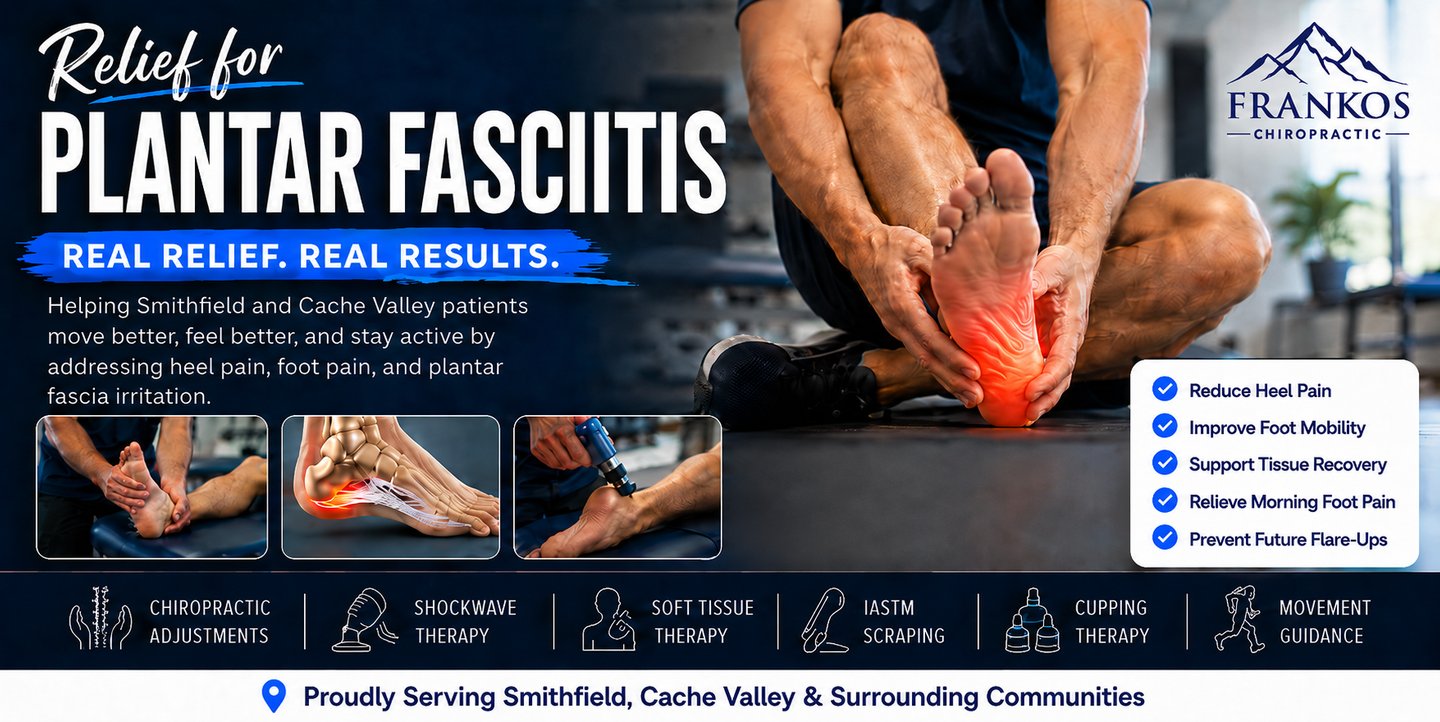
Plantar Fasciitis Treatment in Smithfield & Cache Valley
Help for Heel Pain, Foot Pain, Morning Pain, and Stubborn Plantar Fascia Irritation
Plantar fasciitis can make every step feel frustrating.
For many people, the worst pain happens first thing in the morning. You get out of bed, take a few steps, and feel a sharp pain near the heel or bottom of the foot.
Then it may loosen up a little as you move around.
But later in the day, after standing, walking, working, exercising, or sitting for a while and getting back up, the pain comes right back.
At Frankos Chiropractic in Smithfield, Utah, we help patients throughout Cache Valley with plantar fasciitis, heel pain, arch tightness, calf tension, Achilles irritation, foot stiffness, and stubborn soft tissue problems that keep returning.
Our goal is not to just tell every patient to stretch more.
The goal is to understand what is irritating the plantar fascia, what activities keep loading it, and what treatment options make sense based on how long the problem has been going on.
What Is Plantar Fasciitis?
The plantar fascia is a thick band of connective tissue that runs along the bottom of the foot from the heel toward the toes.
It helps support the arch of the foot and absorbs stress during standing, walking, running, and daily movement.
Plantar fasciitis happens when this tissue becomes irritated, overloaded, or painful near its attachment at the heel.
Even though the word “fasciitis” sounds like pure inflammation, many chronic cases involve more than simple inflammation. The tissue can become irritated from repeated stress, poor load tolerance, calf tightness, footwear issues, changes in activity, or standing and walking demands.
That is why plantar fasciitis can be so stubborn.
It is used every time you stand and walk.
Common Plantar Fasciitis Symptoms
Plantar fasciitis usually has a recognizable pattern.
Patients commonly describe:
sharp heel pain
pain on the bottom of the foot
pain with the first steps in the morning
pain after sitting and then standing
arch tightness
heel tenderness
pain after long periods of standing
pain after walking or running
foot stiffness
calf tightness
pain that improves after warming up but returns later
discomfort that keeps coming back despite stretching
Some patients feel a sharp stabbing pain near the heel.
Others feel a deep ache through the arch or bottom of the foot.
The exact location and pattern matter because not all heel pain is plantar fasciitis.
Why Plantar Fasciitis Hurts in the Morning
Morning heel pain is one of the classic plantar fasciitis complaints.
When you sleep, the foot often rests in a relaxed position. The plantar fascia and calf can tighten overnight. Then, when you stand up and load the foot first thing in the morning, the irritated tissue gets stretched and compressed quickly.
That first load can be painful.
Many patients say:
“The first few steps are the worst.”
“It loosens up after I walk around.”
“It comes back later if I stand too long.”
“I dread stepping out of bed.”
That pattern is one reason plantar fasciitis can feel better temporarily but still not be fully resolved.
The tissue may warm up, but the underlying irritation is still there.
Why Plantar Fasciitis Keeps Coming Back
Plantar fasciitis often becomes frustrating because it is hard to fully rest the foot.
You still have to walk.
You still have to work.
You still have to stand.
You still have daily life.
The plantar fascia gets loaded constantly.
Common reasons symptoms keep returning include:
standing for long periods
walking more than usual
running or jumping
tight calves
poor ankle mobility
unsupportive shoes
sudden activity increases
hard surfaces
high arches or flat feet
repetitive work demands
weight changes
previous foot or ankle injuries
not enough recovery time
A lot of people try to stretch for a few days, feel a little better, then return to the same activity level too quickly.
The pain comes back because the tissue has not built enough tolerance yet.
Plantar Fasciitis vs. Heel Spur
Many patients are told they have a heel spur and assume that is the cause of their pain.
Sometimes heel spurs show up on imaging in people with plantar fasciitis.
But a heel spur is not always the reason the foot hurts.
Some people have heel spurs and no pain at all. Others have plantar fasciitis symptoms without a major spur being the main issue.
The more important question is usually:
Why is the tissue around the heel irritated?
Treatment often focuses on reducing irritation, improving tissue tolerance, addressing tightness, and modifying the loads that keep aggravating the area.
Plantar Fasciitis vs. Other Types of Heel Pain
Not all heel pain is plantar fasciitis.
Other problems can mimic or overlap with plantar fascia pain.
Achilles Tendon Irritation
Achilles pain is usually felt more toward the back of the heel or lower calf rather than the bottom of the heel.
It may worsen with hills, stairs, running, jumping, or calf raises.
Heel Fat Pad Irritation
Fat pad irritation can feel like deep bruising under the heel.
It may feel worse walking barefoot on hard floors or standing for long periods.
Stress Fracture
A stress fracture may cause more constant, deep pain that worsens with activity and may not improve much with warming up.
This needs medical evaluation.
Nerve Irritation
Some foot pain involves burning, tingling, numbness, or nerve-like symptoms.
That may require a different approach than treating plantar fasciitis alone.
Referred Pain From the Low Back or Sciatica
Sometimes foot symptoms are related to nerve irritation from the low back.
If heel or foot pain comes with numbness, tingling, leg pain, or low back symptoms, the spine may need to be evaluated too.
That is why a good exam matters.
Who Commonly Gets Plantar Fasciitis?
Plantar fasciitis can affect a wide range of people.
We often see it in patients who:
stand for work
walk on hard surfaces
run or hike
suddenly increase activity
wear unsupportive shoes
have tight calves
have flat feet or high arches
work physical jobs
spend long days on their feet
are trying to stay active but keep pushing through heel pain
In Cache Valley, plantar fasciitis can show up in people who work on their feet, lift, run, hike, hunt, farm, coach, teach, work healthcare jobs, or spend weekends doing yard work and home projects.
It is not only a runner’s injury.
It is a load problem.
What Makes Plantar Fasciitis Worse?
Plantar fasciitis often gets aggravated by repeated loading.
Common triggers include:
barefoot walking on hard floors
standing for long periods
sudden increases in walking or running
poor shoe support
old shoes
long work shifts
hills or uneven surfaces
jumping or sprinting
tight calves
ignoring early symptoms
aggressive stretching into sharp pain
One of the biggest mistakes is trying to push through the pain until it becomes chronic.
Early symptoms are usually easier to calm down than pain that has been building for months.
When Heel Pain Needs Medical Attention
Most plantar fasciitis is not an emergency, but some symptoms should be checked carefully.
Consider medical evaluation if you have:
severe heel pain after a fall or injury
inability to bear weight
significant swelling or bruising
numbness, tingling, or burning that is worsening
open wounds or signs of infection
fever with foot pain
pain that is constant and worsening
pain that does not improve with conservative care
diabetes or circulation problems with new foot pain
suspected fracture or major injury
Chiropractic and conservative care can help many foot and soft tissue problems, but not every heel pain case is plantar fasciitis.
If your symptoms suggest something that needs imaging, podiatry, orthopedic care, or medical evaluation, we will tell you.
How Chiropractic Care May Help Plantar Fasciitis
Plantar fasciitis is a foot problem, but the foot does not work alone.
The ankle, calf, knee, hip, and even low back can affect how stress moves through the foot.
If the ankle is stiff, the calf is tight, the foot is overloaded, or the body is compensating from another area, the plantar fascia may keep taking more stress than it can handle.
Care may focus on:
improving foot and ankle mobility
reducing calf and plantar fascia tightness
improving tissue tolerance
addressing soft tissue restriction
reducing repeated irritation
evaluating movement patterns
supporting better load management
helping the foot tolerate activity again
The goal is not just to chase the painful heel.
The goal is to figure out why the tissue keeps getting irritated.
Our Plantar Fasciitis Treatment Approach
At Frankos Chiropractic, plantar fasciitis treatment may include different tools depending on the patient and how chronic the problem is.
Shockwave Therapy
Shockwave therapy is often considered for stubborn plantar fasciitis that has not improved with rest, stretching, shoe changes, or basic self-care.
It uses acoustic pressure waves directed into irritated tissue.
The goal is to support local tissue response and help chronic pain patterns calm down over time.
Shockwave therapy is not used for every patient, but it can be a helpful option when plantar fasciitis has been lingering.
Soft Tissue Therapy
Soft tissue therapy may be used on the plantar fascia, calf, Achilles region, and surrounding tissues.
This can help address tightness, trigger points, and guarding patterns that may be contributing to foot pain.
IASTM / Scraping
IASTM, also called scraping therapy, may be used for chronic soft tissue restriction.
It can be applied to the calf, foot, Achilles region, or plantar fascia area depending on the case.
Some patients like IASTM because it targets tissue that feels stuck or difficult to loosen with stretching alone.
Cupping Therapy
Cupping may be used around the calf and lower leg to help reduce soft tissue tension that contributes to foot stress.
It is usually combined with other care rather than used by itself.
Chiropractic Adjustments
Adjustments may be used when restricted motion in the foot, ankle, knee, hip, pelvis, or low back appears to be contributing to the problem.
Not every plantar fasciitis patient needs the same adjustment approach.
Movement and Activity Guidance
Treatment is more effective when it is paired with realistic activity changes.
Depending on the case, we may talk through:
shoe support
barefoot walking
standing time
activity pacing
calf stretching
foot mobility
return to running or hiking
avoiding sudden load increases
recovery between long days on your feet
The goal is to calm the tissue down without making you stop living your life completely.
Shockwave Therapy for Plantar Fasciitis
Shockwave therapy is one of the main services patients ask about for chronic plantar fasciitis.
It may be considered when heel pain has been present for weeks or months and keeps returning despite basic care.
Patients who may ask about shockwave often say:
“I’ve stretched, but it keeps coming back.”
“I changed shoes and still have pain.”
“The first steps every morning still hurt.”
“I can work through it, but it never goes away.”
“I want to avoid injections or surgery if possible.”
Shockwave therapy is not a guaranteed cure, but it can be a useful conservative option for stubborn soft tissue irritation.
It works best when combined with better load management, stretching, mobility work, and reducing the habits that keep irritating the tissue.
What You Can Do at Home for Plantar Fasciitis
Some home care can help, especially early on.
Helpful steps may include:
wearing supportive shoes
avoiding barefoot walking on hard floors
rolling the foot gently on a cold water bottle
stretching the calf
stretching the bottom of the foot gently
reducing painful activity temporarily
avoiding sudden increases in walking or running
replacing worn-out shoes
taking movement breaks during long standing days
gradually returning to activity instead of jumping back in
Be careful with aggressive stretching.
If a stretch creates sharp pain or makes symptoms worse afterward, it may be too much for the tissue at that stage.
Why Calf Tightness Matters
The calf and Achilles tendon influence how stress moves through the foot.
If the calf is tight or the ankle does not move well, the plantar fascia may be placed under more strain during walking, running, stairs, and standing.
This is why plantar fasciitis treatment often includes calf work.
The painful spot may be under the heel, but the contributing factors may be higher up the chain.
Shoes and Plantar Fasciitis
Shoes do not solve every case, but they matter.
Many patients notice symptoms are worse when they walk barefoot, wear flat shoes, or use old shoes with poor support.
Supportive shoes may help reduce stress on the irritated tissue while it calms down.
That does not mean everyone needs expensive custom orthotics.
Some people do well with better shoes, heel cups, over-the-counter inserts, or temporary support while the tissue recovers.
The right choice depends on the person.
Plantar Fasciitis and Running
Runners and active patients often struggle with plantar fasciitis because they do not want to stop moving.
The goal is not always to stop activity forever.
The better question is:
How much load can the foot tolerate right now?
Some patients need to temporarily reduce running volume, hills, speed work, jumping, or long hikes.
Others need to change shoes, improve calf mobility, or gradually rebuild load tolerance.
Pushing through sharp heel pain every day usually keeps the cycle going.
Plantar Fasciitis and Work
Many people with plantar fasciitis are not athletes.
They are on their feet because of work.
Teachers, healthcare workers, construction workers, mechanics, retail workers, restaurant workers, farmers, coaches, and other active professionals may all deal with heel pain from long days standing or walking.
If your job requires you to stand, treatment has to be practical.
We look at how to reduce irritation while still helping you get through daily responsibilities.
What Your First Visit Looks Like
Your first visit is focused on understanding the pain pattern.
We will talk through:
where the pain is located
when it started
whether the first steps in the morning hurt
what shoes you wear most often
how much standing or walking you do
whether running, hiking, or work triggers symptoms
whether there is numbness or tingling
whether the pain followed an injury
what you have already tried
your goals for care
From there, we decide what approach makes sense.
Some patients need shockwave therapy and soft tissue work.
Some need footwear and activity modifications.
Some need ankle and calf mobility work.
Some need referral if symptoms suggest something other than plantar fasciitis.
The goal is to match the treatment to the actual problem.
How Long Does Plantar Fasciitis Take to Improve?
Recovery depends on how long the pain has been present and how much the tissue is still being irritated.
A recent flare-up may calm down faster.
Chronic plantar fasciitis that has been present for months usually takes more time and consistency.
Factors that affect recovery include:
how long symptoms have been present
standing and walking demands
footwear
calf tightness
activity level
running or jumping volume
body mechanics
consistency with home care
whether the tissue gets enough recovery time
Progress may look like:
less morning pain
fewer painful first steps
better standing tolerance
less heel tenderness
improved walking comfort
fewer flare-ups after activity
better ability to return to exercise
The goal is steady improvement, not unrealistic promises.
Plantar Fasciitis Treatment for Cache Valley Patients
Frankos Chiropractic is located in Smithfield, Utah and serves patients throughout Cache Valley and nearby Southeast Idaho.
Patients commonly visit us from:
Smithfield
Logan
North Logan
Hyde Park
Richmond
Lewiston
Providence
Hyrum
Wellsville
Nibley
Preston, Idaho
Franklin, Idaho
surrounding Cache Valley and Southeast Idaho communities
Our office is physically located in Smithfield, and patients from nearby communities often travel to us for plantar fasciitis care, heel pain treatment, shockwave therapy, soft tissue therapy, IASTM, cupping, and movement-focused treatment.
Why Patients Choose Frankos Chiropractic for Plantar Fasciitis
Patients choose our office because they want practical care and clear explanations.
We try to keep the process simple:
Listen to the symptoms.
Find what is irritating the tissue.
Treat what is actually contributing.
Help you understand what to do next.
Patients often appreciate:
personalized plantar fasciitis care
shockwave therapy options
soft tissue therapy
IASTM / scraping
cupping therapy
chiropractic adjustments when appropriate
practical home recommendations
same-day appointments when available
walk-ins when the schedule allows
a smaller Smithfield clinic environment
We are not here to oversell the problem.
We are here to help you understand what may be causing your heel pain and what conservative treatment options make sense.
Frequently Asked Questions About Plantar Fasciitis
What does plantar fasciitis feel like?
Plantar fasciitis commonly feels like sharp heel pain or pain on the bottom of the foot, especially with the first steps in the morning or after sitting.
Why does my heel hurt when I first get out of bed?
The plantar fascia and calf can tighten overnight. When you stand and load the tissue quickly, the irritated area may hurt during the first few steps.
Can chiropractic care help plantar fasciitis?
Chiropractic care may help when plantar fasciitis is connected to foot, ankle, calf, hip, or movement restrictions. Treatment may also include shockwave therapy, soft tissue therapy, IASTM, cupping, and home recommendations.
Does shockwave therapy help plantar fasciitis?
Shockwave therapy may be considered for stubborn plantar fasciitis, especially when symptoms have not improved with rest, stretching, footwear changes, or basic self-care.
Is plantar fasciitis caused by heel spurs?
Not always. Heel spurs can be present in people with plantar fasciitis, but they are not always the cause of the pain.
Should I stretch plantar fasciitis?
Gentle stretching may help, especially for the calf and plantar fascia. Aggressive stretching into sharp pain can make symptoms worse, so the intensity matters.
Should I stop walking or running?
You may need to reduce painful activity temporarily, but complete rest is not always the best long-term solution. Activity should be modified based on what the tissue can tolerate.
What shoes are best for plantar fasciitis?
Supportive shoes often help reduce stress on irritated tissue. Barefoot walking on hard floors and worn-out shoes commonly make symptoms worse.
When should I worry about heel pain?
Heel pain should be checked if it follows an injury, causes major swelling or bruising, makes it hard to bear weight, includes numbness or tingling, or does not improve with conservative care.
Do you accept walk-ins?
Walk-ins are welcome when the schedule allows. Booking ahead is recommended to make sure we have time available.
Schedule Plantar Fasciitis Treatment in Smithfield
If heel pain, arch pain, morning foot pain, or plantar fasciitis is making it harder to walk, work, exercise, or stay active, Frankos Chiropractic is here to help.
Our Smithfield office provides shockwave therapy, soft tissue therapy, IASTM, cupping therapy, chiropractic care, and movement-focused treatment for plantar fasciitis patients throughout Cache Valley.
Book an appointment today and take the next step toward understanding what is causing your heel pain and what can be done about it.