Frankos Chiropractic Blog
Chiropractor Near Logan for Back Pain, Neck Pain, and Headaches
Helpful patient education for Smithfield, Logan, and Cache Valley.
Back Pain • Neck Pain • Headaches • Logan Area
Chiropractor Near Logan for Back Pain, Neck Pain, and Headaches
Back pain, neck pain, and headaches may occur separately or overlap. This patient guide explains how symptom patterns differ, what should be screened before treatment, and how conservative chiropractic care may fit when the problem appears musculoskeletal.
The location of pain is only the beginning. The pattern determines what should happen next.

A stiff low back after lifting, leg symptoms after sitting, neck pain with limited rotation, and a headache that builds during computer work are not the same clinical problem. Each complaint requires its own history, movement assessment, neurological screening when indicated, and treatment decision.
Frankos Chiropractic is located at 115 N Main St in Smithfield, just north of Logan. Patients visit from Logan, North Logan, Hyde Park, Smithfield, and throughout Cache Valley for evaluation and conservative care.
The purpose of this page is to help patients understand common symptom patterns—not to diagnose a condition online. Sudden, severe, progressive, or unusual symptoms should be evaluated promptly by the appropriate medical provider.
Understanding the symptom pattern
Back pain, neck pain, and headaches can overlap without having one universal cause.
Work position, sleep, training load, driving, stress, old injuries, and movement habits may influence more than one region. That does not mean every symptom comes from posture or that every patient needs the same treatment.
Pain patterns are connected—but they are not interchangeable
The spine, muscles, joints, discs, and nervous system can produce local pain, referred pain, or symptoms that travel into an arm or leg. A patient may also develop protective muscle guarding in one area because another area is irritated. This is why the location of pain alone is not enough to choose a treatment.
Mechanical symptoms often change with position, movement, loading, rest, or repeated activity. Neurological symptoms may include numbness, tingling, weakness, altered reflexes, or pain that follows a more defined path into an extremity. Headaches require additional classification because primary headache disorders and secondary medical causes are different from headaches that appear to be influenced by neck pain or muscle tension.
The dominant complaint should guide the evaluation
A useful evaluation asks what started first, what makes symptoms better or worse, whether pain is local or traveling, what activities are limited, and whether any warning signs are present. The examination can then focus on the most relevant region while still checking related areas.
When several symptoms occur together, the goal is not to force them into one explanation. The goal is to identify which findings appear musculoskeletal, which require additional screening, and which should be referred.
Loading and leg symptoms matter
Bending, lifting, sitting, walking, coughing, or repeated movement may change the pattern and help direct the examination.
Motion and arm symptoms matter
Restricted rotation, pain between the shoulder blades, or symptoms into the arm require different screening than simple soreness.
Timing and associated symptoms matter
Onset, severity, frequency, visual symptoms, nausea, fever, trauma, neurological changes, and neck involvement all affect the next step.
Back pain chiropractor near Logan
Back pain should be evaluated by how it behaves—not only by where it hurts.
Low back pain may be influenced by joints, muscles, discs, nerve sensitivity, hip motion, load tolerance, or a combination of factors. The clinical pattern helps determine whether conservative care is reasonable and whether imaging or referral should be considered.
Mechanical back pain often changes with movement or load
Patients commonly report pain when standing after sitting, bending to tie shoes, lifting from the floor, rolling in bed, driving, working in the yard, or returning to exercise. These details can help distinguish a movement-sensitive pattern from pain that is constant, systemic, or unrelated to position.
Leg symptoms change the clinical picture
Pain into the buttock, thigh, calf, or foot may come from several structures. Numbness, tingling, weakness, foot drop, or worsening symptoms below the knee deserve neurological screening. “Sciatica” is a symptom description, not a complete diagnosis, so the source and severity still need to be assessed.
Imaging is not automatic for uncomplicated low back pain
Many episodes of acute low back pain without red flags do not require immediate imaging. Imaging becomes more relevant when there is significant trauma, concern for fracture, infection or cancer, progressive neurological loss, or persistent symptoms when the result would change management.
Pain after sitting or driving
Symptoms that build during sitting and ease with position changes may reflect reduced load tolerance, joint irritation, muscle guarding, or disc-sensitive behavior.
Pain with bending or lifting
The examination may consider hip motion, trunk control, lifting strategy, recent workload, and whether pain remains local or travels.
Back pain with leg symptoms
Radiating pain, numbness, tingling, or weakness requires more than treating a sore muscle and may need referral depending on the findings.
Neck pain chiropractor near Logan
Neck pain may be local, referred, or accompanied by neurological symptoms.
A sore neck after computer work is different from neck pain after trauma or neck pain with arm weakness. The history and examination should separate routine movement-related irritation from patterns that need additional care.
Local neck pain often changes with rotation, posture, or sustained position
Common complaints include stiffness when checking a blind spot, pain after sleeping, tightness between the shoulder blades, and symptoms that build during laptop or phone use. These patterns may involve joint restriction, muscle guarding, reduced endurance, or irritation from a recent increase in workload.
Arm symptoms require neurological screening
Pain, numbness, tingling, weakness, or altered grip can suggest nerve involvement or another condition that needs more careful assessment. New hand clumsiness, balance changes, leg symptoms, or widespread neurological changes should not be treated as ordinary neck tension.
Trauma changes the decision-making
Neck pain after a collision, fall, sports impact, or other trauma may require a different examination and, in some cases, imaging or referral before manual treatment is considered.
Desk and phone strain
Symptoms may build when the head stays in one position for too long. Position changes, screen setup, endurance, and movement capacity all matter.
Limited turning
Restricted rotation can affect driving, work, sleep, and exercise. The examination should identify whether the limitation is painful, guarded, or neurological.
Neck pain with arm symptoms
Arm pain or sensory changes should be tracked by distribution, strength, reflex findings, and response to movement.
Headache evaluation near Logan
Headache care begins with classification and safety screening.
Headaches are not all the same. Some may occur alongside neck pain, upper-back tension, jaw clenching, screen use, or sustained posture. Others are primary headache disorders or signs of a medical condition that should not be managed as a routine musculoskeletal complaint.
A headache associated with neck pain is still not automatically “from the neck”
When head pain changes with neck movement, begins near the upper neck, or occurs with marked cervical stiffness, the neck may be relevant. However, that relationship must be interpreted alongside headache history, neurological findings, trauma, medication use, visual symptoms, nausea, and other associated signs.
Migraine-like symptoms require a broader history
Light or sound sensitivity, nausea, visual aura, pulsating pain, and activity intolerance may suggest a primary headache disorder. Musculoskeletal care may sometimes be used as supportive care for coexisting neck tension, but it should not be presented as a universal treatment for migraine.
New, sudden, or rapidly changing headaches need medical attention
A thunderclap onset, neurological deficit, fever, stiff neck, confusion, seizure, significant head injury, or a major change from the patient’s usual pattern requires urgent medical evaluation.
Head pain with neck stiffness
The history may look at whether neck movement reproduces symptoms and whether upper-neck or shoulder tension is present.
Recurring migraine-like episodes
Frequency, triggers, aura, nausea, sensory sensitivity, medications, and functional impact should be discussed with the appropriate healthcare provider.
First or worst headache
A sudden severe headache or a headache with neurological or systemic symptoms should be treated as a medical concern rather than a routine office visit.
Treatment should match the findings
A symptom-specific care plan may use several conservative approaches.
Not every patient needs every service. The plan should reflect the dominant complaint, examination findings, tolerance, goals, and response over time.
The treatment choice should follow the assessment
Depending on the findings, care may include joint manipulation or mobilization, soft tissue treatment, movement guidance, progressive loading, ergonomic changes, or selected traction methods. Radial shockwave therapy may be considered for certain chronic tendon or fascia problems, but it is not a general treatment for headaches or every spinal complaint.
A reasonable plan also includes a clear point for reassessment. If symptoms are worsening, neurological findings appear, function is not improving, or the response does not fit the expected pattern, the plan should change and referral or co-management may be appropriate.
Back pain with leg symptoms, neck pain after trauma, and recurrent headaches each require different priorities. The treatment may overlap, but the reasoning should not.
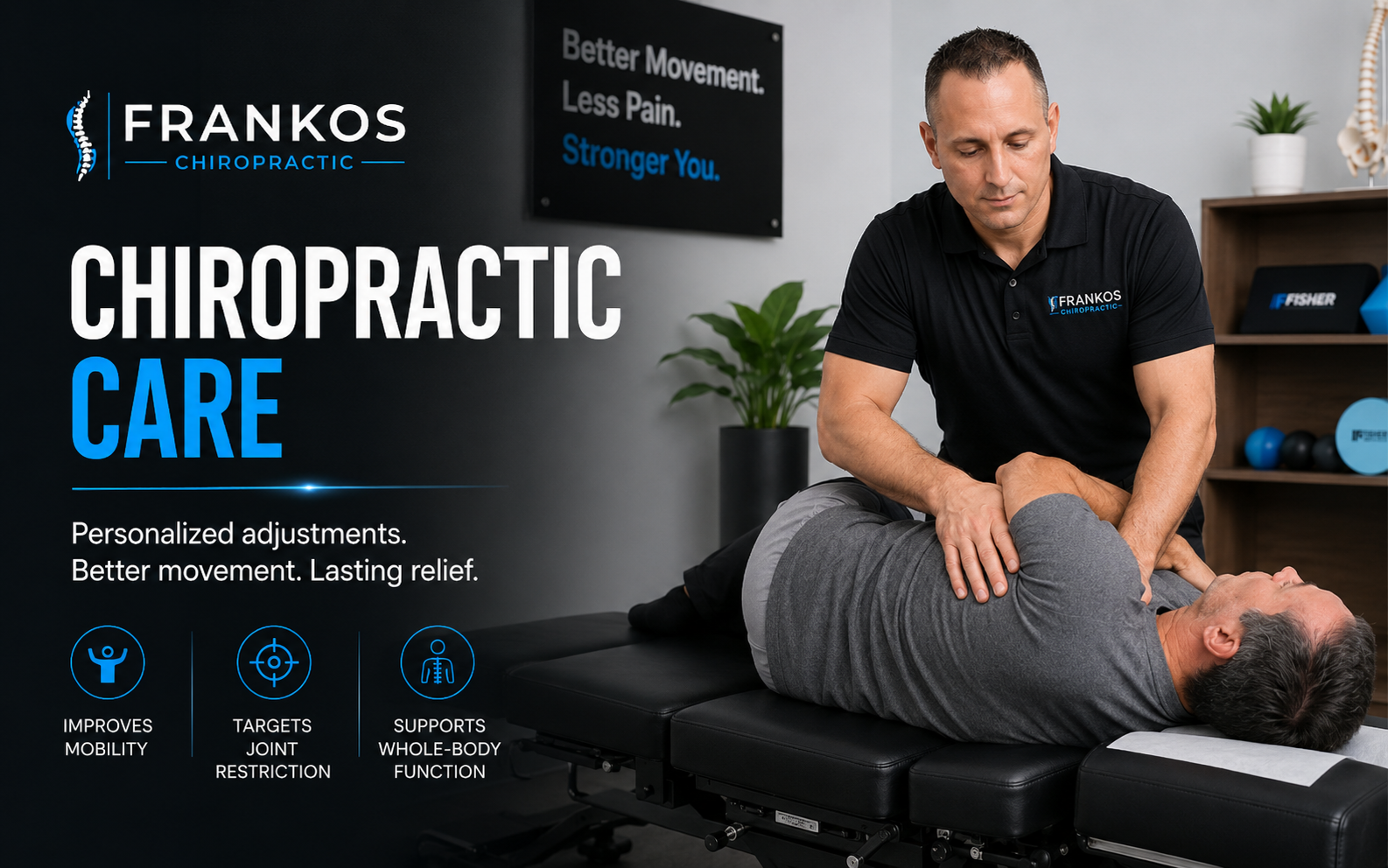
Chiropractic Adjustments
Selected manipulation or mobilization techniques based on the region, findings, comfort, and clinical appropriateness.
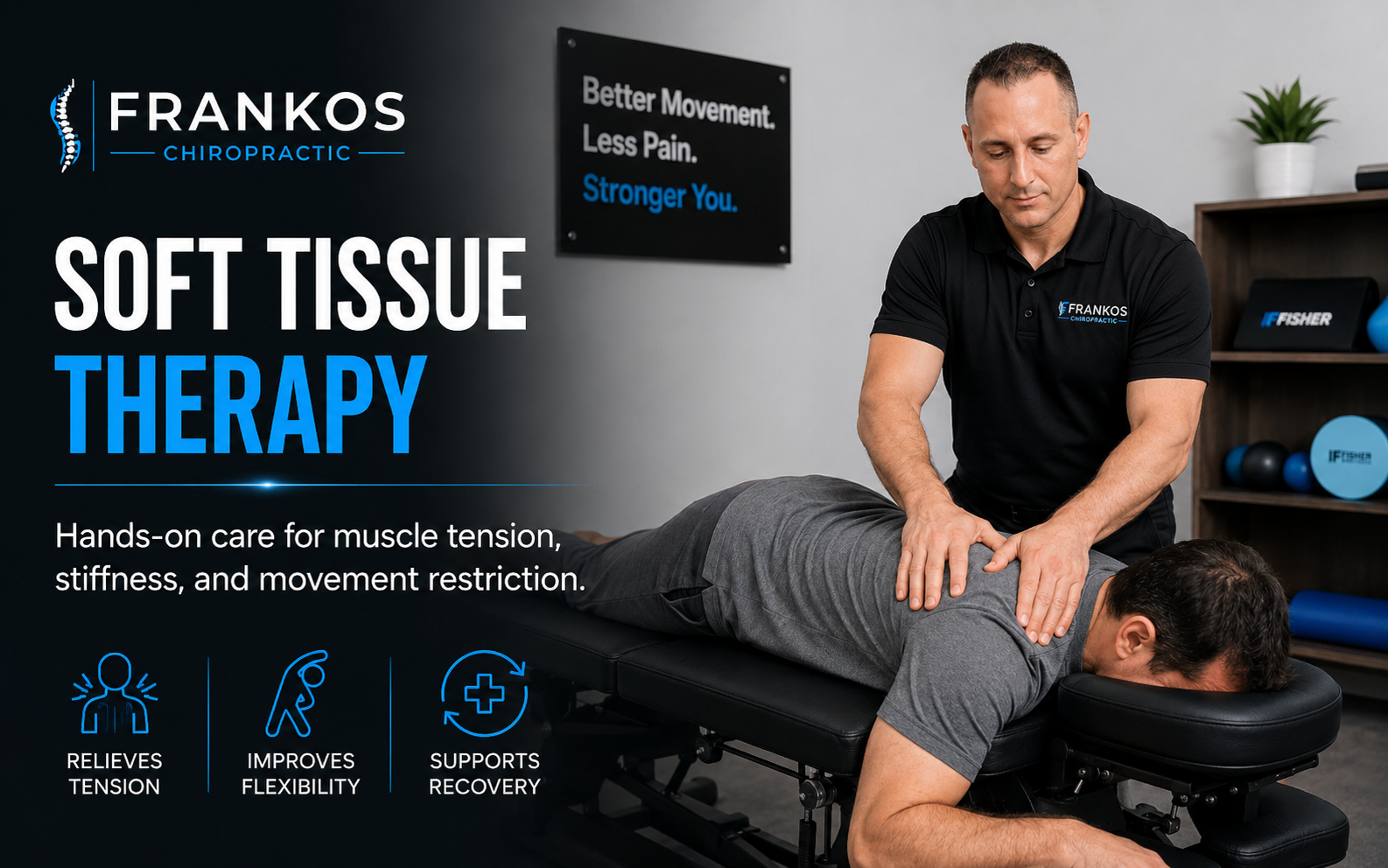
Soft Tissue Therapy
May be used for selected guarding, trigger points, movement restriction, and load-sensitive soft tissue complaints.
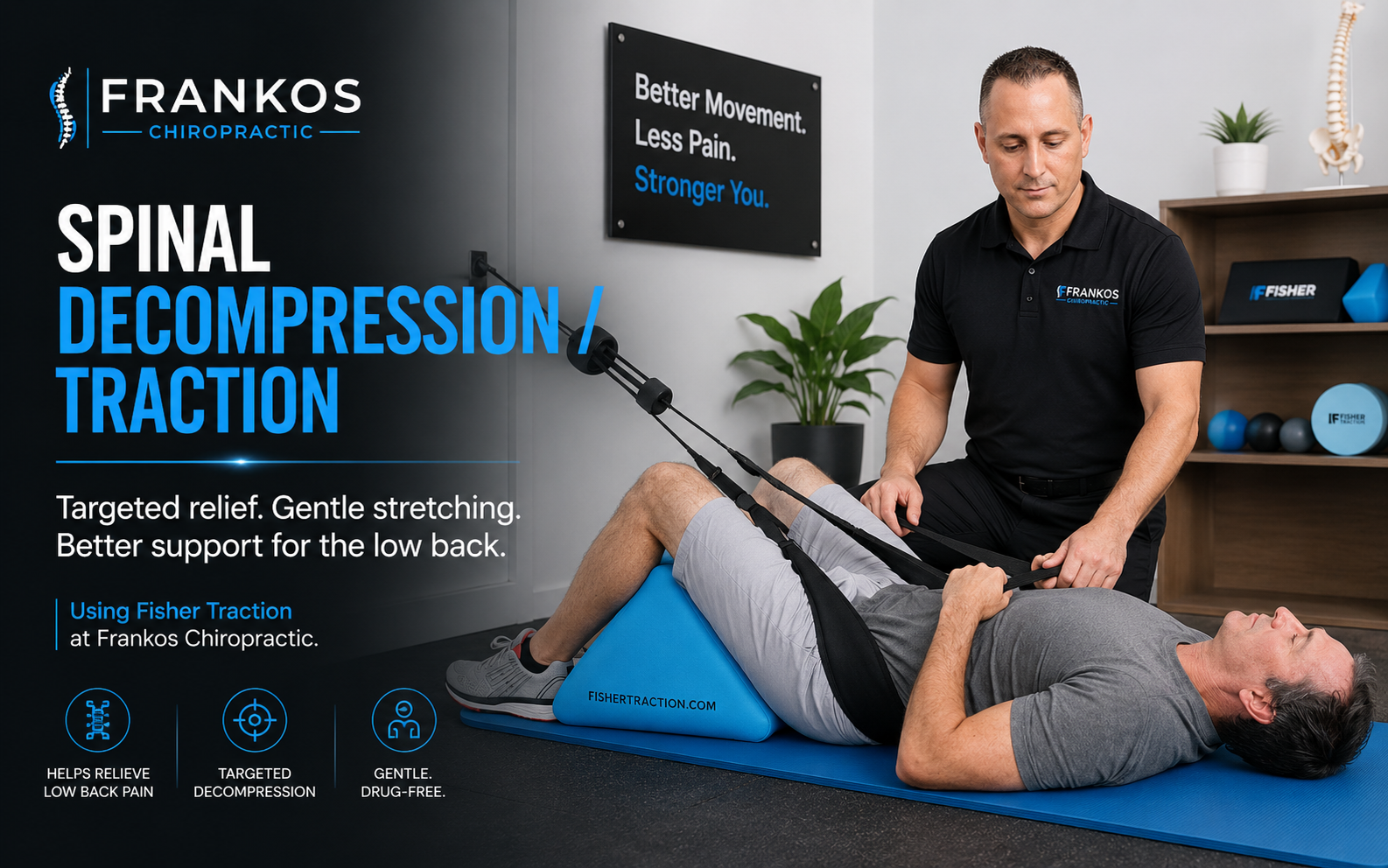
Traction and Decompression
May be considered for selected neck, low-back, disc-related, or radiating symptom patterns after examination.
Posture and Mobility Care
Position changes, mobility work, and progressive activity may help reduce repeated aggravation during work and daily life.

Radial Shockwave Therapy
Reserved for selected chronic tendon, fascia, and soft tissue complaints—not used as a default treatment for spinal pain or headache.
View All Services
Review chiropractic care, family care, sports injury care, auto accident care, wellness options, and additional services.
What happens outside the treatment room matters
Between-visit recommendations should support function without overwhelming the patient.
Most plans work better when the patient understands what to keep doing, what to modify temporarily, and how to judge progress.
Keep moving within a reasonable tolerance
Complete bed rest is rarely the goal for routine mechanical pain. Short walks, frequent position changes, and comfortable movement may be more useful than remaining still for long periods. The exact recommendation depends on the injury, severity, and neurological findings.
Change the aggravating dose, not necessarily the entire activity
A patient may need shorter sitting periods, lighter lifting, fewer repetitions, modified training, or a different sleep position for a limited time. The objective is to reduce repeated irritation while maintaining as much normal activity as is appropriate.
Track function as well as pain
Useful progress markers include walking farther, sleeping more comfortably, turning the head more easily, tolerating work longer, lifting with less limitation, experiencing fewer headache days, or needing less recovery time after activity.
When not to wait for a routine appointment
Some symptoms need urgent medical evaluation.
The following examples are not exhaustive. Call emergency services or seek urgent medical care when symptoms are severe, rapidly progressive, or accompanied by neurological or systemic warning signs.
Seek prompt medical care for symptoms such as:
- New loss of bowel or bladder control, saddle numbness, rapidly worsening leg weakness, or foot drop.
- Severe back or neck pain after significant trauma, or pain with fever, unexplained weight loss, cancer history, immune suppression, or serious infection risk.
- Neck pain with new balance problems, hand clumsiness, widespread numbness, progressive weakness, trouble speaking, facial droop, or other neurological changes.
- A sudden “thunderclap” headache, the worst headache of your life, headache with fever or stiff neck, confusion, seizure, fainting, vision loss, new weakness or numbness, or headache after significant head injury.
Chiropractic care near Logan
Frankos Chiropractic is located in Smithfield, Utah.
The office is at 115 N Main St, Smithfield, UT 84335. Patients visit from Logan, North Logan, Hyde Park, Smithfield, and other Cache Valley communities.
115 N Main St, Smithfield, UT 84335
Use the map for current directions from Logan, North Logan, USU, Hyde Park, or another starting point in Cache Valley.
Frequently asked questions
Questions about back pain, neck pain, and headaches near Logan.
These answers provide general education and cannot determine whether a specific patient is appropriate for chiropractic care.
Can neck pain contribute to some headaches?
Some headache patterns may be associated with cervical joints, muscles, or movement. However, not every headache comes from the neck, so the headache history and warning signs still need to be reviewed.
Can back pain and neck pain be treated the same way?
Not automatically. The involved region, neurological findings, injury mechanism, symptom behavior, health history, and patient tolerance should guide the treatment selection.
When do arm or leg symptoms need more evaluation?
Numbness, tingling, weakness, altered grip, foot drop, balance changes, or progressive symptoms require neurological screening and may need referral or imaging.
Are X-rays or MRI required before chiropractic care?
No. Imaging is based on the history, examination, red flags, trauma, neurological findings, persistence, and whether the result is likely to change management.
Can I book a wellness visit for a new headache or injury?
A new injury, new neurological symptom, or changing headache pattern should be scheduled as an evaluation rather than a brief maintenance-style visit.
Where is Frankos Chiropractic located?
Frankos Chiropractic is at 115 N Main St in Smithfield, Utah, a short drive north for many patients coming from Logan and North Logan.
Need an evaluation for back pain, neck pain, or headaches?
Schedule online or call Frankos Chiropractic to discuss the correct visit type for your symptoms.
Clinical sources and further reading
This page is educational and is not a diagnosis or a substitute for urgent or individualized medical care.
- National Center for Complementary and Integrative Health: Spinal Manipulation—What You Need To Know
- National Center for Complementary and Integrative Health: Headaches—What You Need To Know
- American College of Radiology Appropriateness Criteria: Low Back Pain
- American College of Radiology Appropriateness Criteria: Headache
- American College of Physicians: Noninvasive Treatment of Nonradicular Low Back Pain
Symptom-focused chiropractic care for Logan-area patients.
Frankos Chiropractic serves patients from Logan and Cache Valley from one Smithfield office, with care selected according to the complaint, examination findings, and clinical appropriateness.
Frankos Chiropractic • 115 N Main St, Smithfield, UT 84335 • (435) 535-1020