Frankos Chiropractic Blog
Top 7 Causes of Neck Pain
Helpful patient education for Smithfield, Logan, and Cache Valley.
Neck Pain Guide • Cache Valley
Top 7 Causes of Neck Pain
Neck pain can come from posture, stress, sleep position, joints, muscles, discs, nerves, old injuries, or wear-and-tear changes. The key is not just naming the pain — it is figuring out what pattern is driving it and whether conservative chiropractic care is appropriate.
Neck pain is rarely random. Most cases have a pattern: posture, tension, joint irritation, injury, or nerve involvement.

Some neck pain is a simple stiffness that improves in a few days. Other neck pain keeps returning, spreads into the shoulder or arm, causes headaches, or comes with numbness, tingling, or weakness. Those patterns deserve a closer look.
At Frankos Chiropractic, we evaluate neck pain based on symptoms, movement, posture, joint motion, muscle guarding, nerve signs, and the daily activities that may be feeding the problem.
Frankos Chiropractic is located at 115 N Main St in Smithfield, Utah, serving Smithfield, Logan, North Logan, Hyde Park, Richmond, Lewiston, Providence, Hyrum, Nibley, Wellsville, Cache Valley, Preston, Franklin, and nearby Southeast Idaho.
The top causes
Seven common reasons neck pain shows up.
These causes can overlap. For example, a person may have phone posture, stress tension, joint stiffness, and headaches from neck tension at the same time.
Posture and “Tech Neck”
Long hours looking down at phones, laptops, tablets, or paperwork can overload the neck and upper back. The issue is usually not one bad posture — it is holding the same posture for too long.
Muscle Strain and Guarding
Neck muscles can become irritated from lifting, workouts, long driving, awkward reaching, sleeping wrong, or sudden movement. Guarding can make the neck feel tight, stiff, and painful to turn.
Joint Restriction or Facet Irritation
The small joints in the neck can become stiff or irritated. This may cause pain with turning, looking up, checking blind spots, or waking with a “crick” in the neck.
Stress and Tension Headaches
Stress, jaw clenching, poor sleep, and shoulder tension can tighten the upper traps, neck, and muscles at the base of the skull. Some headaches feel like they start in the neck.
Whiplash or Injury
Auto accidents, falls, sports contact, or sudden jerking motions can irritate joints, ligaments, muscles, discs, or nerves. Pain can sometimes peak later instead of immediately after the injury.
Disc or Nerve Irritation
When a nerve in the neck is irritated, pain may spread into the shoulder, arm, hand, or fingers. Numbness, tingling, weakness, or loss of coordination should be evaluated.
Arthritis and Wear-and-Tear Changes
Age-related changes in the neck can contribute to stiffness, reduced motion, and pain. Imaging findings do not always match symptoms, so the exam and symptom pattern still matter.
Shoulder, Rib, and Upper Back Contribution
The neck does not work alone. Upper back stiffness, shoulder tension, rib restriction, and breathing mechanics can all affect how the neck feels and moves.
Most Cases Are Mixed
Many patients have more than one driver. The best plan addresses the main cause, the habits feeding it, and any red flags that need medical evaluation.
When neck pain is more serious
Some neck symptoms should not be treated like normal stiffness.
Most neck pain is not dangerous, but some patterns need urgent care, medical evaluation, or referral.
Get evaluated quickly if neck pain:
- Follows a car accident, fall, diving injury, sports collision, or other trauma.
- Is severe, intense, or not improving after a few days.
- Spreads into the shoulder, arm, hand, or fingers.
- Comes with numbness, tingling, weakness, loss of grip strength, or balance changes.
- Comes with severe headache, fever, unexplained weight loss, confusion, or unusual symptoms.
- Causes trouble walking, clumsiness, or changes in bowel or bladder control.
Why an exam matters
The right care depends on the source of the pain.
Neck pain from desk posture is managed differently than neck pain after a car accident, nerve irritation into the arm, or headache symptoms connected to the upper neck.
History and triggers
When it started, where it travels, what movements worsen it, and whether headaches, arm symptoms, or trauma are involved.
Motion and joint check
Range of motion, pain with turning, looking up or down, rib and upper back motion, and neck joint restriction patterns.
Muscle and posture assessment
Upper traps, levator scapulae, suboccipitals, pecs, shoulder position, workstation habits, and repeated daily stressors.
Nerve screening
Strength, sensation, reflexes, arm symptoms, and whether additional evaluation or referral may be needed.
Care plan
Chiropractic adjustments, soft tissue work, traction when appropriate, home movements, ergonomic changes, or referral depending on findings.
Progress check
Improvement should be measured by pain, range of motion, headaches, sleep, arm symptoms, work tolerance, and daily function.
Daily habits that help
Neck pain often improves when the daily load changes.
Even good posture becomes irritating if you hold it too long. The goal is more movement variety, better screen height, less prolonged looking down, and fewer repeated neck stressors.
Raise screens closer to eye level
Laptops are especially tough on neck posture. Raise the screen when possible and use an external keyboard and mouse for longer sessions.
Change position often
Do not stay locked in one posture. Stand up, walk, reset your shoulders, or switch tasks every so often.
Stop cranking your neck to stretch
Aggressive neck stretching can irritate some pain patterns. Gentle movement usually beats forceful pulling.
Check sleep position
A pillow that forces the neck too high, too low, or twisted can contribute to morning stiffness.
Train the upper back
Shoulder blade strength, upper back mobility, and breathing mechanics can reduce strain on the neck.
Get checked if symptoms spread
Arm pain, numbness, tingling, weakness, or symptoms below the shoulder should be evaluated rather than ignored.
Care at Frankos Chiropractic
Chiropractic care may help selected neck pain patterns when the exam supports it.
The goal is to identify the pattern and use the right tools: joint motion, soft tissue therapy, traction when appropriate, posture guidance, home movements, or referral when needed.
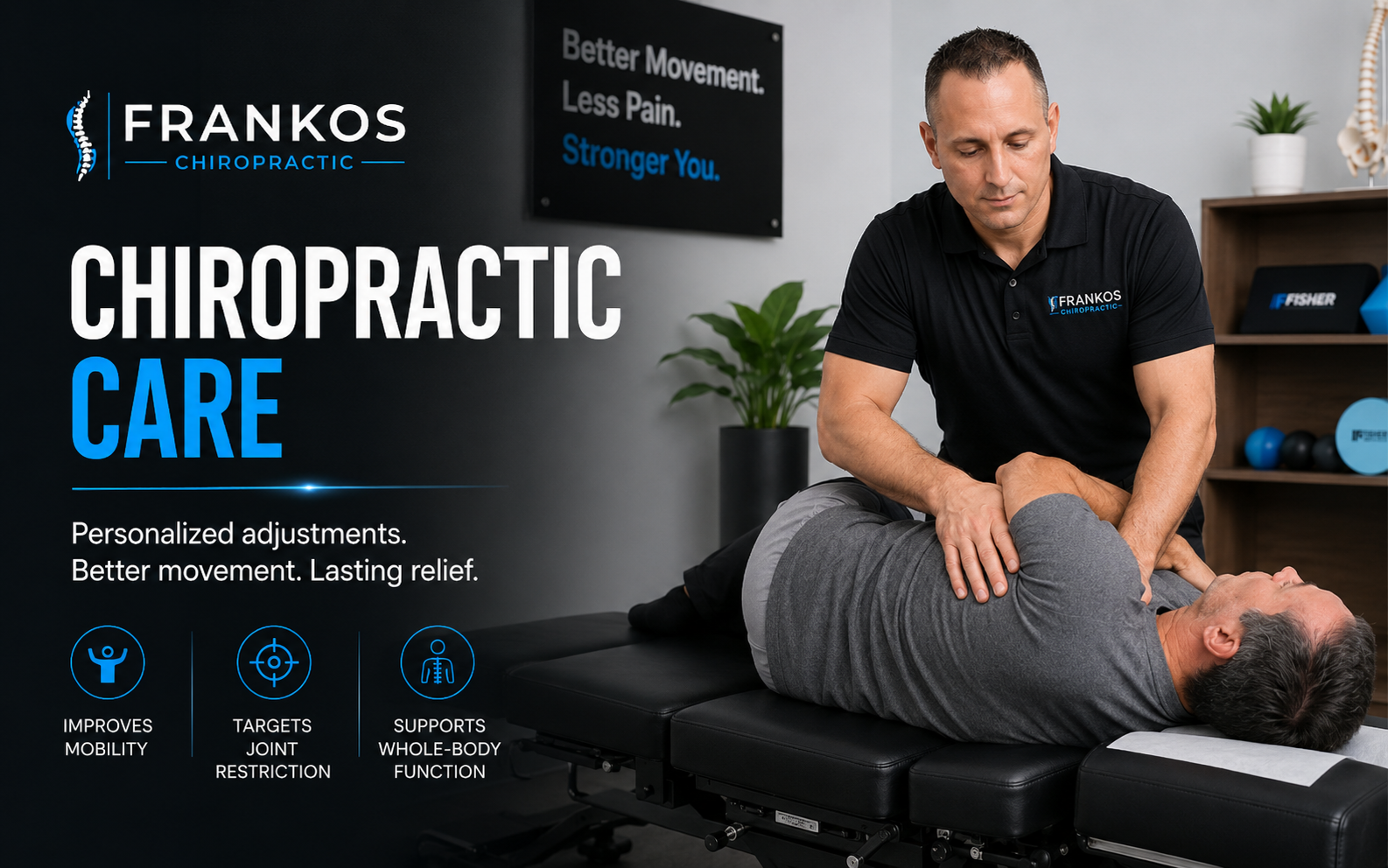
Neck Pain Care
Evaluation and care for selected neck stiffness, posture strain, headaches, and upper back tension patterns.
Chiropractic Adjustments
For selected neck, upper back, rib, and shoulder-related restrictions when appropriate.
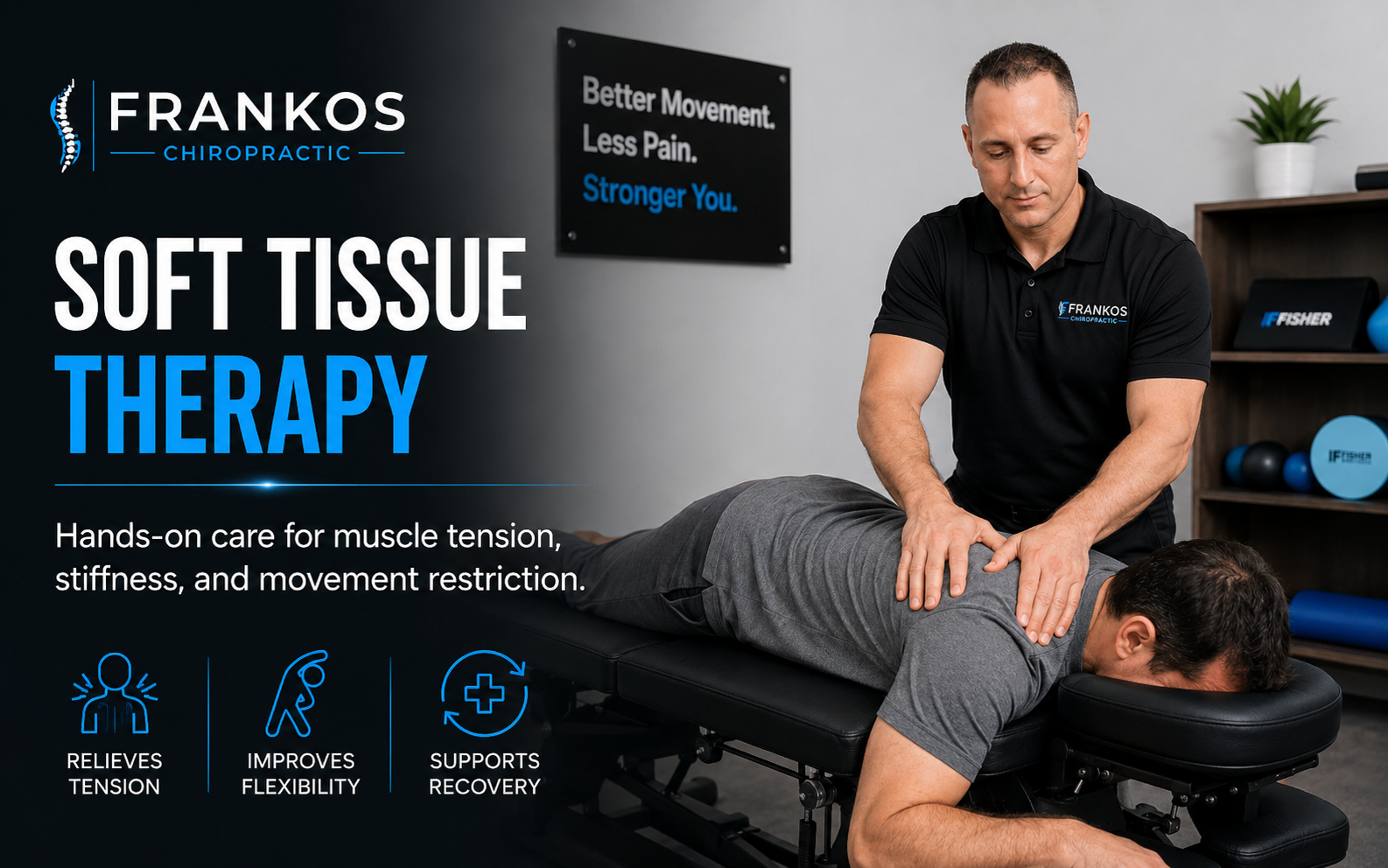
Soft Tissue Therapy
For tight upper traps, levator scapulae, suboccipitals, shoulders, and upper back guarding.
Headache Care
For selected headache patterns that may be connected to neck tension, posture, or upper cervical irritation.
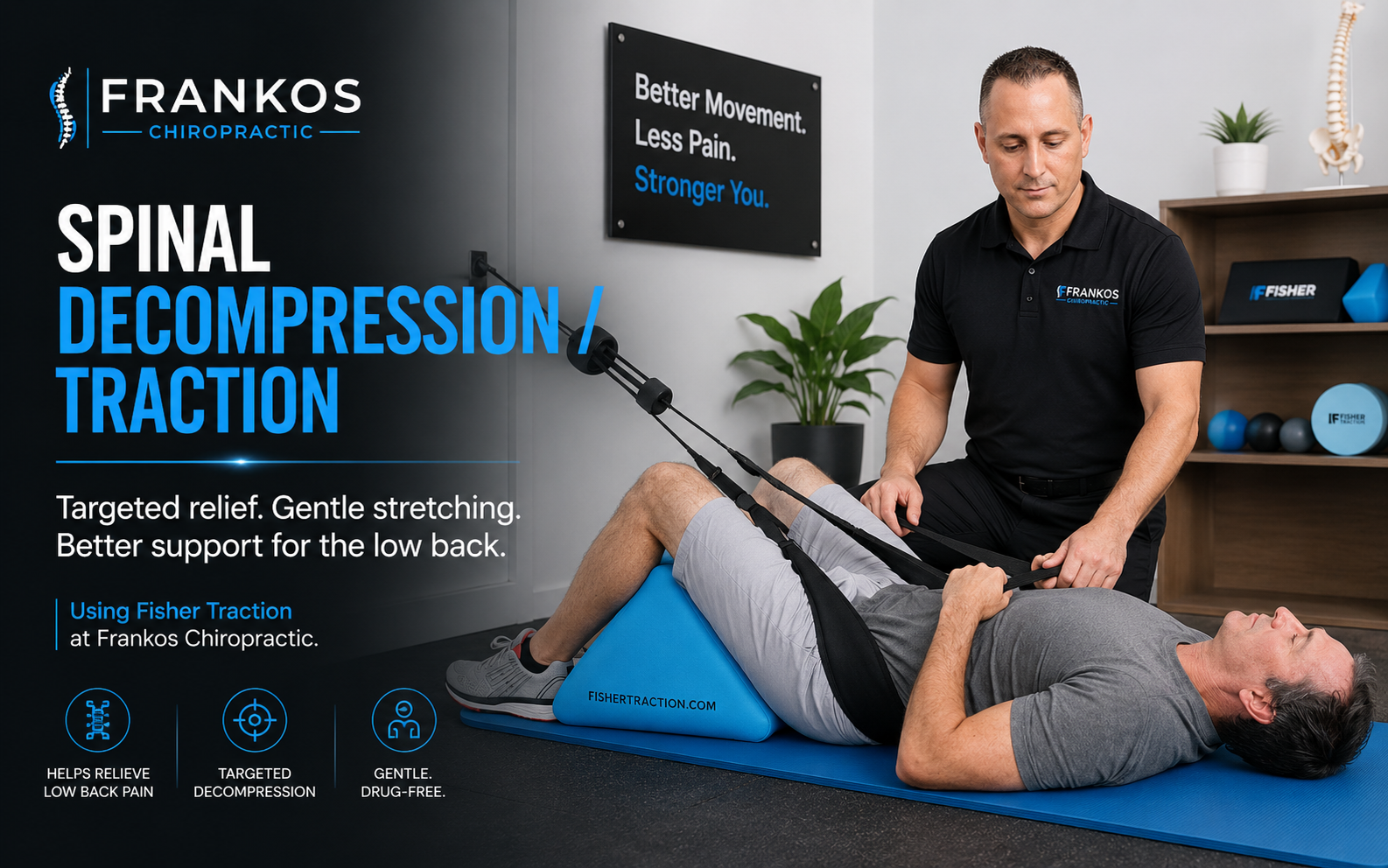
Traction / Decompression
May be considered for selected neck and arm symptom patterns based on exam findings.
Book an Evaluation
If neck pain is lingering, returning, or spreading into the arm, schedule an exam-based visit.
Neck pain FAQs
Common questions about neck pain.
These answers are educational and do not replace a personal exam.
What is the most common cause of neck pain?
Many cases involve muscle strain, posture, stress tension, joint irritation, or a combination of several factors. The most important question is what is driving your specific pattern.
Can phone use cause neck pain?
Long periods looking down can contribute to neck and upper back strain, especially when combined with sitting, stress, or poor workstation setup.
What if neck pain goes into my arm?
Arm pain, numbness, tingling, or weakness may suggest nerve involvement and should be evaluated instead of treated like simple tightness.
Can chiropractic care help neck pain?
It may help selected musculoskeletal neck pain patterns when the exam supports it. Care may include adjustments, soft tissue therapy, traction when appropriate, home guidance, or referral.
Should I stretch my neck?
Gentle movement can help some cases, but aggressive stretching may worsen irritated joints or nerves. If stretching sends symptoms down the arm, stop and get evaluated.
Where is Frankos Chiropractic?
Frankos Chiropractic is located at 115 N Main St in Smithfield, Utah and serves Cache Valley from one Smithfield office.
Neck pain should not have to become your normal.
If your neck pain keeps returning, limits your motion, causes headaches, or spreads into the arm, schedule an evaluation at Frankos Chiropractic in Smithfield.
Get exam-based care for neck pain near Logan and Cache Valley.
Frankos Chiropractic helps patients from Smithfield, Logan, North Logan, Hyde Park, Richmond, Lewiston, and Cache Valley understand what may be causing their neck pain and what care may be appropriate.
Frankos Chiropractic is located at 115 N Main St, Smithfield, UT 84335. We do not operate fake locations in other towns.