Plantar fasciitis treatment in Smithfield, Utah
Heel Pain Care for Plantar Fasciitis, Arch Pain, and First-Step Morning Pain
Plantar fasciitis can make the first steps of the day feel brutal, then come back after standing, running, working, or walking on hard floors. Frankos Chiropractic evaluates the foot, ankle, calf, hip, gait, footwear, training load, and soft tissue pattern so care is not based on guessing or stretching harder.
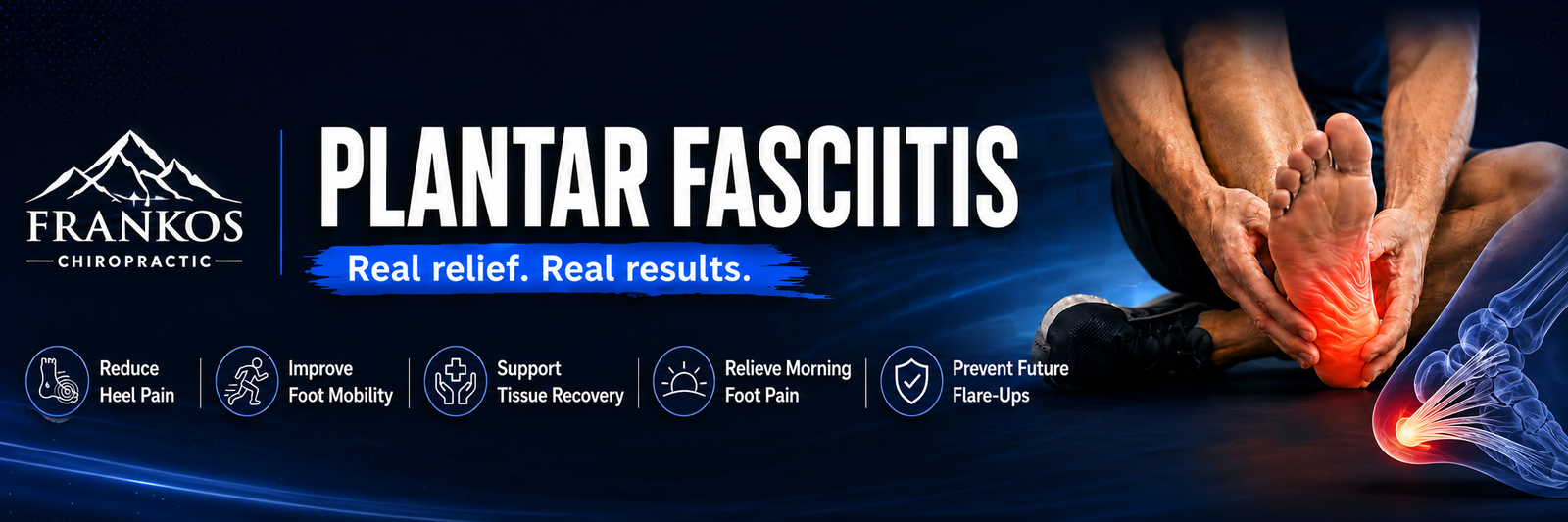
Heel pain is common, but it is not always plantar fasciitis.
Plantar fasciitis is a common cause of heel and arch pain, but other problems can look similar. The first job is to identify the pattern: where it hurts, when it hurts, what loads it, what calms it, and whether symptoms suggest something that needs imaging, podiatry, primary care, or urgent care.
Book based on your walking problem.
Tell us whether it hurts first thing in the morning, after sitting, after work, after running, on hard floors, barefoot, in certain shoes, or when you push off. Those details guide the exam.
Plantar fasciitis may overlap with…
- Calf and Achilles tightness
- Limited ankle mobility
- Arch collapse or poor load control
- Hard floors and long standing shifts
- Running, jumping, hills, or sudden training changes
- Unsupportive footwear or worn-out shoes
- Hip, knee, and lower-body movement patterns
Common plantar fasciitis patterns
What type of heel pain are you dealing with?
Patients often search for plantar fasciitis treatment near Logan or Smithfield because they are tired of limping in the morning, changing shoes, avoiding runs, or pushing through workday heel pain. These are common patterns we evaluate.
First-step morning heel pain
Sharp heel pain when you first get out of bed or after sitting, then it may ease as the foot warms up.
Pain after standing all day
Heel or arch pain that builds with work shifts, hard floors, errands, farming, coaching, or long days on your feet.
Runner and athlete heel pain
Pain after increasing mileage, hills, sprints, court sports, jumping, cleats, or a sudden training change.
Arch pain and foot tightness
Tightness through the arch, plantar fascia, calf, Achilles, or bottom of the foot that keeps returning.
Heel pain with calf tightness
Limited ankle mobility and calf/Achilles tightness can increase load through the plantar fascia.
Foot pain from poor footwear
Unsupportive shoes, worn-out work shoes, flat sandals, barefoot hard floors, or sudden shoe changes can flare symptoms.
Chronic plantar fasciitis
Heel pain that has lasted for months may need a more complete plan than stretching alone.
Heel pain that may be something else
Not every heel pain case is plantar fasciitis. Stress fracture, nerve irritation, heel pad pain, infection, gout, Achilles problems, or trauma may need referral.
The Frankos approach
The exam decides the plantar fasciitis plan.
Heel pain care should identify whether the main issue appears to be plantar fascia overload, calf tightness, ankle restriction, footwear load, training error, lower-chain mechanics, or another source that needs referral.
History and load changes
We review when it started, footwear, work surfaces, running or training changes, standing time, prior injuries, and what makes symptoms better or worse.
Red flag and referral screen
Severe trauma, inability to bear weight, infection signs, numbness, progressive swelling, or sudden tearing pain may need urgent care or imaging first.
Foot and ankle mobility
Ankle dorsiflexion, calf tightness, arch motion, toe extension, and foot mechanics can influence plantar fascia load.
Heel and arch tenderness
The location of pain matters. Medial heel pain, arch tenderness, heel pad pain, Achilles pain, and nerve-type symptoms can point different directions.
Gait and activity pattern
How you walk, stand, train, squat, run, or shift weight can keep loading the same irritated tissue.
Hip, knee, and calf connection
Foot pain is often influenced by calf strength, hip control, knee mechanics, and how the whole lower chain absorbs load.
Visit process
What happens at a plantar fasciitis visit?
You should leave with a clearer understanding of what was screened, what appears to be contributing, what treatment was chosen, and what to do between visits.
Listen
We review first-step pain, work surfaces, shoes, training, standing time, prior injuries, and what you need to return to.
Screen
We check for red flags, trauma signs, nerve symptoms, infection signs, and whether conservative care is appropriate.
Test movement
We look at ankle motion, foot/arch mobility, calf tightness, toe extension, gait, and lower-body loading.
Treat
Care may include soft tissue, IASTM, cupping, mobility work, chiropractic care, footwear guidance, or shockwave discussion.
Plan
You leave with practical guidance for shoes, activity modification, home movement, and follow-up timing.
Treatment options
Plantar fasciitis care may include more than stretching.
Frankos Chiropractic uses conservative options based on the exam. Some patients need calf and foot mobility. Some need footwear changes. Some need load modification. Some need soft tissue work. Some chronic cases may be candidates for shockwave therapy. Some need imaging or referral.
Shockwave therapy
Radial shockwave therapy may be discussed for selected chronic plantar fasciitis or stubborn soft tissue irritation patterns.
Learn moreSoft tissue therapy
Muscle and fascia-focused care for calf tightness, plantar fascia irritation, Achilles tension, and foot/ankle guarding.
Learn moreIASTM and cupping
Tools may be used for selected soft tissue restriction, calf tightness, arch tension, and mobility limitations when appropriate.
Learn moreFoot and ankle mobility
Simple home guidance may include plantar fascia mobility, calf stretching, ankle mobility, and activity modification.
Learn moreChiropractic adjustments
When appropriate, care may address restricted motion in the foot, ankle, knee, hip, pelvis, or low back that affects lower-body mechanics.
Learn moreSupportive footwear guidance
Shoe support, work shoes, arch support, heel cushioning, and avoiding barefoot hard floors may be part of the plan.
Learn moreSports injury care
Care for runners, lifters, court athletes, hikers, and active patients returning to activity intelligently.
Learn moreReferral when needed
Some heel pain needs imaging, podiatry, primary care, orthopedics, or urgent care before or alongside conservative care.
Learn moreActive symptoms vs maintenance
Active heel pain is not a quick wellness visit.
Heel pain that affects walking, work, running, first steps, or daily activity needs a problem-focused visit instead of a routine maintenance adjustment.
Book active plantar fascia care if…
- First steps in the morning are painful.
- You limp after sitting, standing, or working.
- Running, hiking, sports, or hard floors flare symptoms.
- Heel pain has lasted for weeks or months.
- You want to discuss shockwave therapy for chronic heel pain.
Maintenance care is different.
Wellness or membership visits are best for appropriate patients who are not trying to evaluate active heel pain, a new foot injury, worsening symptoms, or chronic plantar fascia irritation. If heel pain is the main complaint, choose a problem-focused visit first.
Safety first
When heel pain needs urgent medical care first.
Heel pain is often mechanical, but not always. Severe trauma, infection signs, sudden tearing pain, inability to bear weight, or neurological symptoms should not be treated like routine plantar fasciitis.
Do not wait on these symptoms.
Seek urgent or emergency care for severe trauma, inability to bear weight, sudden tearing pain or a pop, major swelling, fever, redness, warmth, open wounds, numbness, progressive weakness, diabetes-related foot concerns, or symptoms that feel like an emergency.
Trauma signs
Fall, twist, impact, sudden pop, major bruising, swelling, or inability to put weight on the foot.
Infection signs
Fever, redness, warmth, open wounds, drainage, severe swelling, or rapidly worsening pain.
Nerve or medical signs
Numbness, progressive weakness, diabetes-related foot problems, or symptoms that do not behave like mechanical heel pain.
What to do at home
Plantar fascia self-care should reduce load without shutting life down.
The goal is not to stretch harder and push through worse pain. The goal is to calm the irritated tissue, improve tolerance, and stop repeating the exact load that keeps flaring it.
Usually helpful early steps
- Avoid barefoot walking on hard floors during a flare.
- Use supportive shoes or heel cushioning when appropriate.
- Temporarily reduce running, jumping, hills, and long hard-surface standing if they worsen symptoms.
- Use gentle calf and plantar fascia mobility if it does not spike pain.
- Use ice or other comfort measures based on your doctor’s guidance.
Stop guessing if it keeps coming back.
If you have tried stretching, shoes, inserts, ice, rest, and it still returns, the plan may need to address training load, calf strength, foot mechanics, ankle mobility, soft tissue sensitivity, or whether another diagnosis is involved.
Local plantar fasciitis care
Plantar fasciitis treatment near Logan, Smithfield, and Cache Valley.
Frankos Chiropractic is located at 115 N Main St in Smithfield, Utah. Patients visit from Logan, North Logan, Hyde Park, Richmond, Lewiston, Providence, Hyrum, Nibley, Wellsville, Preston, Franklin, and nearby communities for plantar fasciitis and heel pain care.
Frankos Chiropractic
115 N Main St, Smithfield, UT 84335
One Smithfield office serving Cache Valley with practical, exam-based conservative care for plantar fasciitis, heel pain, arch pain, chronic foot pain, calf tightness, running-related foot pain, and selected cases where shockwave therapy may fit.
Related pages
Build the right internal pathway for foot pain patients.
Plantar fasciitis patients often need to understand shockwave therapy, soft tissue, sports injuries, lower-body mechanics, back/hip connection, and conservative care options before they book. These pages help them choose the right next step.
Frequently asked questions
Plantar fasciitis questions before you schedule.
These answers are educational and do not replace an exam. Your care plan depends on your history, symptoms, exam findings, goals, and whether conservative care is appropriate.
Can chiropractic care help plantar fasciitis?
Chiropractic and conservative care may help selected plantar fasciitis patterns when foot, ankle, calf, hip, gait, footwear, or soft tissue load is contributing. The exam helps decide whether care is appropriate.
Is all heel pain plantar fasciitis?
No. Heel pain can also involve heel pad irritation, Achilles tendon issues, stress fracture, nerve irritation, arthritis, gout, infection, trauma, or referred pain. The location and behavior of symptoms matter.
Can shockwave therapy help plantar fasciitis?
Radial shockwave therapy may be discussed for selected chronic plantar fasciitis and stubborn soft tissue irritation patterns. It is not the right choice for every case and should be matched to the exam.
Why does plantar fasciitis hurt first thing in the morning?
Many plantar fasciitis patients feel worse during the first steps after rest because the tissue has been unloaded and stiff, then gets suddenly loaded when standing.
Should I stretch my foot if it hurts?
Gentle plantar fascia and calf mobility may help selected patients, but aggressive stretching into sharp pain can irritate symptoms. Your plan should match the stage and sensitivity of the problem.
Should I keep running with plantar fasciitis?
Do not simply push through worsening heel pain. Training may need temporary modification, lower impact activity, footwear changes, calf/foot strengthening, and a gradual return plan.
What shoes are best for plantar fasciitis?
Many patients do better with supportive shoes, arch support, and heel cushioning, especially on hard floors. The best choice depends on your foot type, work demands, symptoms, and activity.
When is heel pain urgent?
Seek urgent care for severe trauma, inability to bear weight, sudden tearing pain, major swelling, fever, redness, warmth, wounds, numbness, or symptoms that feel like an emergency.
Do you accept insurance for plantar fasciitis care?
Frankos Chiropractic accepts most major insurance plans. Coverage varies by plan, deductible, visit type, and medical necessity. The office can help verify benefits.
Where is Frankos Chiropractic located?
Frankos Chiropractic is located at 115 N Main St in Smithfield, Utah and serves Cache Valley from one Smithfield office.
Schedule at Frankos Chiropractic
Ready to find out what your heel pain pattern is?
Book online or call the Smithfield office. If you are a new patient, complete intake forms before your visit when possible. If you have severe trauma, inability to bear weight, infection signs, sudden tearing pain, numbness, or urgent symptoms, seek urgent medical care first.
Frankos Chiropractic • 115 N Main St, Smithfield, UT 84335 • One Smithfield office serving Cache Valley