Sciatica chiropractor in Smithfield, Utah
Sciatica Care for Low Back Pain, Glute Pain, Leg Pain, Numbness, and Tingling
Sciatica-like symptoms can feel sharp, burning, electric, deep, tight, numb, or heavy. The pain may start in the low back or glute and travel into the hamstring, calf, foot, or toes. Frankos Chiropractic evaluates the low back, pelvis, hips, glutes, nerve sensitivity, movement triggers, and red flags before choosing care.
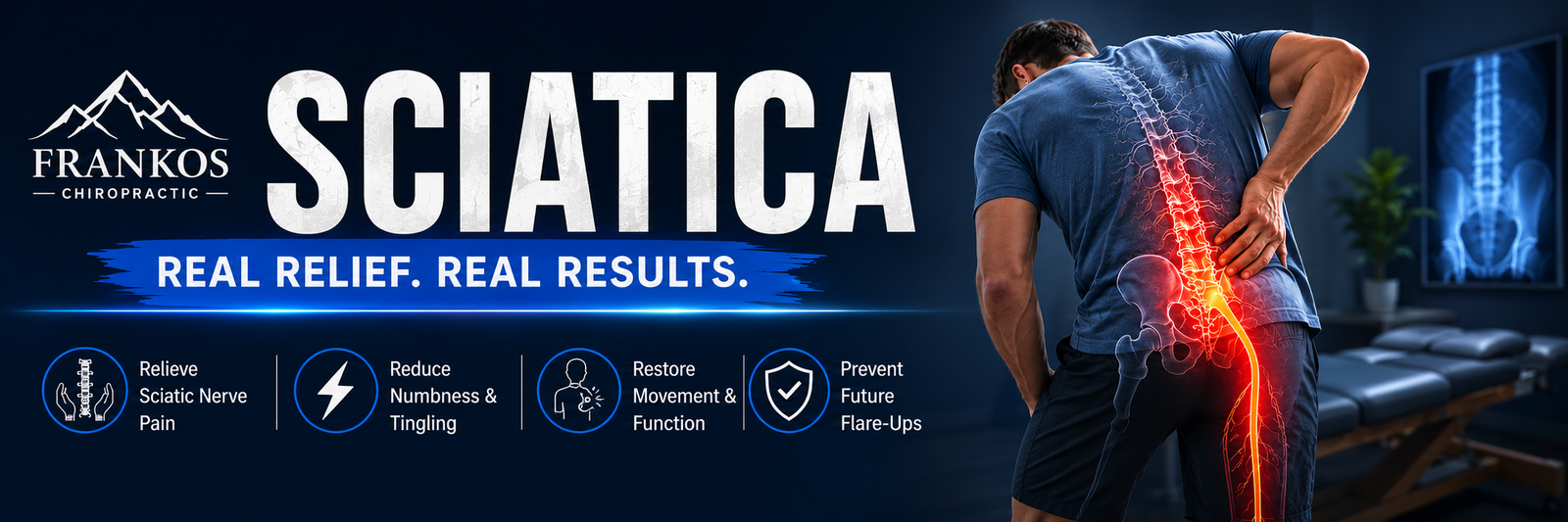
Sciatica is a symptom pattern, not a guess.
Patients often call any buttock or leg pain “sciatica,” but the source can vary. Pain may be driven by nerve root irritation from the low back, disc-style irritation, stenosis-style irritation, hip or glute involvement, deep gluteal/piriformis-region irritation, SI mechanics, or overlapping factors. The exam helps determine which pattern fits best.
Do not just stretch harder.
Sciatica-like pain is not always a tight hamstring. Aggressive stretching, repeated bending, heavy lifting, or forcing nerve-sensitive positions can make some cases worse.
Sciatica-like symptoms can include…
- Low back pain traveling into the buttock or leg
- Burning, electric, sharp, or shooting pain
- Numbness, tingling, or pins-and-needles
- Symptoms worse with sitting, bending, coughing, or sneezing
- Weakness, heaviness, or foot changes
- Glute, hip, hamstring, calf, foot, or toe symptoms
Common sciatica-like patterns
What type of leg pain are you dealing with?
Patients search for a sciatica chiropractor near Logan or Smithfield because they want to know whether the problem is a disc, nerve, hip, piriformis, SI joint, or muscle issue. These are common patterns we evaluate.
Pain from the low back into the leg
Pain that starts in the low back or glute and travels into the hamstring, calf, foot, or toes may be nerve-related and should be screened carefully.
Glute and piriformis-type pain
Deep buttock pain can mimic sciatica. It may involve the hip, SI area, piriformis region, hamstrings, or irritation near the sciatic nerve pathway.
Pain worse with sitting
Sciatica-like pain that increases with driving, desk work, sitting on a wallet, or long study sessions often needs load and position-specific guidance.
Pain worse with bending or lifting
Bending, twisting, lifting, deadlifting, yard work, or picking up kids can irritate the low back and leg pain pattern.
Numbness or tingling
Tingling, burning, pins-and-needles, numb patches, or a heavy leg feeling can suggest nerve sensitivity and should not be treated like simple muscle tightness.
Weakness or foot changes
Trouble heel walking, toe walking, calf strength changes, foot slap, or progressive weakness needs prompt attention and may require referral.
Back pain with hip referral
Low back, SI, hip, glute, and thigh pain can overlap. The exam helps separate local back pain from nerve-related symptoms.
Recurring flare-ups
Some patients get repeated sciatica-like episodes after sitting, lifting, training, driving, or long work weeks because the underlying pattern was never addressed.
The Frankos approach
The exam decides the sciatica plan.
Sciatica-like symptoms require more than a quick adjustment. The visit should identify whether symptoms behave like nerve sensitivity, local back pain, glute/hip irritation, disc-style irritation, stenosis-style irritation, or a condition that needs a different provider.
Pain pathway
We clarify whether symptoms stay in the back/glute or travel below the knee into the calf, foot, or toes.
Nerve screen
Strength, sensation, reflexes, nerve tension signs, and symptom behavior help determine how urgent or conservative the plan should be.
Movement testing
Bending, extension, side bending, walking, hip hinge, sitting, and positional testing help show what aggravates or eases symptoms.
Low back and pelvis
Lumbar segments, SI joints, pelvis, hips, and surrounding structures may all contribute to the sciatica-like pattern.
Hip and glute assessment
Glutes, piriformis region, hip mobility, hamstrings, adductors, and hip flexors may be checked for involvement.
Red flag review
Bowel or bladder changes, progressive weakness, severe trauma, fever, or unusual symptoms can change the plan immediately.
Visit process
What happens at a sciatica visit?
The goal is to reduce confusion and avoid guessing. You should understand what was checked, what may be driving the symptoms, and what you should do next.
Listen
We review when symptoms started, where they travel, what triggers them, what calms them, and what you need to get back to.
Screen
We check red flags, strength, sensation, nerve signs, trauma concerns, and whether chiropractic care is appropriate.
Test movement
We check bending, extension, hip motion, sitting tolerance, gait, and which positions worsen or ease leg symptoms.
Treat
Care may include adjustments, flexion distraction, traction, soft tissue, IASTM, cupping, or movement guidance.
Plan
You leave with practical guidance for sitting, lifting, bending, walking, sleep, activity, and follow-up.
Treatment options
Sciatica care may include more than one tool.
Frankos Chiropractic uses conservative care options based on the exam. Some cases need unloading. Some need mobility. Some need glute and hip work. Some need home activity changes. Some need referral or imaging.
Chiropractic adjustments
When appropriate, lumbar, pelvic, SI, hip, rib, or upper spine adjustments may be used to restore motion and reduce mechanical stress.
Learn moreFlexion distraction
A table-assisted approach that may be considered for selected low back and disc-style presentations.
Learn moreTraction / decompression
May be considered when unloading the low back changes leg symptoms and the exam supports that direction.
Learn moreSoft tissue therapy
Muscle-focused work for glute guarding, piriformis-region tightness, hip tension, QL tenderness, and protective spasm.
Learn moreIASTM and cupping
Tools that may support stubborn tissue sensitivity, hip/glute tightness, and mobility limitations when appropriate.
Learn moreNerve mobility guidance
Gentle nerve sliders or movement changes may be used only when they calm the pattern instead of flaring symptoms.
Learn moreShockwave therapy
Not a cure for true nerve compression, but may be discussed for selected chronic glute, hip, tendon, fascia, or soft tissue contributors.
Learn moreReferral when needed
Progressive weakness, severe neurological symptoms, red flags, or non-mechanical signs may require imaging, urgent care, or co-management.
Learn moreSciatica vs piriformis vs back pain
Not all buttock and leg pain is true sciatica.
That distinction matters. A low back nerve-root pattern, hip referral pattern, SI/pelvic pattern, and deep gluteal/piriformis-region pattern can feel similar to a patient, but the care plan may be different.
More nerve-like signs
- Pain travels below the knee into the calf or foot
- Numbness, tingling, burning, or electric pain
- Weakness, foot slap, or trouble heel/toe walking
- Symptoms change with coughing, sneezing, sitting, or bending
More local glute/hip signs
Pain may stay mostly in the buttock, hip, or upper hamstring and worsen with sitting, squatting, stairs, or hip positions. It can still be painful and still deserves an exam, but it may need different care than a nerve-root pattern.
Safety first
When sciatica needs urgent medical care first.
Most sciatica-like symptoms are not an emergency, but certain signs should not wait for a chiropractic appointment.
Do not wait on these symptoms.
Seek immediate medical care for sudden numbness or muscle weakness in a leg, pain after a violent injury such as a traffic accident, or trouble controlling bowel or bladder function. Also seek urgent care for progressive weakness, saddle numbness, fever with severe spine pain, or symptoms that feel like an emergency.
Bowel/bladder changes
Trouble controlling bowel or bladder function needs urgent medical evaluation.
Weakness or numbness
Sudden numbness, progressive weakness, foot drop, or worsening leg control should not wait.
Violent injury
Severe symptoms after a traffic accident, fall, or major trauma need medical screening first.
What to do at home
Sciatica self-care should calm symptoms, not provoke them.
With nerve-sensitive pain, the goal is not to force aggressive stretching or test the pain all day. The goal is to find tolerable movement and avoid the positions that clearly worsen leg symptoms.
Usually helpful early steps
- Take short, easy walks if they do not worsen leg symptoms.
- Change positions often instead of sitting for long blocks.
- Avoid repeated bending, twisting, and lifting during a flare-up.
- Use positions that centralize or calm symptoms.
- Use heat or ice based on comfort and your doctor’s guidance.
Be careful with stretches.
If a stretch sends symptoms farther down the leg, increases tingling, or makes the foot more irritated, stop guessing. Sciatica-like symptoms often need specific movement guidance rather than aggressive hamstring or piriformis stretching.
Local sciatica care
Sciatica chiropractor near Logan, Smithfield, and Cache Valley.
Frankos Chiropractic is located at 115 N Main St in Smithfield, Utah. Patients visit from Logan, North Logan, Hyde Park, Richmond, Lewiston, Providence, Hyrum, Nibley, Wellsville, Preston, Franklin, and nearby communities for sciatica-like symptoms and low back pain into the leg.
Frankos Chiropractic
115 N Main St, Smithfield, UT 84335
One Smithfield office serving Cache Valley with practical, exam-based chiropractic care for low back pain into the leg, glute pain, numbness, tingling, and sciatica-like symptoms.
Related pages
Build the right internal pathway for sciatica patients.
Sciatica-like symptoms often overlap with back pain, hip/glute pain, decompression care, soft tissue therapy, sports injuries, and auto accidents. These pages help patients choose the right next step.
Frequently asked questions
Sciatica questions before you schedule.
These answers are educational and do not replace an exam. Your care plan depends on your history, symptoms, exam findings, goals, and whether chiropractic care is appropriate.
Is sciatica the same as low back pain?
No. Low back pain stays mostly in the back. Sciatica-like symptoms usually travel from the low back or glute into the leg and may include burning, tingling, numbness, or weakness.
Can chiropractic care help sciatica?
Chiropractic care may help selected patients with sciatica-like symptoms when the pattern is appropriate for conservative care. The exam helps determine whether chiropractic care, traction, soft tissue work, home guidance, referral, or imaging is the next best step.
What if my pain goes below the knee?
Pain below the knee, numbness, tingling, foot symptoms, or weakness should be taken seriously and screened carefully. Call first if symptoms are severe or changing.
Do I need an MRI for sciatica?
Not every sciatica-like case needs immediate imaging. Imaging may be discussed when symptoms are severe, persistent, worsening, traumatic, or include neurological changes that could alter the plan.
Is piriformis syndrome the same as sciatica?
Piriformis-region pain can mimic sciatica, but true sciatica often involves irritation of nerve roots from the low back. The exam helps determine whether the pain behaves more like a back/nerve-root pattern, hip/glute pattern, or both.
Should I stretch my hamstring if I have sciatica?
Not always. Aggressive hamstring stretching can aggravate some nerve-sensitive cases. Gentle movement may help, but it should not increase leg symptoms.
Can sitting make sciatica worse?
Yes. Sitting, driving, bending, coughing, sneezing, or certain positions can worsen some sciatica-like symptoms. Your visit should identify which positions irritate your pattern.
Can shockwave therapy help sciatica?
Shockwave is not a direct treatment for true nerve compression. It may be discussed for selected chronic glute, hip, tendon, fascia, or soft tissue contributors that overlap with sciatica-like pain.
When is sciatica an emergency?
Seek immediate medical care for sudden leg numbness or muscle weakness, pain after a violent injury such as a traffic accident, or trouble controlling bowel or bladder function.
Where is Frankos Chiropractic located?
Frankos Chiropractic is located at 115 N Main St in Smithfield, Utah and serves Cache Valley from one Smithfield office.
Schedule at Frankos Chiropractic
Ready to find out what your sciatica-like symptoms are doing?
Book online or call the Smithfield office. If symptoms are severe, worsening, traveling into the foot, associated with weakness, or you are unsure which visit type to choose, call first.
Frankos Chiropractic • 115 N Main St, Smithfield, UT 84335 • One Smithfield office serving Cache Valley