Frankos Chiropractic Blog
Gentle Chiropractic Care for Growing Families: A Parent’s Guide
Helpful patient education for Smithfield, Logan, and Cache Valley.
Gentle Chiropractic Care for Growing Families
A Parent’s Guide to Pregnancy, Pediatric & Family Chiropractic Care
Evidence-informed, individualized care for pregnancy, postpartum recovery, babies, children, teen athletes, and parents in Smithfield and throughout Cache Valley.
Family chiropractic care should look different at every stage of life. Pregnancy changes how a person carries weight and moves. New parents may spend hours feeding, lifting, rocking, reaching into cribs, carrying car seats, and functioning on interrupted sleep. Children grow rapidly, play sports, fall, climb, sit through school, carry backpacks, and sometimes develop aches or injuries of their own.
At Frankos Chiropractic, the starting point is not the adjustment. It is the evaluation: what is bothering the patient, does the problem appear musculoskeletal, is conservative care reasonable, and what is the safest and most useful next step?
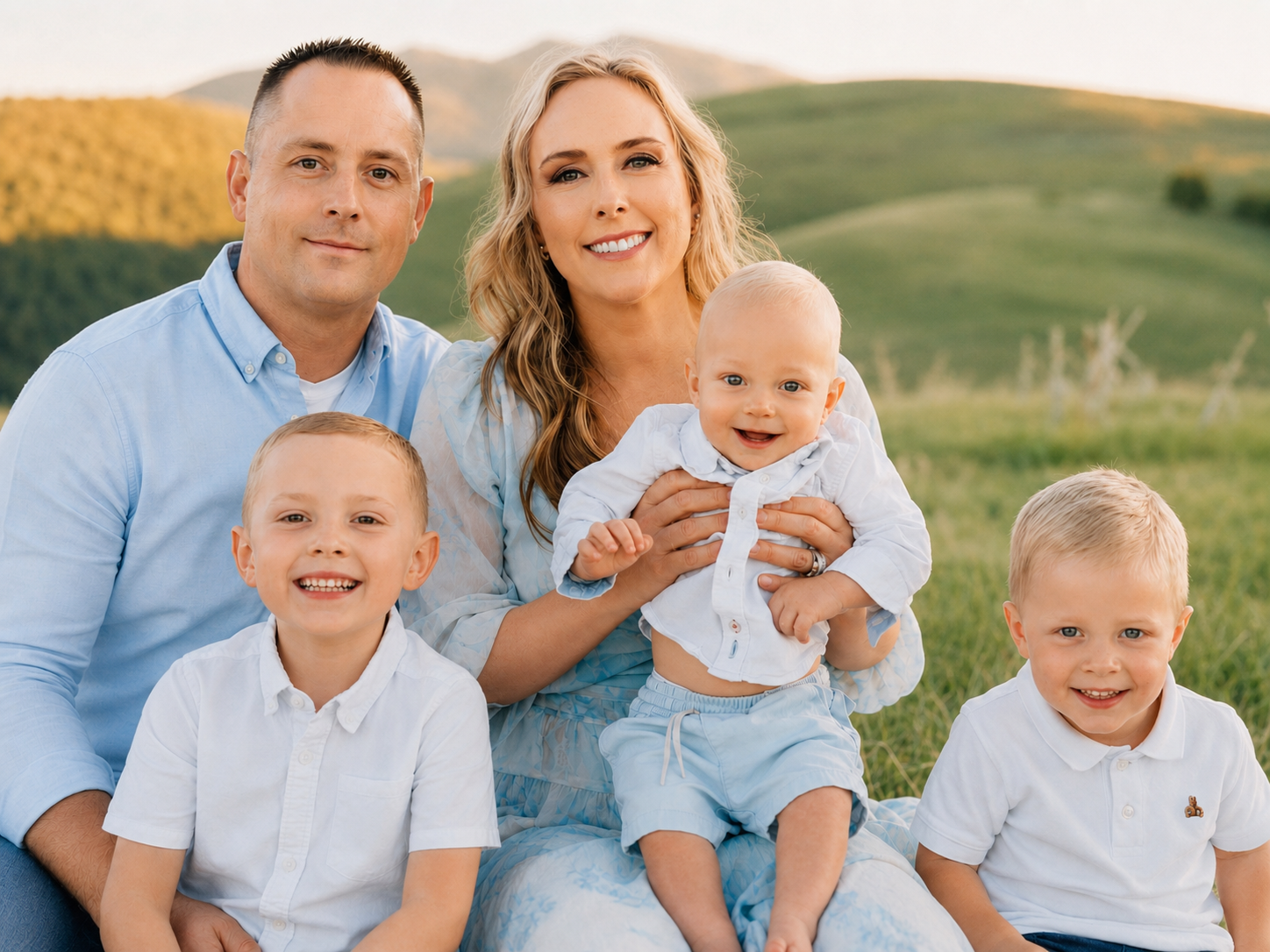
What Gentle Family Chiropractic Care Should Really Mean
Gentle family chiropractic care should mean more than simply using less force. It should mean choosing the examination, positioning, technique, treatment area, speed, force, and plan according to the actual person in front of you.
Understand the complaint
What is bothering the patient? What activities are limited? Is there a relevant injury, pregnancy, surgical, sports, or medical history?
Decide whether care fits
Not every problem belongs in a chiropractic treatment plan. Screening and referral are part of good clinical decision-making.
Match care to the person
Care may involve mobilization, carefully selected manipulation, soft-tissue work, assisted movement, exercise, activity modification, or another conservative strategy.
Pregnancy Is a Perfect Example of Why Treatment Must Be Individualized
As pregnancy progresses, the body adapts to a changing center of mass, increasing abdominal size, different sleeping positions, and greater demands on the hips, pelvis, low back, and surrounding musculature.

Where conservative care may fit
For an appropriately evaluated pregnant patient with a musculoskeletal complaint, care may combine manual therapy, movement modification, education, exercise, mobility work, soft-tissue treatment, or other supportive strategies.
- Low-back and pelvic discomfort
- Movement limitations affecting daily activity
- Comfort-focused mobility and manual care
- Exercise and activity guidance when appropriate
What the evidence supports best
Pregnancy-related musculoskeletal care is best understood as multimodal care rather than an adjustment-only solution. Exercise and education have meaningful support for pregnancy-related low-back and pelvic pain. Manual therapies may also be useful for some patients, while evidence specifically supporting spinal manipulation during pregnancy is less conclusive.
What About Webster Technique?
Dr. Valeri Frankos is Webster Certified. Webster certification involves additional training in a pregnancy-focused chiropractic technique involving assessment and treatment of the pregnant patient’s pelvis and surrounding musculoskeletal structures.
A pregnancy-focused musculoskeletal technique
It may be used as part of an individualized approach to maternal musculoskeletal complaints, with positioning and treatment modified for pregnancy.
An obstetric procedure for turning a baby
Webster Technique should not be described as a proven method to convert breech presentation, prevent cesarean delivery, shorten labor, guarantee fetal positioning, or create a specific birth outcome.
Postpartum Care Should Help Restore Capacity for Real Life
Delivery does not end the physical demands on the body. Feeding positions, repeated lifting, reaching into cribs, carrying a baby on one side, moving car seats, getting up from the floor, and interrupted sleep can all contribute to neck, upper-back, shoulder, low-back, hip, and pelvic discomfort.
Manual care
When appropriate, hands-on care may help address musculoskeletal symptoms and improve comfort with movement.
Progressive movement
Strengthening, walking, mobility work, and gradual return to normal activity deserve a central role in postpartum recovery.
Modify the daily load
Small changes to repetitive childcare positions can reduce irritation while physical capacity is being rebuilt.
Babies and Children Are Not Miniature Adults
Their anatomy, development, communication, medical history, symptoms, and ability to cooperate with an examination are different. History, observation, age-appropriate examination, comfort, and screening come first.
What we do focus on
- Muscles, joints, movement, soreness, and activity-related complaints
- Appropriate sports and injury evaluation
- Age-appropriate examination and communication
- Referral when a problem does not fit routine musculoskeletal care
What we do not promise chiropractic will treat
We do not tell parents that spinal adjustments have been proven to treat ear infections, asthma, ADHD, autism, reflux, immune-system problems, developmental disorders, childhood infections, bed-wetting, or other unrelated medical conditions.
A good pediatric visit starts with the child, not the adjustment.
Sometimes the recommendation may be manual treatment. Sometimes it may be movement advice or monitoring. Sometimes another healthcare provider should be involved. And sometimes the correct decision is not to treat.
Babies
History, observation, comfort, gentle examination, and careful screening come first. Routine spinal manipulation of asymptomatic infants is not strongly supported by evidence.
Young children
The visit often relies on parental observations, movement, behavior, history, and age-appropriate interaction. Treatment should not be forced if a child is frightened or unwilling to participate.
School-age kids
Sports, playground activity, falls, repetitive movement, backpacks, sitting, and other physical demands may become more relevant to the complaint.
Teen athletes
Evaluation can increasingly resemble adult sports and orthopedic care while still accounting for growth and youth-specific injuries.
Know when to refer
Stress injuries, fractures, growth-plate injuries, neurologic problems, concussion, and significant sprains may need imaging or another healthcare professional.
Take back pain seriously
Persistent pediatric back pain deserves appropriate evaluation, especially with significant trauma, neurologic changes, systemic illness, unusual night pain, or worsening symptoms.
Parents Are Often the Ones Doing the Lifting
A normal day may include crib-to-floor lifts, high-chair transfers, car-seat carries, groceries, toys, work, exercise, household chores, poor sleep, and old injuries. It is not surprising that parents develop neck, back, hip, shoulder, and other musculoskeletal complaints.
What the evidence says about adult low-back pain
Spinal manipulation is recognized as one of several conservative options that may be considered for some adults with low-back pain. It is not superior to every other treatment, and not every person with low-back pain needs an adjustment. Modern care often includes education, remaining active, exercise, self-management strategies, and selected manual therapies.
Hands-on treatment is a tool—not the entire treatment philosophy.
Three simple movement ideas for busy parents
These are general examples, not prescriptions for an injured patient. Pregnancy, recent delivery, acute injury, neurologic symptoms, prior surgery, osteoporosis, and other conditions can change what is appropriate.
Quadruped rock-back
From hands and knees, slowly move the hips backward toward the heels, then return. Keep it comfortable and controlled.
Bird-dog progression
Extend one leg backward while controlling the trunk. Progress to the opposite arm if the movement remains controlled.
Hip-hinge practice
Shift the hips backward with slight knee bend while controlling the trunk, then return to standing. Use the same pattern for appropriate lifting tasks.
When Chiropractic Should Not Be the First Stop
Medical evaluation may need to come first when there is:
- Significant trauma or concern for fracture
- New or progressive weakness, numbness, or other neurologic changes
- New bowel or bladder dysfunction associated with spinal symptoms
- Fever or systemic illness with significant neck or back pain
- Severe, unexplained, rapidly worsening, or unremitting pain
- Concern for infection, inflammatory disease, malignancy, or another serious condition
- Concerning pregnancy or postpartum symptoms
- A child with persistent or progressive unexplained pain
- Findings that do not fit an uncomplicated musculoskeletal problem
An examination should determine treatment—not the other way around.
What a Good Family Chiropractic Visit Should Look Like
Listen
Start with what the patient or parent is actually noticing, what changed, and what activities have become difficult.
Examine
Use movement, orthopedic, neurologic, muscle, joint, strength, coordination, or other testing that fits the complaint.
Explain
Patients should understand what appears to be happening, what remains uncertain, and why treatment is or is not being recommended.
Individualize
Care may include mobilization, manual therapy, soft-tissue work, exercise, mobility, activity modification, or another conservative strategy.
Reassess
Care should continue for a reason: better sleep, movement, lifting, work, exercise, sports, childcare, or another meaningful function.

Pregnancy, Pediatric & Family Chiropractic Care
Dr. Valeri Frankos has a special focus on pregnancy, babies, toddlers, children, and family chiropractic care at Frankos Chiropractic in Smithfield, Utah. Her background includes a B.S. in Kinesiology, Doctor of Chiropractic degree, Webster Certification, pregnancy-focused care, and care for babies and children.
Her approach emphasizes calm visits, clear explanations, age-appropriate techniques, and helping parents understand both what is appropriate to address with chiropractic care and what is not.
Questions Parents Commonly Ask
Is chiropractic care for a child the same as chiropractic care for an adult?
No. Examination, communication, positioning, technique, force, and treatment goals should be adapted to the child’s age, development, clinical presentation, size, and comfort.
Does every child who comes to Frankos Chiropractic receive an adjustment?
No. The purpose of an evaluation is to determine what is appropriate. The recommendation may involve manual care, movement advice, monitoring, co-management, referral, or no chiropractic treatment at all.
What pediatric concerns make the most sense for chiropractic evaluation?
The clearest role is with musculoskeletal concerns involving muscles, joints, movement, pain, soreness, activity-related complaints, and appropriate sports or injury evaluation.
Is chiropractic care during pregnancy safe for everyone?
Pregnancy itself does not automatically rule out conservative musculoskeletal care, but medical and obstetric history, symptoms, gestational stage, contraindications, and patient comfort should be considered. Concerning obstetric symptoms require maternity-care evaluation.
Can Webster Technique turn a breech baby?
It should not be presented as a proven way to turn a breech baby. Fetal presentation is an obstetric issue and should be evaluated and managed with the patient’s maternity-care provider.
Can chiropractic help with pregnancy-related back pain?
Some pregnant patients with musculoskeletal low-back or pelvic complaints may benefit from conservative care. Evidence supports exercise and multimodal approaches particularly well; manipulation alone has a more limited evidence base and should not be presented as a guaranteed solution.
Does a chiropractor have to “crack” my back?
No. Manual care can include lower-force mobilization, soft-tissue techniques, assisted movement, stretching, exercise, or other approaches. An audible joint sound is not the purpose of treatment.
Can chiropractic replace my child’s pediatrician or my OB/GYN?
No. Chiropractic care does not replace pediatric preventive care, obstetric management, emergency medicine, treatment of infection or systemic disease, or other appropriate medical services.
What if my child is nervous?
Tell us. A family-focused appointment should allow time for questions, explanation, and helping the child understand what is happening. Treatment should not simply be forced because an appointment was scheduled.
Family Chiropractic Care in Smithfield, Utah
Frankos Chiropractic provides individualized family chiropractic care for patients in Smithfield and throughout Cache Valley. Whether the concern is pregnancy-related back discomfort, postpartum neck or low-back pain, an active teenager with a sports-related complaint, a child with a musculoskeletal concern, or a parent who simply wants to move more comfortably again, the first step is determining what appears to be happening and whether chiropractic care is appropriate.
Our goal is not to put every family member on the same treatment plan. It is to provide individualized, evidence-informed conservative care and to be clear when another healthcare professional should be involved.
Evidence Behind This Family Chiropractic Care Guide
This article is intentionally conservative about what chiropractic care can and cannot claim. The following external sources are useful starting points for readers who want to review the underlying clinical guidance and research.
Chronic Primary Low-Back Pain Guideline
WHO guidance emphasizes person-centered, multimodal care and includes exercise, education, and selected physical therapies among conservative options for adults.
Read the WHO guideline → PubMed · 2026 systematic reviewExercise for Pregnancy-Related Pelvic Girdle Pain
A recent systematic review and meta-analysis found structured exercise associated with improvements in pain and function, while noting remaining uncertainty around ideal program parameters.
View on PubMed → PubMed · systematic reviewManual Therapy During Pregnancy
This review found limited evidence for complementary manual therapies for pregnancy-related back and pelvic pain and called for better-quality research.
View on PubMed → PubMed · pediatric scoping reviewSpinal Manipulation & Mobilization in Children
The collective evidence did not support broad effectiveness claims for pediatric spinal manipulation or mobilization and highlighted the need for stronger safety and effectiveness data.
View on PubMed →External research links are provided for patient education. They do not replace individualized clinical evaluation or guidance from a pediatrician, OB/GYN, primary-care clinician, or other appropriate healthcare professional.
Have a Question About Care for Your Family?
Start with the concern. Frankos Chiropractic can help determine what type of appointment makes sense and whether a chiropractic evaluation is appropriate.