Frankos Chiropractic Blog
The Benefits of Shockwave Therapy for Chronic Pain and Tendon Conditions
Helpful patient education for Smithfield, Logan, and Cache Valley.
Shockwave Therapy • Cache Valley
The Benefits of Shockwave Therapy for Chronic Pain and Tendon Conditions
Radial shockwave therapy is a noninvasive treatment option that may help selected chronic tendon, fascia, and soft tissue pain patterns — especially when pain has lingered for weeks or months and basic rest, stretching, or home care have not been enough.
Shockwave therapy is not magic. It is a tool for the right chronic tissue problem, used with the right plan.
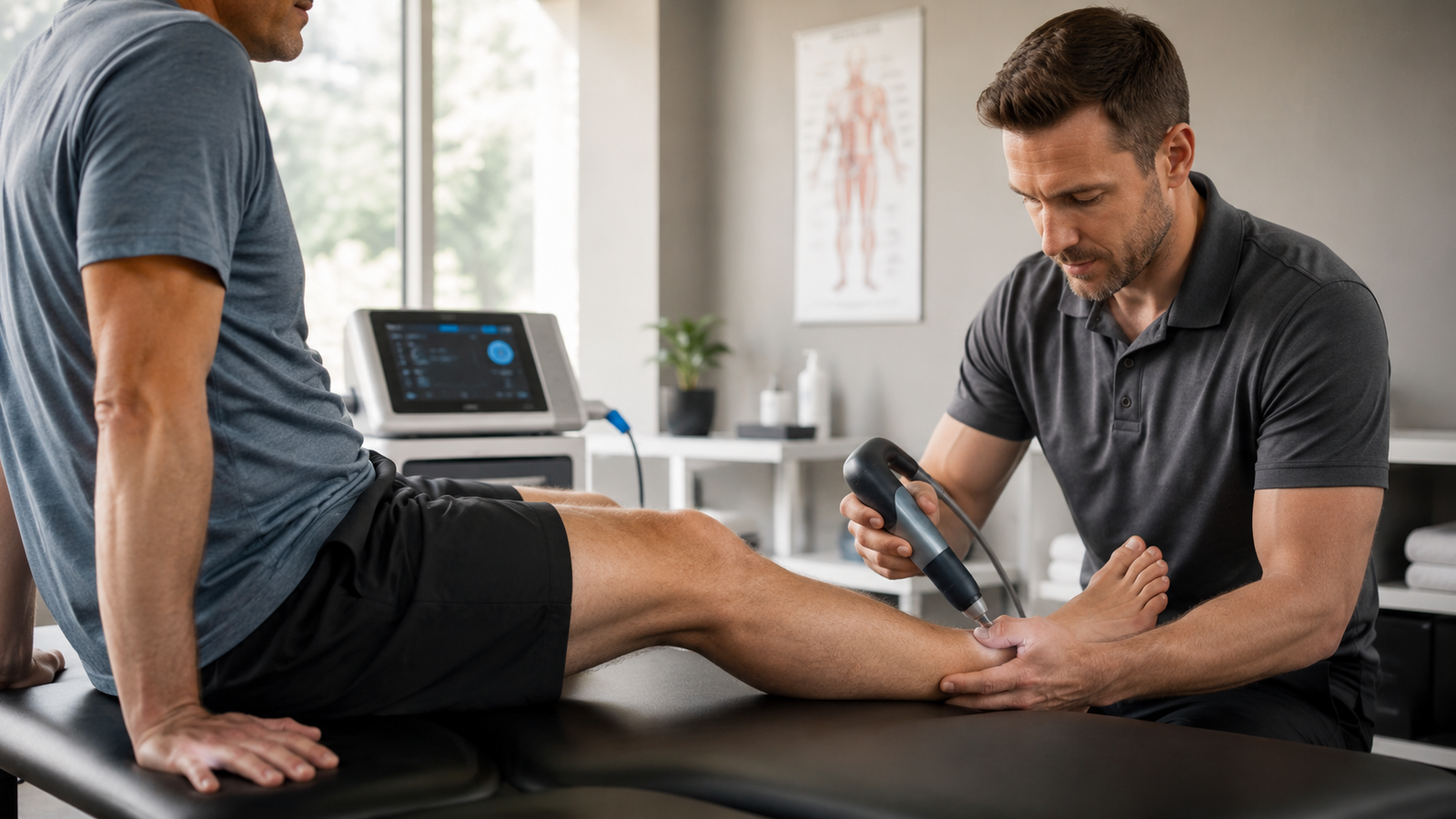
At Frankos Chiropractic, radial shockwave therapy is used for selected chronic musculoskeletal pain patterns after an exam. It may be considered for tendon, fascia, and soft tissue irritation when the goal is to stimulate a local tissue response, improve tolerance to loading, and support a better recovery plan.
Common examples include plantar fasciitis or heel pain, Achilles tendon irritation, patellar tendon pain, tennis elbow-type pain, shoulder tendon problems, hip/glute tendon pain, and other chronic soft tissue conditions when appropriate.
Frankos Chiropractic is located at 115 N Main St in Smithfield, Utah, serving Smithfield, Logan, North Logan, Hyde Park, Richmond, Lewiston, Providence, Hyrum, Nibley, Wellsville, Cache Valley, Preston, Franklin, and nearby Southeast Idaho.
What shockwave therapy does
Shockwave therapy uses acoustic pressure waves to create a local tissue response.
Extracorporeal means the energy is delivered from outside the body through the skin. In musculoskeletal care, shockwave therapy is commonly used as a noninvasive option for selected chronic tendon, fascia, and soft tissue problems.
Radial vs focused shockwave: what is the difference?
Focused shockwave directs energy deeper and more precisely. Radial shockwave spreads acoustic pressure more broadly through superficial tissues. Frankos Chiropractic uses radial shockwave therapy, which can be useful for selected soft tissue, tendon, and fascia pain patterns when paired with the right exam and plan.
Potential benefits
Why patients consider shockwave therapy for chronic pain and tendon conditions.
Shockwave therapy is often considered when a chronic area keeps flaring, when normal activity still hurts, or when a tendon or fascia problem has stopped responding to basic rest and stretching.
Noninvasive care
Shockwave therapy is applied through the skin. It does not require an incision, injection, or medication to deliver the treatment stimulus.
Targets chronic tissue irritation
It is commonly considered for chronic tendon, fascia, and soft tissue pain patterns that have lingered beyond a normal short-term strain.
May reduce pain and improve function
Research on tendinopathy and plantar fasciitis suggests shockwave therapy can help selected patients reduce pain and improve activity tolerance.
Pairs well with rehab principles
Shockwave therapy is often strongest when combined with load management, strengthening, mobility work, footwear or training changes, and graded return to activity.
Can fit active lifestyles
Many patients can continue normal daily activity, though heavy loading, hard training, or aggressive stretching may need temporary modification.
Helps clarify the plan
An evaluation helps decide whether the problem is a good shockwave candidate or whether another approach, imaging, or referral makes more sense.
Best-fit conditions
Shockwave therapy is usually considered for chronic tendon, fascia, and soft tissue pain patterns.
It is not for every ache or acute injury. The best candidates often have a stubborn area that has become painful with loading, activity, or repeated use.
Plantar Fasciitis / Heel Pain
Chronic heel and arch pain is one of the more common reasons patients ask about shockwave therapy.
Achilles Tendon Pain
Selected chronic Achilles tendon patterns may be considered when symptoms linger despite load modification and basic care.
Patellar Tendon Pain
Jumping, squatting, stairs, and running can irritate the patellar tendon. Shockwave may be considered for selected chronic cases.
Tennis Elbow-Type Pain
Lateral elbow pain can become stubborn when gripping, lifting, or repetitive use keeps irritating the tendon region.
Shoulder Tendon Problems
Selected chronic shoulder tendon patterns, especially when movement and load are involved, may be evaluated for shockwave suitability.
Hip or Glute Tendon Pain
Outer hip, glute, or tendon-region pain can affect walking, stairs, running, and sleeping on the side. A focused exam helps identify the driver.
Not every painful area is a shockwave problem.
Acute tears, unstable injuries, significant nerve symptoms, inflammatory or systemic conditions, infections, tumors, fractures, or pain that needs medical workup should not be treated like a simple tendon problem. Screening matters.
What to expect
A good shockwave plan starts with evaluation, not just treatment.
Because chronic tendon and fascia problems are usually load-related, the treatment plan should include more than the shockwave session itself.
History and exam
Where the pain is, how long it has been there, what loads irritate it, what you have already tried, and whether red flags are present.
Candidate decision
The visit should clarify whether shockwave therapy is appropriate, or whether chiropractic care, soft tissue therapy, imaging, or referral is better.
Treatment sessions
Shockwave plans commonly involve a series of visits. The exact schedule depends on the condition, severity, tissue response, and clinical judgment.
Temporary soreness
Some soreness, redness, tenderness, or mild bruising can occur after treatment. Patients should follow their provider’s activity guidance.
Load management
For tendon and fascia problems, changing the painful load is often just as important as the treatment itself.
Progress check
Improvement should be measured by pain, walking or activity tolerance, strength, function, sleep, and ability to return to normal life.
Safety and fit
Shockwave therapy should be screened, targeted, and used appropriately.
Shockwave therapy is generally considered noninvasive, but it is still a treatment that should be used in the right area, for the right condition, and with the right precautions.
Shockwave may not be appropriate for:
- Treatment over infection, open wounds, local tumor, or areas needing urgent medical workup.
- Treatment over air-filled tissue such as lung or gut.
- Known pre-ruptured tendons or suspected acute tendon rupture.
- Certain bleeding or clotting disorders, local thrombosis, or high-risk vascular situations.
- Pregnancy-related treatment areas or treatment where pregnancy changes the safety decision.
- Recent corticosteroid injection sites, depending on timing and tissue risk.
- Areas with major numbness, altered sensation, or symptoms that suggest a different diagnosis.
Care at Frankos Chiropractic
Shockwave therapy works best when it is part of a clear plan.
Frankos Chiropractic uses radial shockwave therapy as one tool within conservative musculoskeletal care. The exam helps decide whether shockwave should be used alone, combined with other care, or avoided.

Radial Shockwave Therapy
For selected chronic tendon, fascia, and soft tissue pain patterns after evaluation.
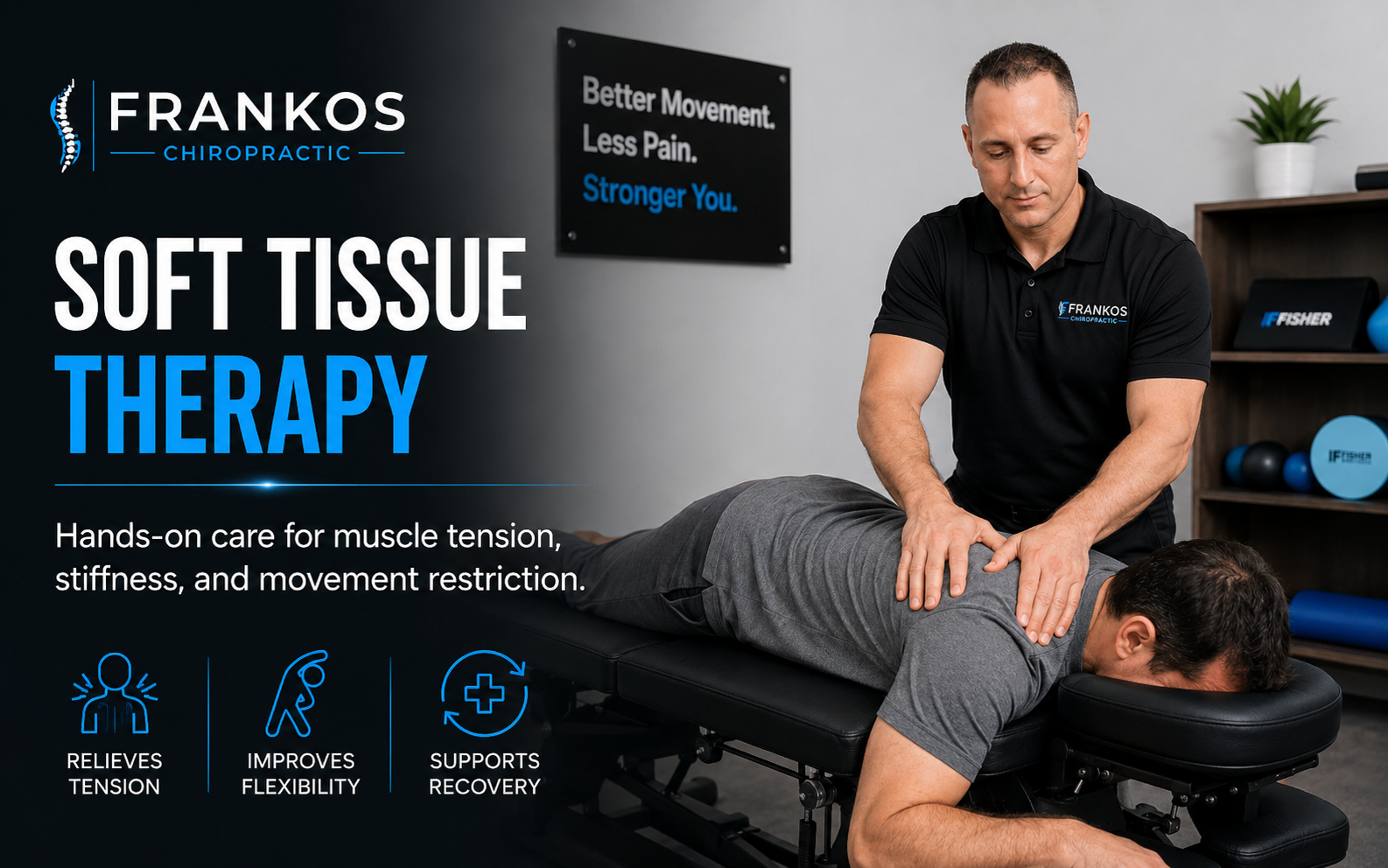
Soft Tissue Therapy
May be paired with shockwave when muscle guarding, fascia restriction, or movement sensitivity is involved.
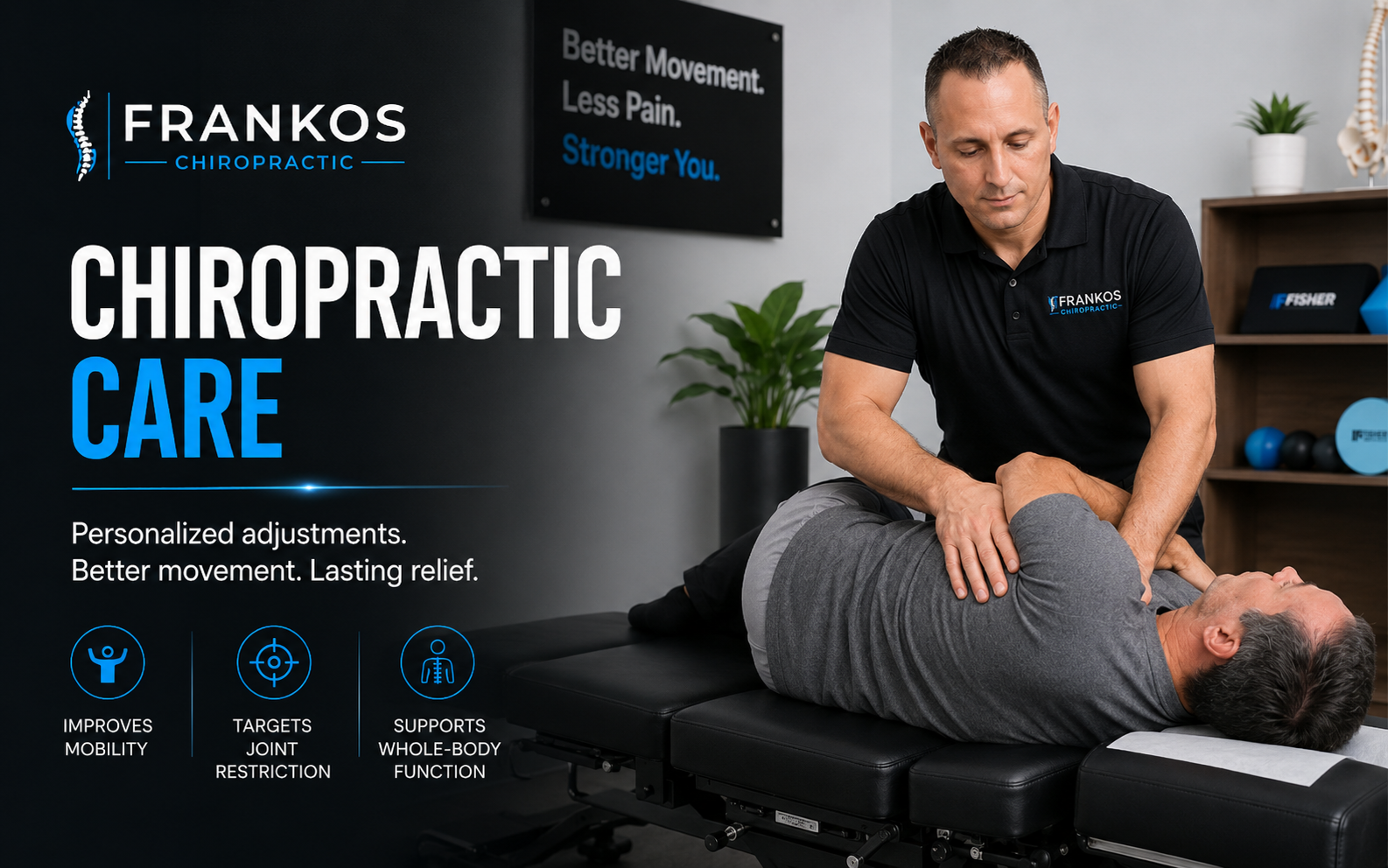
Chiropractic Care
For selected joint restrictions or mechanical patterns that may contribute to loading the painful area.

Plantar Fasciitis Care
For selected chronic heel and arch pain patterns that may benefit from a complete load-management plan.
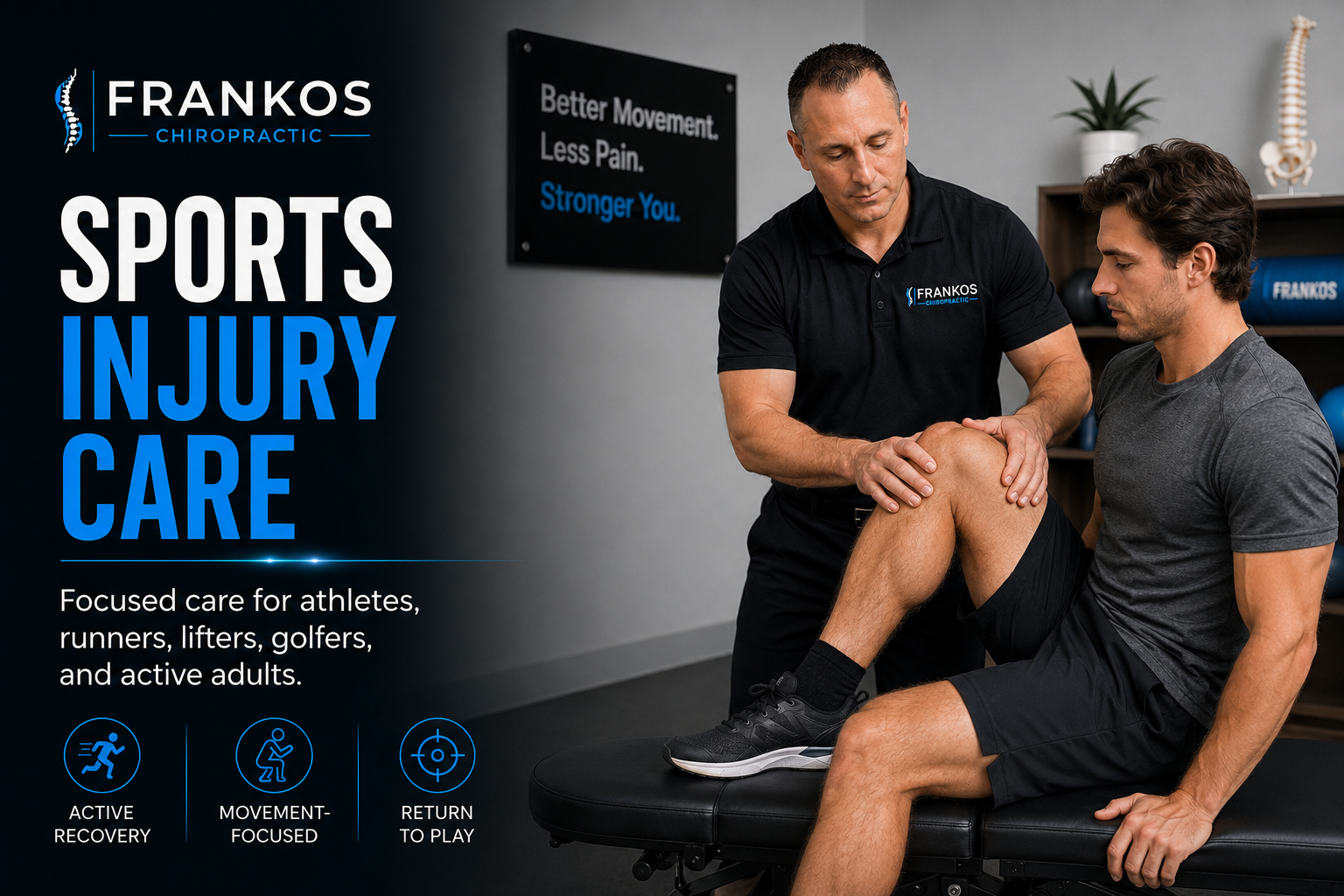
Sports Injury Care
For runners, hikers, lifters, athletes, workers, and active adults dealing with stubborn pain patterns.
Book an Evaluation
Find out whether your chronic tendon, fascia, or soft tissue pain pattern is a good fit for shockwave therapy.
Shockwave therapy FAQs
Common questions about shockwave therapy for chronic pain.
These answers are educational and do not replace a personal exam.
What does shockwave therapy feel like?
Patients usually feel repeated pressure pulses over the treatment area. It can be uncomfortable, especially over irritated tissue, but the intensity can often be adjusted.
How many visits does it take?
Many protocols use a series of visits, but the exact number depends on the condition, how long it has been present, tissue irritability, and response to care.
Is shockwave therapy only for plantar fasciitis?
No. Heel pain is a common use, but shockwave therapy may also be considered for selected Achilles, patellar tendon, elbow, shoulder, hip, and other chronic soft tissue pain patterns.
Can I keep exercising?
Usually activity is modified, not always stopped. Heavy loading, hard running, jumping, or aggressive stretching may need temporary adjustment depending on the condition.
Is shockwave therapy guaranteed to work?
No. It is not guaranteed and it is not for every pain pattern. It works best when the diagnosis, treatment area, dosage, and supporting plan are appropriate.
Where is Frankos Chiropractic?
Frankos Chiropractic is located at 115 N Main St in Smithfield, Utah and serves Cache Valley from one Smithfield office.
Wondering if shockwave therapy is right for your chronic pain?
Schedule an evaluation at Frankos Chiropractic in Smithfield to see whether your tendon, fascia, or soft tissue pain pattern is a good fit.
Chronic tendon and soft tissue pain deserves a clear plan.
Frankos Chiropractic offers radial shockwave therapy in Smithfield, Utah for selected chronic pain, tendon, fascia, and soft tissue conditions after evaluation.
Frankos Chiropractic is located at 115 N Main St, Smithfield, UT 84335. We do not operate fake locations in other towns.