Frankos Chiropractic Blog
What Conditions Respond Best to Shockwave Therapy?
Helpful patient education for Smithfield, Logan, and Cache Valley.
Shockwave Therapy Guide • Smithfield, Utah
What Conditions Respond Best to Shockwave Therapy?
Shockwave therapy can be a helpful option for selected chronic tendon, fascia, and soft tissue problems, but it is not the right tool for every painful area. This guide explains where the research looks strongest, where it is mixed, and how Frankos Chiropractic decides whether radial shockwave therapy is worth discussing for patients in Smithfield, Logan, and Cache Valley.
Start with chronic tendon, fascia, or soft tissue pain — not every ache.
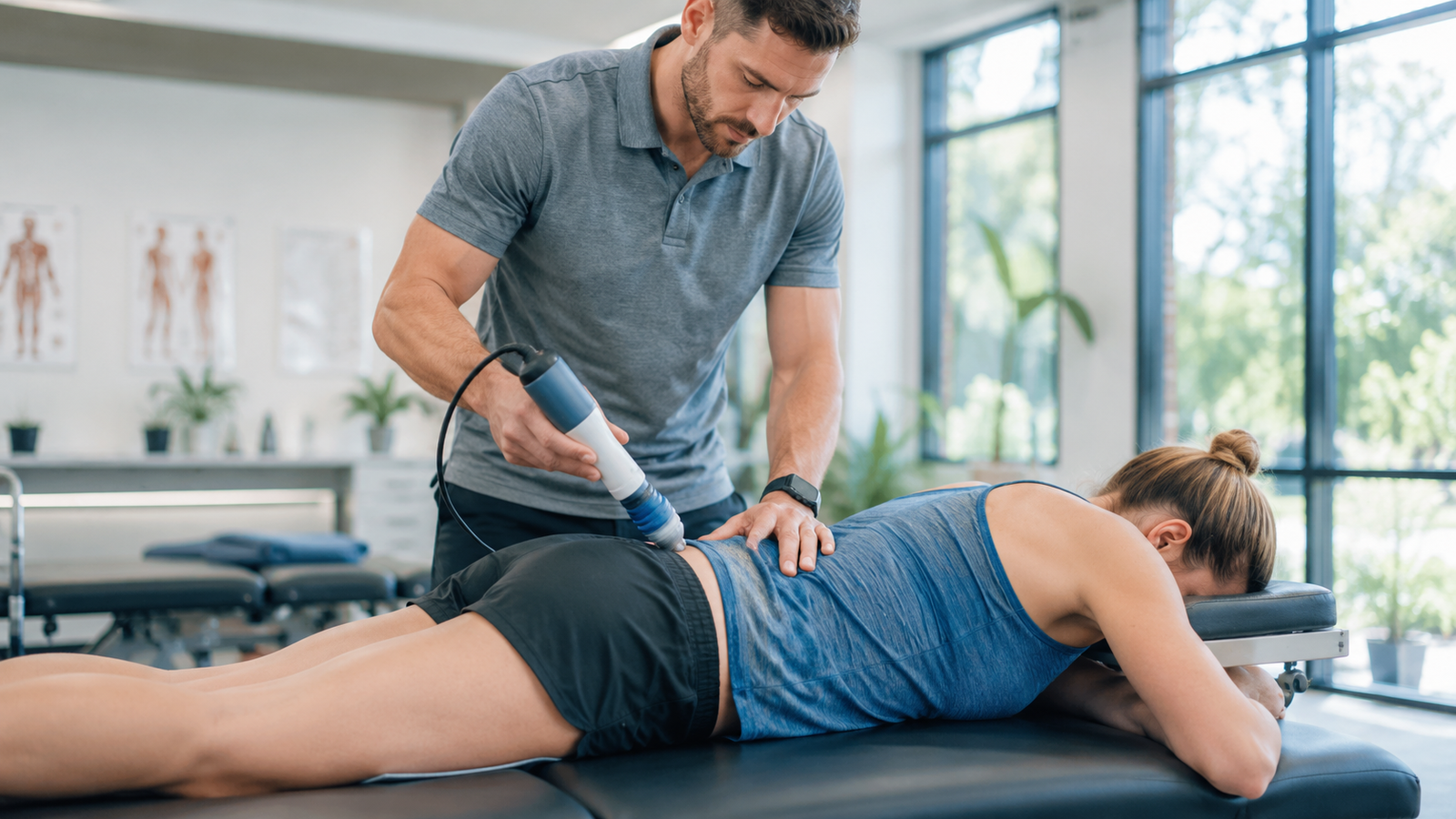
The best candidates are usually patients with a more focused, stubborn soft tissue problem: heel pain from plantar fascia irritation, chronic tendon pain, selected shoulder or hip tendon patterns, or an overuse problem that has not responded well to basic rest, stretching, shoes, ice, or repeated flare-up cycles.
Frankos Chiropractic uses a Storz Medical Masterpuls One radial shockwave device. Radial shockwave is different from deep focused shockwave used in some specialty settings, so the condition, exam findings, pain location, tissue stage, and patient goals all matter.
What the research says
The strongest practical use is usually stubborn soft tissue pain, especially plantar fascia and chronic tendon problems.
Shockwave research is not one simple yes-or-no answer. Results depend on the condition, whether the device is focused or radial, treatment dose, number of sessions, chronicity, and what rehab or loading plan is done alongside care. The clearest takeaway is this: shockwave is most often discussed for chronic tendon, fascia, and overuse-related soft tissue problems rather than sudden injuries or vague pain.
| Condition category | Research pattern | Practical Frankos Chiropractic takeaway |
|---|---|---|
| Plantar fasciitis / plantar heel pain | One of the better-supported musculoskeletal uses, especially when symptoms are persistent and not resolving with a core approach. | Often one of the first conditions where shockwave is worth discussing if exam findings fit. |
| Chronic tendinopathy | Meta-analyses suggest pain improvements across tendinopathy groups, but the size of benefit varies by tendon and protocol. | Helpful conversation for chronic Achilles, elbow, patellar, shoulder, hip, or other tendon patterns — case by case. |
| Calcific shoulder / rotator cuff tendon pain | Evidence is more specific for calcific rotator cuff tendinopathy than for every type of shoulder pain. | Shoulder pain needs evaluation first; shockwave may be considered when the pain looks tendon-related. |
| Tennis elbow / lateral elbow pain | Research is mixed: some reviews show benefit, while others find small or uncertain effects depending on the comparison and device type. | Potential option for stubborn lateral elbow pain, but not something to oversell as guaranteed. |
| Bone stress injuries / nonunion | Some consensus recommendations discuss focused high-energy shockwave in medical/sports medicine settings. | That is not the same conversation as routine radial shockwave for soft tissue pain. Suspected fracture or stress injury needs medical evaluation. |
Best-fit conditions
Conditions most likely to make sense for a shockwave conversation.
These are not promises. They are the patterns where radial shockwave is most commonly considered when the exam supports a tendon, fascia, or stubborn soft tissue driver.
Plantar Fasciitis and Heel Pain
First-step heel pain, plantar fascia irritation, calf/foot tightness, and walking or running pain that keeps returning despite basic care.
Chronic tendon painAchilles, Patellar, or Elbow Tendon Pain
Shockwave may be discussed when tendon pain has become stubborn, localized, and slow to respond to rest or repeated stretching alone.
Selected shoulder casesShoulder Tendon Irritation
Not all shoulder pain is a shockwave case. It may be considered for selected rotator cuff or tendon-related patterns after evaluation.
Active patientsOveruse Sports Pain
Runners, lifters, golfers, hikers, and active adults may benefit when the pain pattern is more chronic tendon or fascia overload than an acute injury.
Soft tissue restrictionPersistent Muscle or Soft Tissue Pain
Some stubborn soft tissue problems need more than one tool. Shockwave may be combined with soft tissue work, mobility, or loading advice.
Exam firstHip, Glute, or Tendon-Like Pain
Lateral hip, glute, and tendon-like pain can have different causes. The goal is to identify whether the pain source actually matches shockwave.
When shockwave may not be the right tool
Shockwave should not be used as a catch-all for every painful condition.
Some patients need a different starting point: evaluation, referral, imaging, progressive loading, chiropractic care, traction, soft tissue therapy, activity modification, or medical management. The right plan depends on the case.
Fresh injuries
A new sprain, suspected tear, fracture, or sudden swelling needs evaluation first. Shockwave is usually a chronic tissue conversation.
True nerve compression
Numbness, weakness, or radiating pain from the spine may need a different plan. Shockwave may help soft tissue contributors, not fix every nerve symptom.
Recent steroid injection
Some medical sources advise caution after a recent local corticosteroid injection. Tell the office about injections before booking shockwave.
Pregnancy over treatment area
Pregnancy itself is not the same as a local treatment field, but shockwave should not be aimed where a fetus could be in the treatment field.
Tumor, infection, clotting issues
Local tumor, infection, significant bleeding/clotting issues, or certain implants in the treatment field may make shockwave inappropriate.
General soreness only
If the issue is simple post-workout soreness, poor sleep, or general tightness, basic movement, recovery, or soft tissue work may be a better first step.
Good candidate checklist
You may be a good shockwave candidate if the problem is stubborn, localized, and tissue-related.
The closer your symptoms match a chronic tendon, fascia, or soft tissue pattern, the more reasonable it is to discuss shockwave. The less specific the pain is, the more important the exam becomes.
Better shockwave fit
- Pain has lasted longer than a typical short flare-up.
- You can point to a fairly specific tender area.
- The issue feels tendon, fascia, or soft tissue related.
- Basic rest, stretching, ice, shoes, or self-care has not solved it.
- You are willing to follow a protocol, not expect a one-visit miracle.
Less clear shockwave fit
- Pain is brand new, severe, or rapidly worsening.
- There is obvious swelling, bruising, deformity, or suspected tear.
- Symptoms are mostly numbness, weakness, or nerve referral.
- Pain is vague and moves around without a clear tissue target.
- You have medical contraindications that need screening first.
How Frankos Chiropractic uses shockwave
The treatment tool should match the exam, not the other way around.
At Frankos Chiropractic, shockwave is usually discussed as part of a practical plan for selected chronic tendon, fascia, and soft tissue problems. It may be combined with chiropractic care, soft tissue therapy, IASTM, cupping, activity advice, mobility work, or a loading plan depending on the case.

Radial Shockwave Therapy
Used for selected chronic tendon, fascia, and soft tissue problems when appropriate.
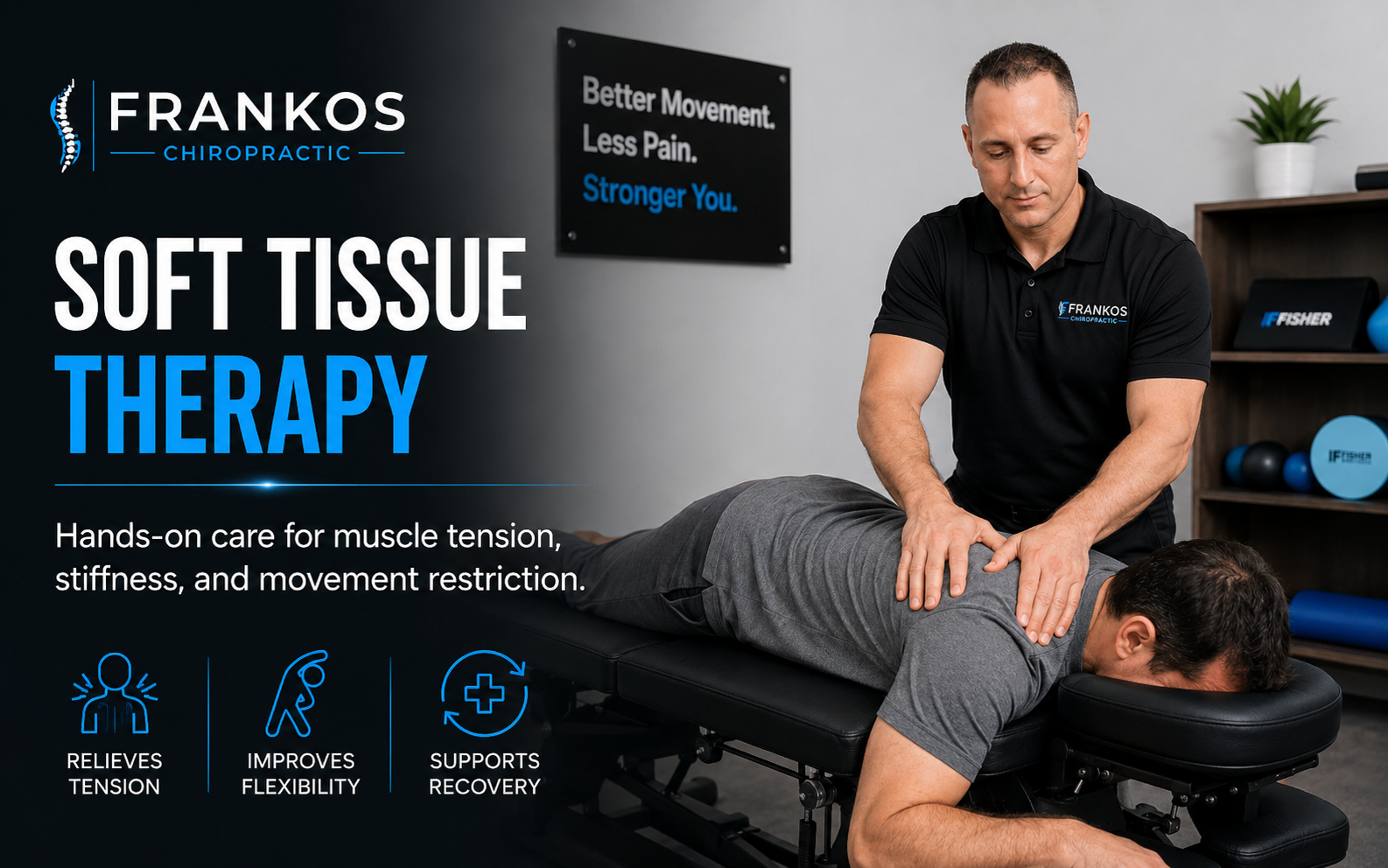
Soft Tissue Therapy
Hands-on muscle-focused care when tight or guarded tissue is part of the pattern.
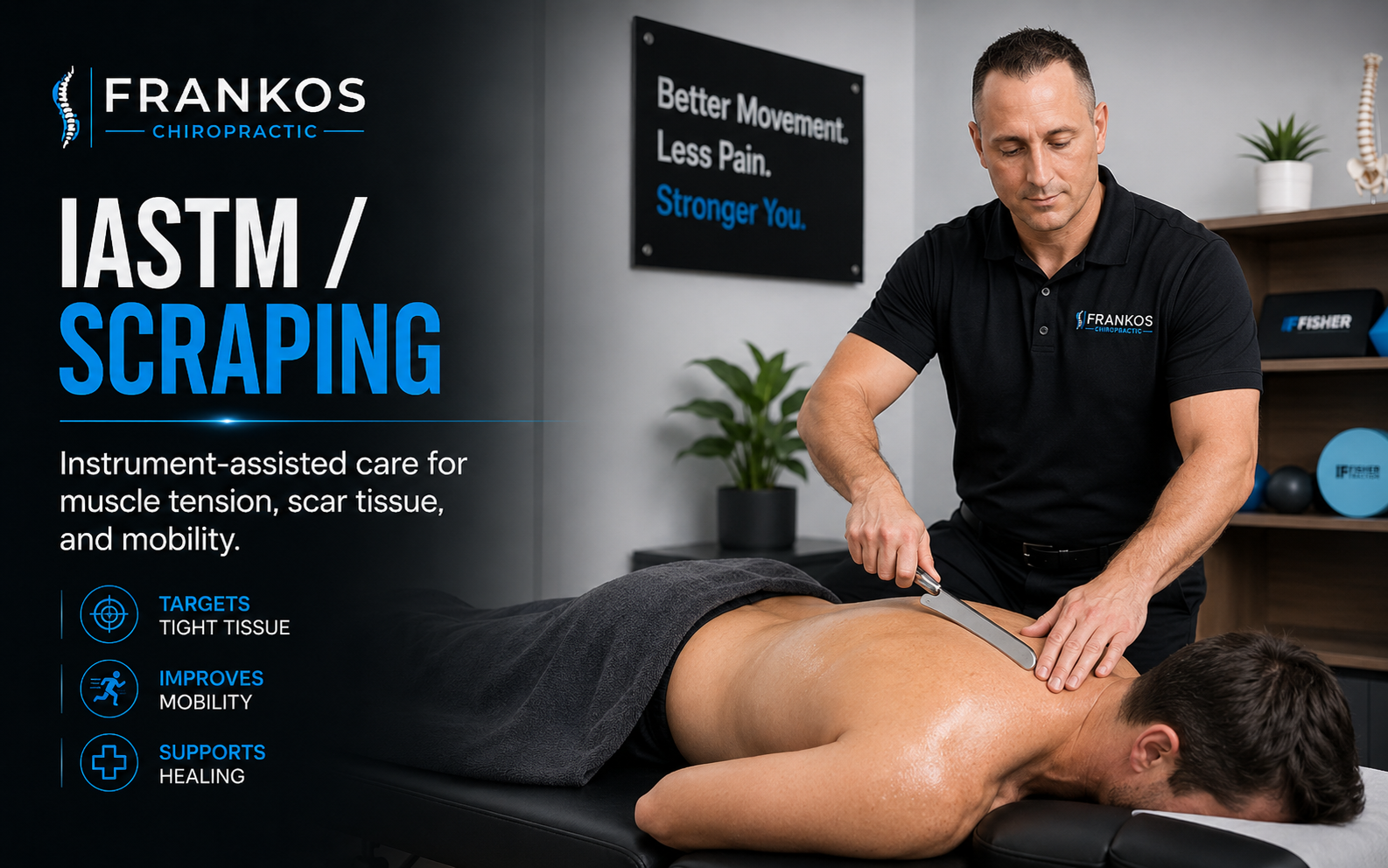
IASTM / Scraping
Instrument-assisted soft tissue work for selected repetitive strain and restricted tissue patterns.

Cupping Therapy
Cupping may be used for selected muscle tension, recovery, and mobility patterns.
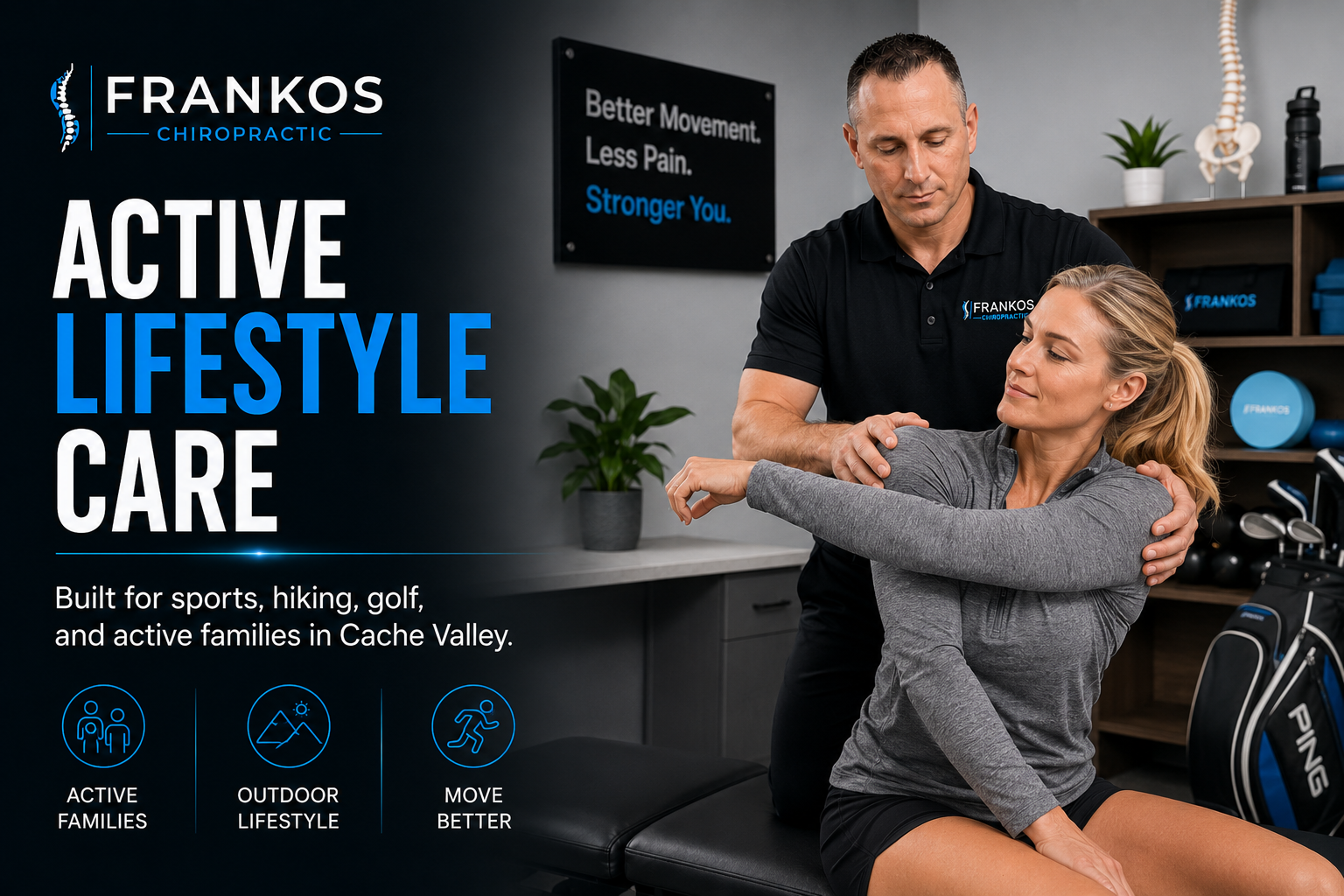
Sports and Overuse Care
For runners, lifters, golfers, hikers, students, and active adults trying to return to activity.
Book an Evaluation
Schedule a visit so the doctor can determine whether shockwave is a reasonable fit.
Shockwave therapy FAQs
Common questions before booking shockwave therapy.
These answers are educational and do not replace an exam or individualized medical advice.
What condition responds best to shockwave therapy?
Plantar fasciitis and chronic tendon/fascia problems are among the most common best-fit categories. The exact answer depends on the exam and how long the condition has been present.
Is shockwave good for acute injuries?
Usually not as a first step. New swelling, bruising, suspected fracture, sudden weakness, or possible tendon tear should be evaluated before considering shockwave.
Is radial shockwave the same as focused shockwave?
No. Radial shockwave/pressure wave therapy is commonly used for superficial soft tissue and tendon/fascia problems. Focused shockwave can be used differently in specialty settings.
How many visits does shockwave take?
It is usually performed as a protocol, not a one-time miracle. The number of visits depends on the condition, severity, chronicity, and response.
Can shockwave help sciatica?
Shockwave is not a primary treatment for nerve compression from the spine. It may be considered only if there is a clear soft tissue component that fits the exam.
Where can I get shockwave therapy near Logan?
Frankos Chiropractic is located in Smithfield, Utah and serves patients from Logan, North Logan, Hyde Park, Richmond, Lewiston, Preston, Franklin, and Cache Valley.
Wondering if shockwave is right for your pain?
Book a visit at Frankos Chiropractic in Smithfield, Utah. We will help determine whether your symptoms match a shockwave-friendly pattern or whether another care option makes more sense.