Frankos Chiropractic Blog
When Should You See a Chiropractor for Back Pain? (Cache Valley Guide)
Helpful patient education for Smithfield, Logan, and Cache Valley.
Back Pain Guide • Cache Valley
When Should You See a Chiropractor for Back Pain? (Cache Valley Guide)
Back pain is common, but that does not mean every case should be ignored — and it also does not mean every case needs imaging, medication, or surgery. The real question is whether your back pain looks like a common mechanical pattern that may respond to conservative care, or whether it needs medical evaluation first.
You should not wait forever, but you also should not treat red flags like normal soreness.

A chiropractic evaluation may be appropriate when back pain is not calming down, keeps returning, limits work or sleep, makes it hard to bend or walk normally, or is connected to lifting, yard work, desk posture, sports, driving, pregnancy-related strain, or sciatica-like symptoms.
A good visit should also screen for warning signs. Back pain with progressive weakness, bowel or bladder changes, fever, major trauma, unexplained weight loss, or severe worsening symptoms needs medical evaluation rather than routine conservative care.
Frankos Chiropractic is located at 115 N Main St in Smithfield, Utah, serving Smithfield, Logan, North Logan, Hyde Park, Richmond, Lewiston, Providence, Hyrum, Nibley, Wellsville, Cache Valley, Preston, Franklin, and nearby Southeast Idaho.
Quick answer
See a chiropractor when back pain affects life, keeps returning, or is not improving like normal soreness.
If back pain is mild, improving quickly, and not causing leg symptoms, numbness, weakness, or other warning signs, a short period of gentle activity and self-care may be reasonable. If it is not improving, limits normal life, or keeps returning, an exam can help identify the pattern.
Pain lasting more than a few days
Back pain that is not settling down, or that keeps feeling “stuck,” may need an exam to check movement, muscle guarding, and possible nerve irritation.
Flares that keep coming back
If your back flares every time you lift, sit, drive, work out, or do yard work, there may be a repeated movement or mechanical pattern feeding it.
Pain that changes how you move
Limping, avoiding bending, trouble standing up straight, or guarding every movement are signs the issue is affecting function.
Hip, pelvis, or glute involvement
Back pain often overlaps with hip and SI/pelvic mechanics. A focused exam can help identify whether the driver is low back, hip, pelvis, or mixed.
Sciatica-like symptoms
Pain into the glute, thigh, calf, or foot needs careful screening, especially if it includes numbness, tingling, or weakness.
You need a plan, not just guessing
Back pain can come from muscles, joints, discs, nerves, hips, activity load, posture, or several factors together. The plan should match the pattern.
Likely chiropractic fit
Back pain is often a good chiropractic evaluation when it looks musculoskeletal.
Chiropractic care may be appropriate when the pain appears related to movement, position, muscle guarding, joint restriction, lifting, posture, sports, repetitive work, or activity overload — assuming no red flags are present.
Mechanical low back pain
Pain with bending, lifting, twisting, getting in and out of a chair, or standing after sitting.
Desk or driving pain
Symptoms that build after sitting, commuting, studying, computer work, or long static positions.
Yard work or lifting flare
Pain after bending, twisting, shoveling, hauling, squatting, deadlifting, moving furniture, or lifting kids.
Hip or SI/pelvis pain
One-sided low back, glute, or hip-region pain that feels mechanical and changes with position or movement.
Sports or active-life soreness
Back pain connected to running, lifting, hiking, golf, wrestling, dance, pickleball, or general activity.
Maintenance questions
If you are out of active pain but want help staying mobile, maintenance-style care is different from active injury care.
Active pain care is not the same as a quick wellness adjustment.
If you are dealing with new pain, a recent injury, radiating symptoms, or a flare that is changing how you move, that should be scheduled as an evaluation-style visit rather than a maintenance-only adjustment.
When not to wait
Some back pain needs medical evaluation quickly.
These warning signs do not mean something serious is always present, but they do mean back pain should not be treated like routine stiffness.
Seek urgent medical evaluation if back pain:
- Causes new bowel or bladder control problems.
- Comes with saddle numbness or numbness in the groin region.
- Comes with fever, unexplained weight loss, or feeling seriously ill.
- Follows a fall, blow to the back, car accident, or other significant injury.
- Spreads below the knee with worsening numbness, tingling, or weakness.
- Causes foot drop, progressive leg weakness, or trouble walking normally.
- Is severe, constant, intense at night, or not improving with rest and gentle activity.
What a chiropractor should check
A useful back pain visit should answer three questions.
Is this appropriate for conservative chiropractic care? What pattern appears to be driving the pain? What should you do next?
Is it safe for conservative care?
The visit should screen for red flags, nerve signs, trauma history, and symptoms that may need medical referral or imaging.
What is the pattern?
Low back joint restriction, muscle guarding, hip or SI involvement, disc-related irritation, nerve sensitivity, or activity overload may require different plans.
What should change?
Care may include hands-on treatment, but the plan should also address lifting, sitting, sleep, activity load, home movements, and return to normal life.
Care options at Frankos Chiropractic
Back pain care should match the exam, not a template.
At Frankos Chiropractic, care may include chiropractic adjustments, soft tissue therapy, traction/decompression, flexion distraction, home movement guidance, activity modification, or referral when needed.
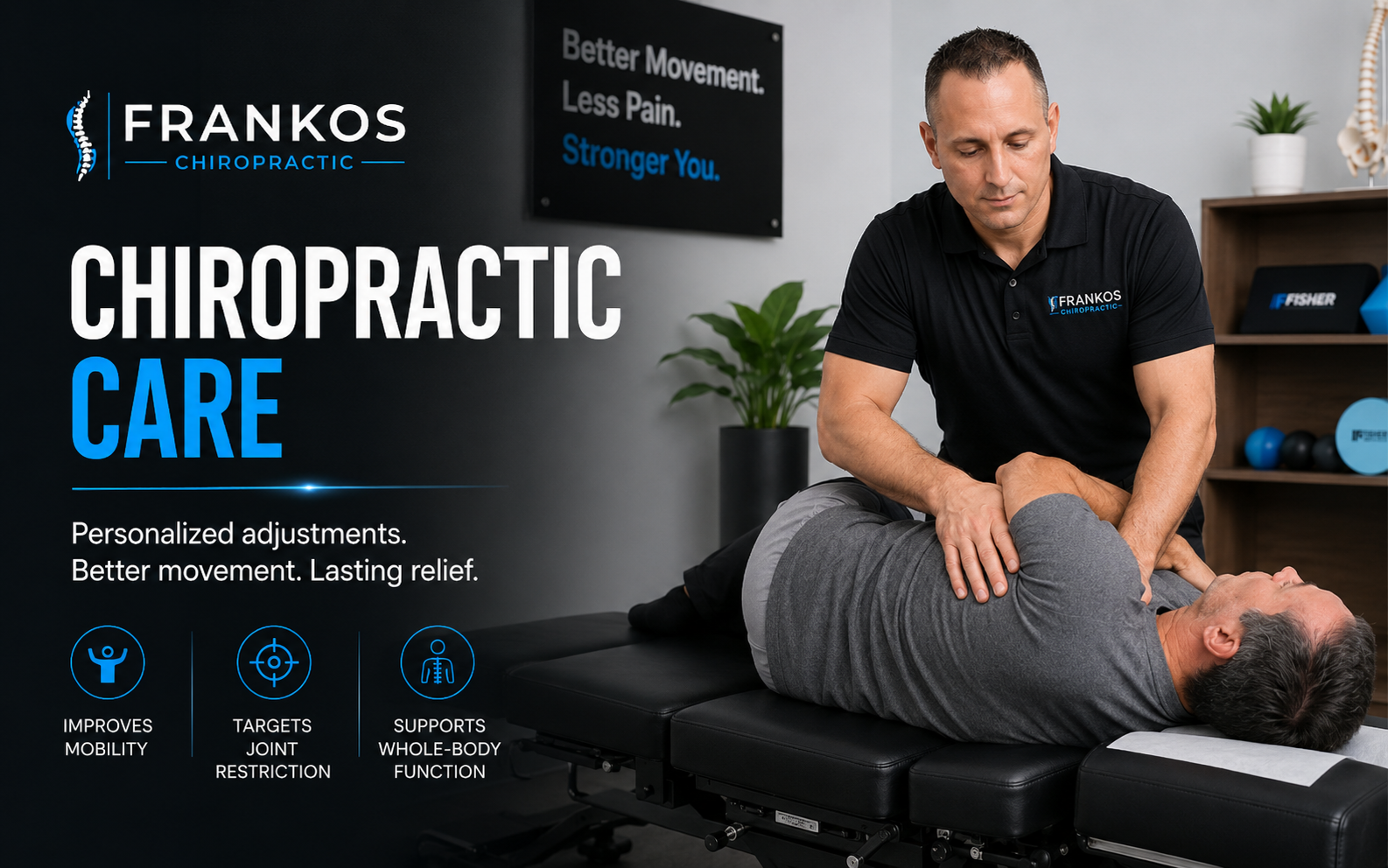
Back Pain Care
Evaluation and care for selected low back pain, hip, pelvis, and movement-related pain patterns.
Chiropractic Adjustments
For selected spine, pelvis, hip, rib, or extremity restrictions when appropriate.
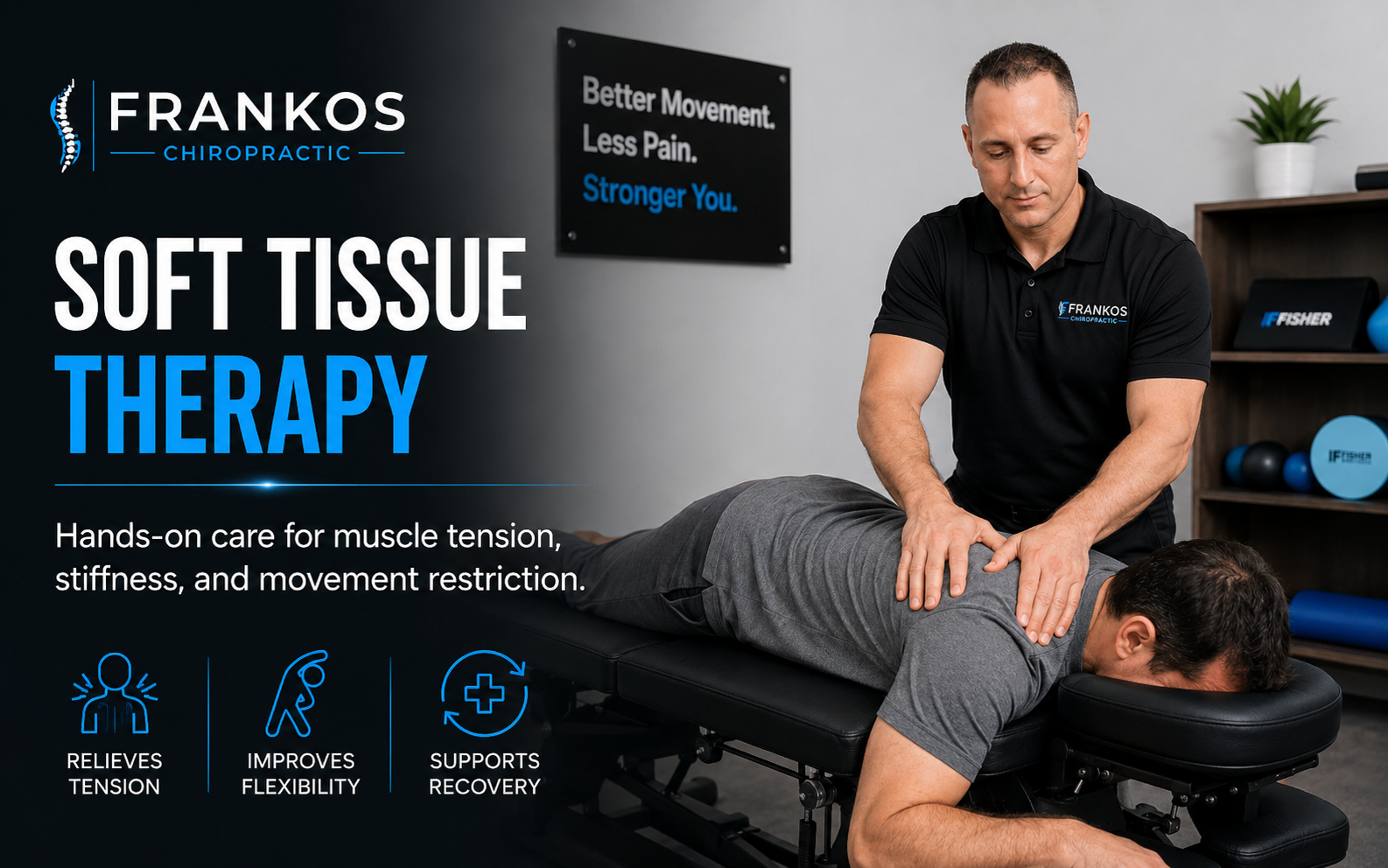
Soft Tissue Therapy
For tight or guarded low back, glute, hip, hamstring, mid-back, or related soft tissue patterns.
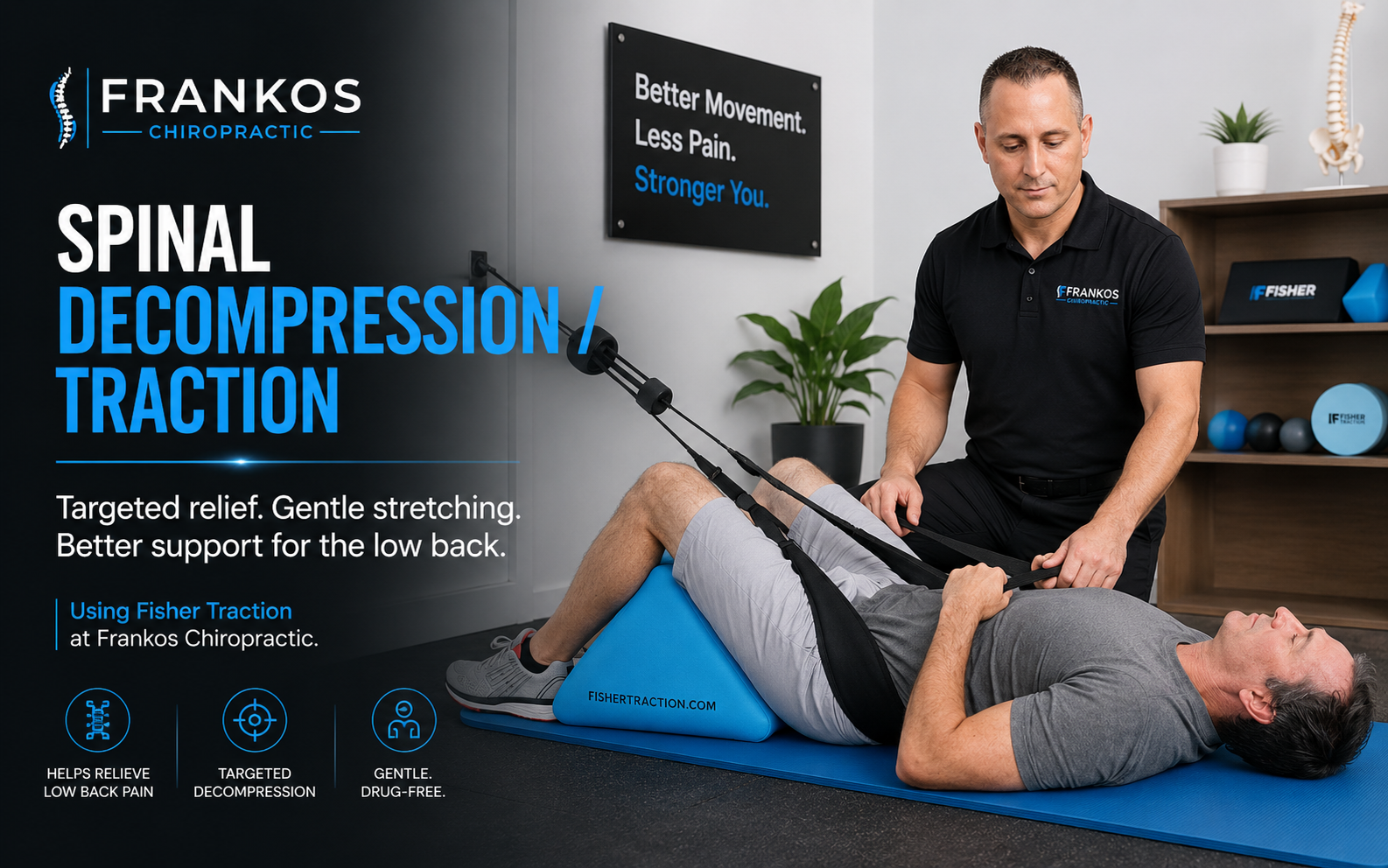
Traction / Decompression
May be considered for selected disc-related, low back, or leg symptom patterns based on exam findings.
Sciatica-Like Symptoms
If pain travels into the glute, thigh, calf, or foot, the visit should screen for nerve involvement.
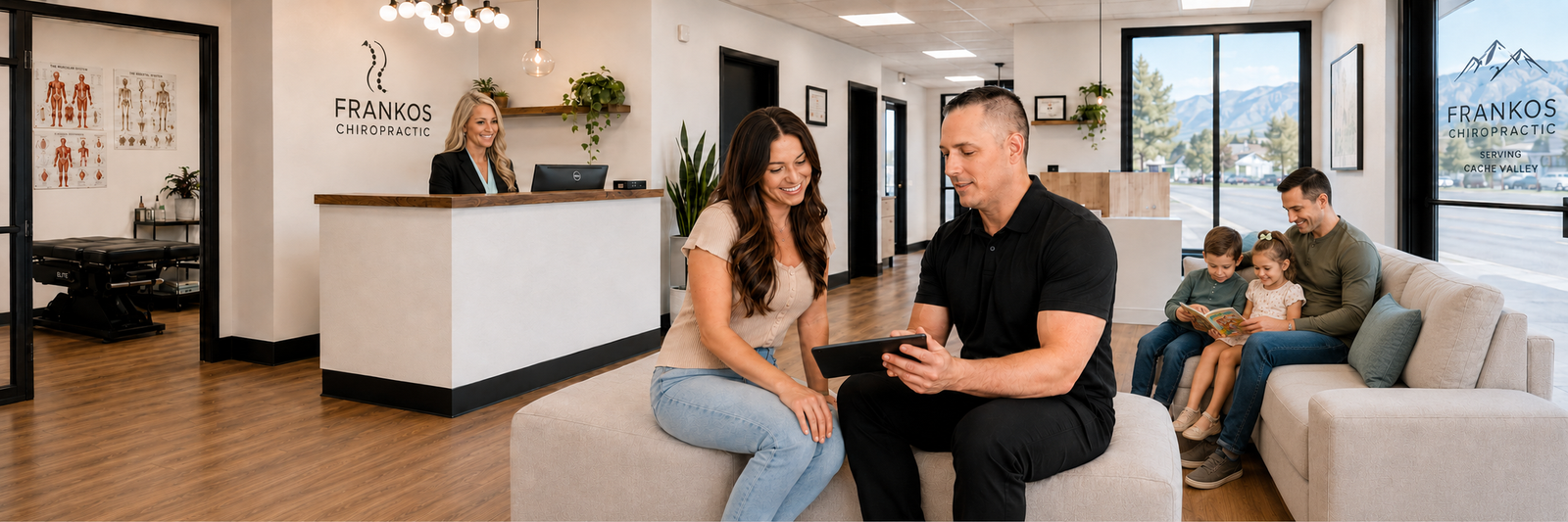
Book an Evaluation
If back pain is limiting daily life or not improving, schedule an exam-based visit.
Back pain FAQs
Common questions about when to see a chiropractor.
These answers are educational and do not replace a personal exam.
Should I see a chiropractor right away for back pain?
If pain is mild and improving quickly, you may not need care right away. If it is severe, lingering, returning, limiting movement, or connected to leg symptoms, schedule an evaluation.
What if back pain goes down my leg?
Leg pain should be evaluated, especially if it travels below the knee, includes numbness or tingling, causes weakness, or is worsening.
Do I need imaging before chiropractic care?
Not always. Imaging is usually based on red flags, trauma, neurological findings, or symptoms that do not fit a typical mechanical pattern.
Can chiropractic care help chronic back pain?
It may help selected chronic low back pain patterns, especially when combined with education, exercise, activity modification, and a clear plan.
Is a wellness adjustment the same as active back pain care?
No. New injuries, active pain, or radiating symptoms may require more evaluation than a quick maintenance-style visit.
Where is Frankos Chiropractic?
Frankos Chiropractic is located at 115 N Main St in Smithfield, Utah and serves Cache Valley from one Smithfield office.
Not sure if your back pain is normal soreness or something that needs care?
Schedule an evaluation at Frankos Chiropractic in Smithfield and get a clearer plan for your back pain pattern.
Get exam-based back pain care near Logan and Cache Valley.
Frankos Chiropractic helps patients from Smithfield, Logan, North Logan, Hyde Park, Richmond, Lewiston, and Cache Valley understand what may be causing their back pain and what care may be appropriate.
Frankos Chiropractic is located at 115 N Main St, Smithfield, UT 84335. We do not operate fake locations in other towns.