Frankos Chiropractic Blog
Why Yard Work Causes Back Pain — And How Chiropractic Care Can Help
Helpful patient education for Smithfield, Logan, and Cache Valley.
Back Pain Guide • Cache Valley
Why Yard Work Causes Back Pain — And How Chiropractic Care Can Help
Yard work looks simple, but it often combines bending, twisting, lifting, reaching, pulling, pushing, and long periods of repetitive motion. That mix can irritate the low back, hips, pelvis, ribs, neck, shoulders, or sciatic-like symptoms — especially when a weekend project turns into several hours of nonstop work.
The problem is usually not one weed, one bag of mulch, or one shovel scoop. It is the repeated bend-twist-lift pattern.

In Cache Valley, yard projects often hit all at once: spring cleanup, mowing, edging, raking, trimming, hauling soil, digging garden beds, stacking firewood, shoveling snow, or cleaning up after wind and storms. Your back may tolerate one task, then flare when fatigue changes your mechanics.
Chiropractic care may help selected yard-work-related back pain patterns when the exam shows joint restriction, muscle guarding, movement irritation, hip or pelvic involvement, or related musculoskeletal findings. It is not a replacement for emergency care or medical referral when red flags are present.
Frankos Chiropractic is located at 115 N Main St in Smithfield, Utah, serving Smithfield, Logan, North Logan, Hyde Park, Richmond, Lewiston, Providence, Hyrum, Nibley, Wellsville, Cache Valley, Preston, Franklin, and nearby Southeast Idaho.
Why yard work flares backs
Yard work combines the exact risk factors that commonly irritate the back.
The back does not usually complain because yard work is “bad.” It complains because yard work often stacks multiple stressors together: awkward posture, repetitive bending, twisting with a load, reaching away from the body, heavy or bulky lifting, vibration from equipment, and working longer than your body is conditioned for.
Bending forward for too long
Weeding, planting, trimming, and picking up debris can keep the low back flexed for long periods. The longer the position is held, the more fatigue builds.
Twisting while loaded
Throwing weeds, swinging a shovel, turning with a bag of soil, or raking across the body can irritate the low back, pelvis, ribs, or hips.
Holding weight away from you
A light load can become irritating when it is held far from the body. Buckets, bags, branches, rocks, and awkward tools increase leverage on the back.
Hundreds of small movements
Raking, shoveling, sweeping, pruning, and mowing repeat the same motion again and again. Repetition plus fatigue can make small irritations add up.
The weekend warrior effect
If the body is not used to long physical work, several hours of yard labor can exceed what the back, hips, and core are ready to tolerate.
Mowers, trimmers, and vibration
Equipment can add vibration, one-sided loading, gripping, shoulder tension, and awkward reaching. The back often tightens as the body works to stabilize.
Common yard-work triggers
The task matters because each one stresses the back differently.
Different yard projects irritate different areas. Knowing the pattern helps you change the load instead of repeatedly flaring the same tissue.
Raking and sweeping
Usually irritates the low back, ribs, mid-back, and shoulders because the motion is repetitive and rotational. Switch sides often and avoid reaching far across the body.
Shoveling and digging
Combines bending, lifting, twisting, and throwing. Smaller scoops, foot repositioning, and avoiding loaded twisting can reduce strain.
Weeding and planting
Long forward bending can irritate the low back and hips. Kneeling pads, squat variations, or sitting on a low garden stool can help change the angle.
Mulch, soil, rocks, and branches
Bulky loads are harder to control than they look. Keep loads close, split heavy loads, and ask for help with awkward items.
Mowing and trimming
Long walking, vibration, hills, uneven ground, and one-sided carrying can irritate the back, hips, neck, and shoulders.
Cleaning gutters or overhead work
Looking up and reaching overhead can irritate the neck, upper back, ribs, and shoulders. Ladder safety and pacing matter.
What to do first
If your back flares after yard work, calm it down before testing it again.
Most mild mechanical back pain improves with time, gentle activity, and avoiding the exact movements that flared it. The mistake is repeatedly “checking” the pain with the same bend, twist, or lift that irritated it.
Stop the aggravating task
Do not keep shoveling, twisting, or hauling just to finish the job if symptoms are escalating.
Keep gentle motion
Short walks, easy position changes, and comfortable movement are often better than stiffening up on the couch all day.
Use heat or cold thoughtfully
Cold may help a fresh irritated area. Heat may help tight guarded muscles. Use what improves comfort and avoid anything that worsens symptoms.
Do not aggressively stretch nerve pain
If symptoms travel down the leg, create tingling, or worsen with stretching, stop forcing it and get evaluated.
Return gradually
When symptoms calm down, restart with shorter sessions, lighter loads, and better spacing between tasks.
Get checked if it lingers
If pain does not improve, returns every time you do yard work, or changes your walking, an exam can help identify the driver.
When back pain needs more attention
Some back pain after yard work should not be treated like a simple strain.
Yard work can flare common mechanical pain, but severe or unusual symptoms need evaluation.
Get medical evaluation quickly if back pain:
- Follows a fall, major twist, or direct injury.
- Is severe, worsening, or does not improve with rest and gentle activity.
- Travels below the knee or causes numbness, tingling, or weakness.
- Causes foot drop, loss of strength, or trouble walking normally.
- Comes with fever, unexplained weight loss, or night pain that feels unusual.
- Comes with bladder or bowel changes, saddle numbness, or numbness in the groin region.
Prevention before the next project
Yard work is easier on your back when you treat it like a workout.
You do not need to avoid yard work. You need to pace it, change positions, reduce loaded twisting, and make the work match your current conditioning.
Warm up for five minutes
Walk, hip hinge, gently rotate, and practice a few easy squats before heavy lifting or digging.
Break the project into rounds
Try 25 to 40 minutes of work, then take a short reset. Fatigue is when form usually falls apart.
Keep loads close
Carry mulch, soil, rocks, branches, and tools close to the body instead of reaching away with a rounded back.
Move your feet instead of twisting
When dumping, raking, shoveling, or turning with a load, pivot your whole body instead of twisting through the low back.
Use better tools
Longer handles, wheelbarrows, kneeling pads, garden stools, and smaller containers can reduce awkward posture and load.
Stop before the flare
Do not wait for sharp pain to call it. Early tightness, fatigue, and form breakdown are signs to pause or switch tasks.
How Frankos Chiropractic may help
Care depends on what your exam shows.
Yard-work back pain can involve the low back, pelvis, hips, ribs, neck, shoulders, soft tissue, or nerve irritation. A focused exam helps determine whether conservative chiropractic care is appropriate and which tools make sense.

Back Pain Care
Evaluation and care for selected low back pain patterns from lifting, bending, twisting, and overuse.

Chiropractic Adjustments
For selected spine, rib, pelvis, hip, or extremity restrictions when appropriate.

Soft Tissue Therapy
For tight low back, glute, hip, mid-back, neck, or shoulder areas that may be guarding after overuse.
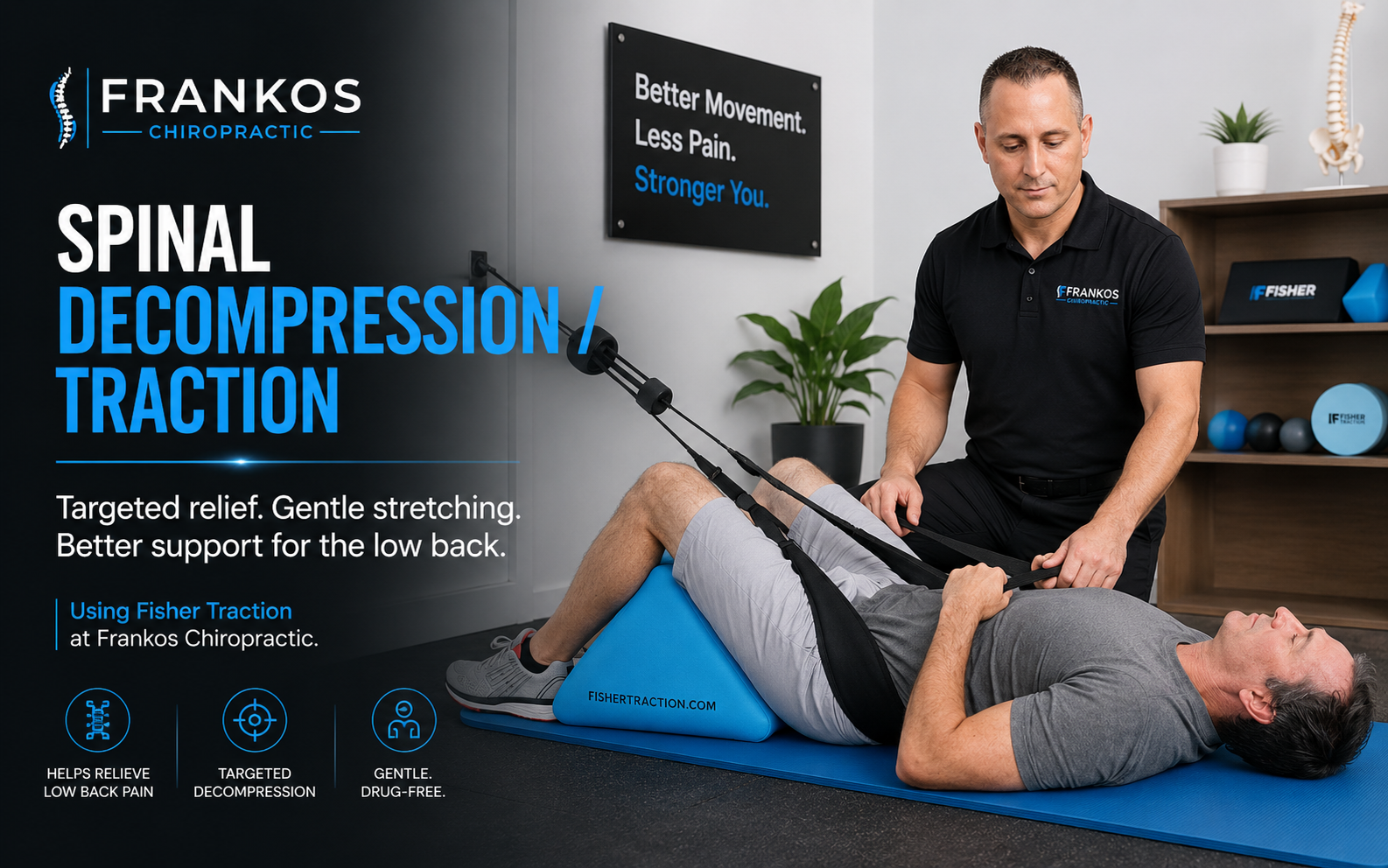
Traction / Decompression
May be considered for selected low back or leg symptom patterns based on exam findings.

Sciatica-Like Symptoms
If pain travels into the glute, thigh, calf, or foot, the exam should screen for nerve involvement.

Book an Evaluation
If yard work keeps flaring your back, schedule a visit and get a clearer plan.
Yard work back pain FAQs
Common questions after a weekend project goes too far.
These answers are educational and do not replace a personal exam.
Why does my back hurt after yard work?
Yard work often combines bending, twisting, lifting, reaching, pushing, pulling, and repetition. Fatigue can also change how you move, which increases irritation.
Should I rest completely after yard-work back pain?
Total rest is not always best. Gentle activity, short walks, and avoiding the aggravating movement are often more helpful than staying stiff all day, unless symptoms are severe or unusual.
Can chiropractic care help?
It may help selected musculoskeletal back pain patterns when care is based on an exam. Care may include adjustments, soft tissue therapy, traction when appropriate, home guidance, or referral when needed.
What if pain goes down my leg?
Leg symptoms should be evaluated, especially if pain travels below the knee, includes numbness or tingling, or causes weakness.
How do I prevent it next time?
Warm up, work in shorter rounds, keep loads close, avoid loaded twisting, switch tasks, use tools that reduce bending, and stop before pain escalates.
Where is Frankos Chiropractic?
Frankos Chiropractic is located at 115 N Main St in Smithfield, Utah and serves Cache Valley from one Smithfield office.
Still sore after yard work?
If your back pain is not calming down, keeps returning with chores, or is starting to affect sleep, walking, work, or daily activity, schedule an evaluation at Frankos Chiropractic in Smithfield.
Get back pain checked before the next big yard project.
Frankos Chiropractic helps patients from Smithfield, Logan, North Logan, Hyde Park, Richmond, Lewiston, and Cache Valley understand why their back flared and what care may be appropriate.
Frankos Chiropractic is located at 115 N Main St, Smithfield, UT 84335. We do not operate fake locations in other towns.