Frankos Chiropractic Blog
Why Your Back Hurts After Sitting
Helpful patient education for Smithfield, Logan, and Cache Valley.
Back Pain After Sitting Guide • Smithfield & Cache Valley
Why Does My Back Hurt More After Sitting Than Moving?
If your low back feels stiff, tight, or painful after sitting — but loosens up once you stand, walk, or move around — you are describing a real and very common pattern. The key is understanding why sustained sitting can make sensitive tissues complain, and why movement often feels like relief.
Sitting is not automatically harmful. The bigger issue is staying in one loaded position long enough that your back stops tolerating it well.

Many people with sitting-related back pain are not fragile, damaged, or “out of alignment.” They are often dealing with a load-tolerance problem: the back tolerates some sitting, but not prolonged sitting without enough position change, movement, strength, recovery, or tissue capacity.
This pattern can show up in office workers, drivers, students, remote workers, parents, and active people who sit for long stretches between workouts. It can involve joints, discs, muscles, hips, the pelvis, irritated nerves, or a combination of factors. The pattern matters, but it does not identify one single diagnosis by itself.
Frankos Chiropractic is located at 115 N Main St in Smithfield, Utah, serving patients from Smithfield, Logan, North Logan, Hyde Park, Richmond, Lewiston, Preston, Franklin, and throughout Cache Valley.
The useful answer
Your back may hurt after sitting because it is sensitive to sustained load, not because sitting is always damaging it.
Back pain after sitting is usually best understood as a tolerance issue. A position that feels fine for 10 minutes may become uncomfortable after 45 minutes because the same tissues are being loaded the same way for too long.
Stillness makes small irritations louder
Sitting keeps the hips, pelvis, and low back in a relatively fixed position. If those tissues are already irritated, stillness can make the sensation more noticeable.
The issue is often capacity, not catastrophe
When the back has less tolerance for sitting than your day requires, pain can appear even without a dramatic injury or one clear “wrong” movement.
Walking changes the load
Movement redistributes pressure, warms tissues, changes nerve input, engages muscles, and gives the back a break from one repeated position.
The clinical version in plain English.
There is no single “sitting pain diagnosis.” Back pain that gets worse with sitting but improves with movement may involve irritated spinal joints, disc sensitivity, hip stiffness, SI/pelvic irritation, muscle guarding, poor recovery, reduced conditioning, or nerve sensitivity.
The important question is not, “Which posture caused this?” The better question is, “What does your back currently tolerate, what makes symptoms calm down, and what needs to change so your normal day no longer overloads it?”
What this pattern does not prove
- It does not automatically mean your spine is damaged.
- It does not prove your posture is “bad.”
- It does not prove you need the same treatment as someone else.
- It does not mean rest is always the answer.
- It does not replace a proper exam if pain is persistent, worsening, or radiating.
Why sitting can trigger the low back
Prolonged sitting combines reduced movement, repeated pressure, hip position, and nervous system sensitivity.
Most sitting-related back pain is not explained by one simple cause. It is usually a stack of small contributors that becomes noticeable after enough time in one position.
The same tissues get asked to do the same job
A chair may feel comfortable at first, but the low back, pelvis, hips, and surrounding muscles may become irritated if the load does not vary for a long time.
The hips stay flexed
Sitting keeps the hips bent. For some people, that can contribute to hip flexor tension, glute inactivity, pelvic stiffness, and a low back that feels locked when they stand up.
Some backs dislike sustained flexion or compression
Some people are more sensitive to sitting, bending, or flexed positions. Others are more sensitive to standing or extension. The pattern helps guide the exam.
The back may brace instead of relax
When the nervous system sees a position as threatening or irritating, muscles can tighten defensively. That protective guarding can feel like stiffness, pressure, or a deep ache.
Poor sleep and stress can raise pain sensitivity
Two people can sit the same way and feel different symptoms. Sleep, stress, training load, previous injuries, and general health can change how loudly the body reports discomfort.
The setup can matter without being the whole story
Chair height, car seat position, laptop angle, foot support, wallet position, and desk layout can contribute, but the real goal is better load variation — not perfect furniture.
Why the first few steps hurt
That stiff, painful “start-up” feeling often happens because your back is changing states.
Many patients say the worst moment is not sitting itself. It is getting out of the chair. The first few steps feel tight, guarded, or sharp, then walking slowly improves it.
What may be happening when you stand
- The hips go from flexed to extended.
- The pelvis and low back begin sharing load again.
- Muscles that were quiet while sitting suddenly have to work.
- Stiff joints and guarded muscles receive new movement input.
- Sensitive tissues that were compressed or still are asked to move.
Why walking may feel better after a minute.
Walking changes the load over and over. It brings the hips, pelvis, trunk, and legs back into rhythm. For many sitting-related back pain patterns, that repeated low-level movement is exactly what the back was missing.
That does not mean the problem is imaginary. It means the body may tolerate dynamic movement better than static sitting. That distinction is useful because the solution often involves more frequent movement, better pacing, and improving tissue capacity over time.
Posture reality
The best posture is usually the next posture.
The old advice was to sit perfectly straight all day. That is not realistic, and it is not how most bodies work. A rigid “perfect posture” held for hours can become just another static position.
Change positions often
Shift, stand, walk, lean back, reset, and alternate tasks. Frequent low-effort changes usually matter more than forcing one ideal posture.
Make the easy position less irritating
Use a chair height that lets your feet rest, keep the screen easy to see, avoid reaching for the mouse, and keep your work close enough that you are not stuck leaning forward.
Cars lock you into fewer options
On long drives, small seat changes and short walking breaks can be more useful than trying to hold a perfect brace against the seat for hours.
A useful rule: do not ask your back to tolerate a position longer than it currently can.
If your symptoms reliably start after 40 minutes of sitting, do not wait 60 minutes to move. Stand at 25 to 30 minutes, walk briefly, and build tolerance gradually. That is not weakness. That is intelligent load management.
Practical home relief
What to try before the next long sit.
These strategies are not a diagnosis or a substitute for care, but they are practical first steps for many sitting-related back pain patterns.
Use movement snacks
Stand, walk, or lightly move for 60 to 120 seconds before symptoms build. Do it early enough that pain does not have to force the break.
Reset before standing
Before getting up, move to the edge of the chair, place both feet under you, brace lightly, hinge through the hips, and stand smoothly instead of twisting out of the chair.
Walk after long sitting
A short walk often helps more than aggressive stretching. It changes load, warms tissues, and gives the nervous system non-threatening movement input.
Adjust the chair, not your identity
Try changing seat height, lumbar support, arm support, screen height, or foot position. The goal is comfort and variation, not proving you can sit perfectly.
Use gentle hip and trunk mobility
Light hip flexor mobility, glute activation, cat-cow style movement, or easy trunk rotation may help if symptoms feel better afterward and do not travel down the leg.
Build capacity over time
If the back only tolerates short sitting, the long-term solution is not avoiding life. It is gradually improving strength, mobility, recovery, and tolerance.
Common real-life patterns
Different people sit for different reasons, but the complaint often sounds the same.
Back pain after sitting shows up in predictable situations around Cache Valley: desk work, college studying, commuting, driving between towns, remote work, long appointments, and long weekends on the road.
Office and remote workers
Symptoms often build through the workday and feel worse after long meetings, laptop work, or sitting without enough breaks.
Drivers and commuters
Car seats reduce movement options. Long drives between Smithfield, Logan, Preston, and surrounding towns can make the low back and hips feel locked up.
Students
Studying, laptops, class schedules, and long periods of sitting can combine with poor sleep and stress, making back and neck symptoms more noticeable.
Active adults
Some people feel good while moving but stiff after sitting later. That may reflect a back that tolerates activity better than static recovery positions.
Parents
Sitting, lifting kids, twisting out of a chair, carrying car seats, and interrupted sleep can stack stress on the low back and hips.
People with recurring episodes
If this pattern keeps returning, the issue may need a more complete exam instead of another round of random stretches.
When to get checked
Most sitting-related back pain is not an emergency, but some symptoms should not be ignored.
A professional evaluation makes sense when symptoms persist, keep returning, limit normal activity, or include nerve-related signs.
Get evaluated quickly if back pain after sitting comes with warning signs.
- New or progressive leg weakness, foot drop, or trouble walking normally.
- Numbness, tingling, or pain traveling below the knee that is worsening or persistent.
- New bowel or bladder changes, loss of control, or saddle numbness.
- Severe pain after a fall, car accident, heavy lift, or other trauma.
- Fever, unexplained weight loss, history of cancer, or feeling seriously unwell.
- Night pain that is severe, unusual, or not relieved by changing positions.
- Pain that keeps you from sitting, working, sleeping, driving, or taking care of daily responsibilities.
Back pain care at Frankos Chiropractic
Care should be based on the exam, not just the chair you sit in.
At Frankos Chiropractic, sitting-related back pain is evaluated by looking at the full pattern: what triggers it, what relieves it, what movements are limited, whether nerve signs are present, and whether chiropractic care is appropriate.
History and pattern recognition
How long you can sit, what kind of chair or car seat bothers you, whether walking helps, and whether symptoms travel into the hip, glute, or leg.
Low back, hip, and pelvis assessment
Range of motion, pain with specific positions, hip mobility, pelvic mechanics, and muscle guarding help determine what needs attention.
Orthopedic and neurological screening
When symptoms suggest nerve involvement, exam findings help determine whether conservative care, modification, or referral is the right next step.
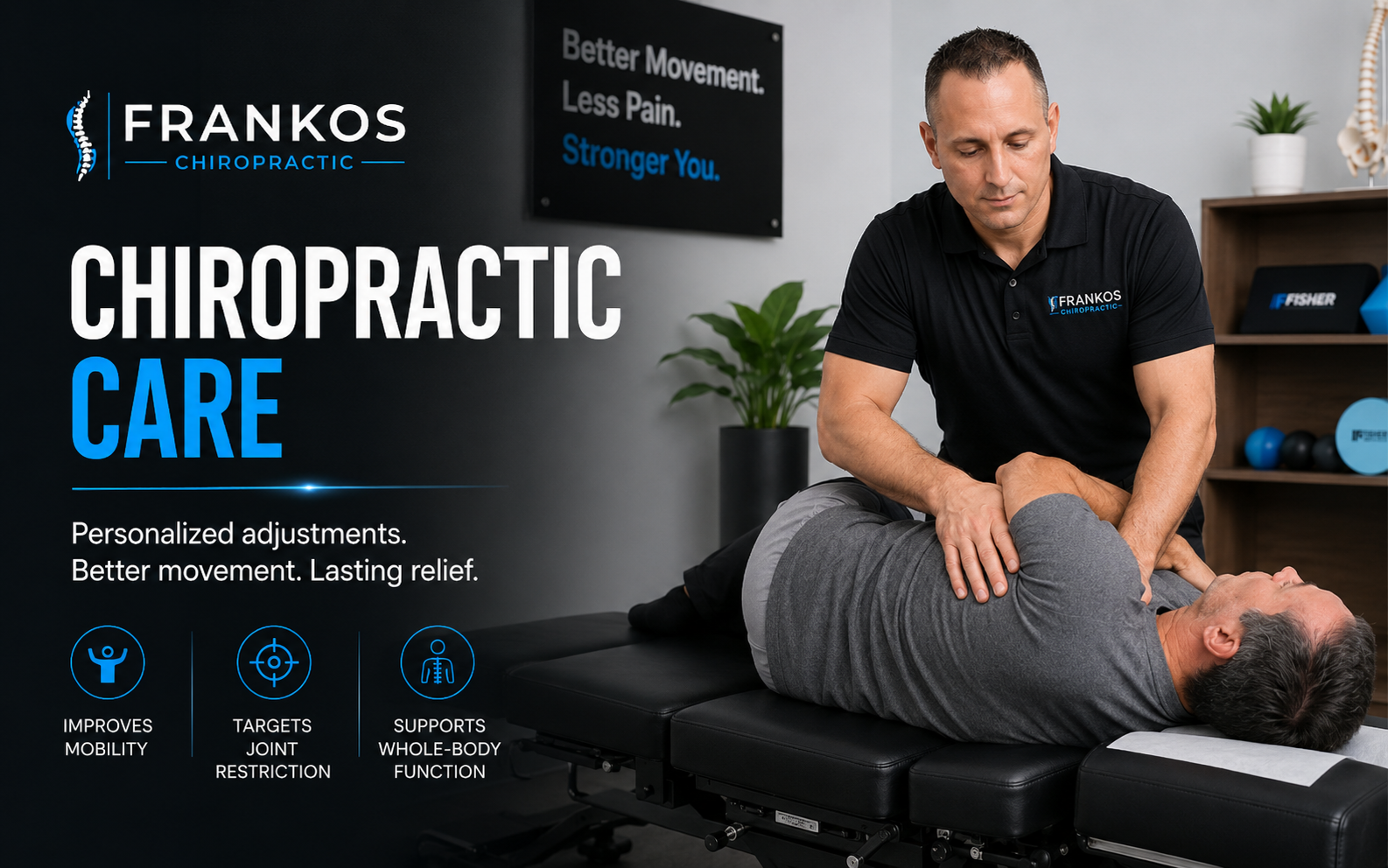
Chiropractic Adjustments
May be used when the exam shows joint restriction, movement irritation, or mechanical patterns that fit chiropractic care.
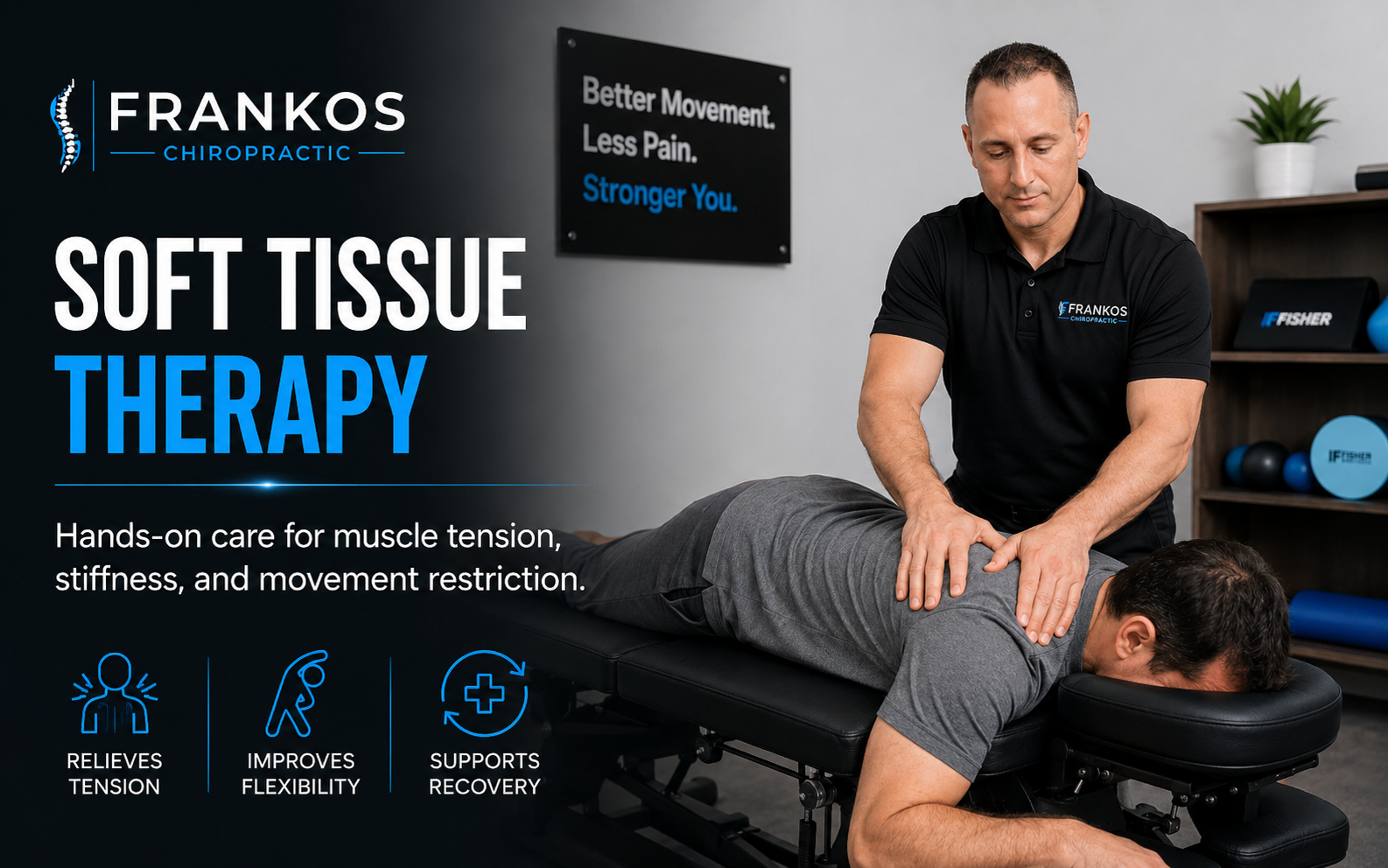
Soft Tissue Therapy
May help selected patterns involving muscle guarding, hip tension, trigger points, or soft tissue sensitivity.
Exam-Based Back Pain Care
Care may include adjustments, soft tissue work, flexion distraction, traction/decompression, mobility advice, or referral when needed.
Not every patient needs every treatment.
A sitting-related back pain plan should be specific. Some patients need more movement guidance. Some need joint or soft tissue care. Some need flexion distraction or decompression-style care. Some need referral or imaging. The exam decides the next step.
Back pain after sitting FAQs
Common questions from patients who feel better once they move.
These answers are educational and do not replace an exam.
Why does my back hurt when I stand up after sitting?
The transition from sitting to standing changes load through the hips, pelvis, muscles, discs, and low back joints. Sensitive tissues may feel stiff or guarded until walking restores movement.
Is sitting bad for my back?
Sitting is not automatically bad. Problems often appear when one position is held longer than your back currently tolerates. Regular position changes usually matter more than perfect posture.
Why does walking make my back feel better?
Walking changes pressure, warms tissues, engages muscles, and gives the nervous system repeated low-threat movement input. Many backs tolerate movement better than static sitting.
Could sitting-related back pain be a disc issue?
It can be, but sitting pain alone does not prove a disc problem. An exam is needed to evaluate the full pattern, especially if pain travels into the leg or includes numbness or weakness.
What is the best posture for back pain after sitting?
The best posture is usually the next posture. Sit in a way that is tolerable, change positions often, and avoid waiting until pain forces you to move.
When should I see a chiropractor for this?
Schedule an evaluation if the pain is persistent, worsening, recurring, radiating, limiting work or sleep, or not improving with sensible movement breaks and basic self-care.
Local care near Logan and Cache Valley
Back pain after sitting is common in people who work, study, commute, and stay active around Cache Valley.
Frankos Chiropractic serves patients from one Smithfield office. Use the links below if you are looking for care near your community.
If sitting keeps lighting up your low back, get the pattern evaluated.
Frankos Chiropractic in Smithfield helps patients understand what may be driving back pain after sitting, what they can safely try, and what care may be appropriate based on the exam.
Frankos Chiropractic is located at 115 N Main St, Smithfield, UT 84335. We do not operate fake locations in other towns.